
#FactCheck -Viral Photo Misidentifies Woman With Education Minister as NEET Paper Leak Accused; Fact Check Finds Claim False
Executive Summary
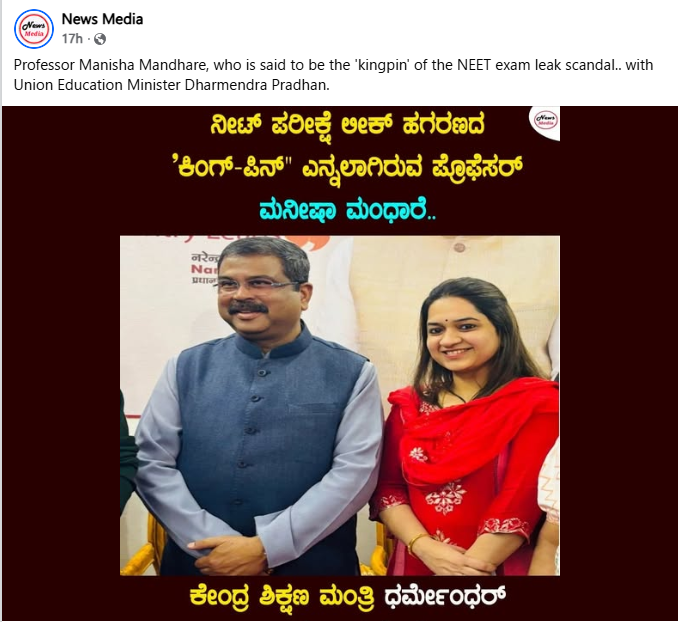
A photograph showing Union Education Minister Dharmendra Pradhan standing with a woman is being widely circulated on social media. Users are falsely claiming that the woman in the image is Manisha Mandhare, a teacher allegedly arrested in the NEET-UG paper leak case. CyberPeace Research Wing research confirms that the woman in the viral photograph is Dr. Nivedita Ekbote and not Manisha Mandhare. Social media users are falsely misidentifying her and linking her to the NEET paper leak case without evidence.
Claim
Several social media users, including Facebook and Instagram pages, have shared the image claiming that the woman seen with the Union Minister is Manisha Mandhare, who was arrested in connection with the NEET paper leak case.
- https://www.facebook.com/Sri.Media.Kannada/posts/pfbid0pCuJrhcz3mcf8MzYci4oWXaTKvaJYNjCtGo34Z6R9ztshWqs3QUupyHNu2K4Rodpl?rdid=WtnRhDM22ftHT9oe
- https://archive.is/uwmsj
Fact Check
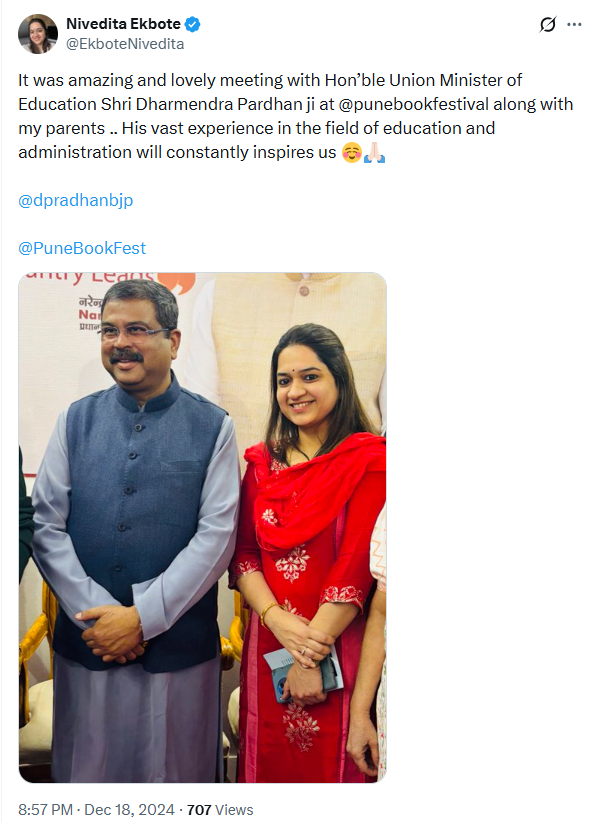
A reverse image search of the viral photograph reveals that the woman is actually Dr. Nivedita Ekbote, Principal of Modern College and Vice President of the Bharatiya Janata Yuva Morcha in Maharashtra. Nivedita Ekbote originally shared this photograph on December 18, 2024, across her official social media accounts on X (formerly Twitter), Facebook, and Instagram. According to the caption, the image was taken during the Pune Book Festival, where she met the Union Education Minister along with her parents.
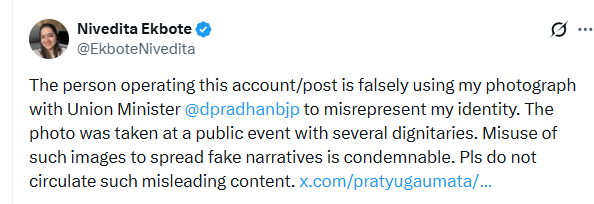
In a public clarification, she stated that her photograph was being misused online. She added that the image was taken at a public event with several dignitaries and strongly condemned the circulation of false and misleading claims using it.
- https://x.com/EkboteNivedita/status/2056265520765399049?s=20
Further verification from credible news reports confirms that Manisha Mandhare, who is linked to the NEET paper leak case, is a senior botany teacher from Pune. She was reportedly appointed as a subject expert by the National Testing Agency (NTA) for NEET-related processes. Her identity is completely different from the woman seen in the viral image.

Conclusion
The viral claim is completely false and misleading. The woman seen with Union Education Minister Dharmendra Pradhan is Dr. Nivedita Ekbote, and she has no connection to the NEET-UG paper leak case.

Related Blogs
.webp)
Introduction
The ongoing armed conflict between Israel and Hamas/ Palestine is in the news all across the world. The latest conflict was triggered by unprecedented attacks against Israel by Hamas militants on October 7, killing thousands of people. Israel has launched a massive counter-offensive against the Islamic militant group. Amid the war, the bad information and propaganda spreading on various social media platforms, tech researchers have detected a network of 67 accounts that posted false content about the war and received millions of views. The ‘European Commission’ has sent a letter to Elon Musk, directing them to remove illegal content and disinformation; otherwise, penalties can be imposed. The European Commission has formally requested information from several social media giants on their handling of content related to the Israel-Hamas war. This widespread disinformation impacts and triggers the nature of war and also impacts the world and affects the goodwill of the citizens. The bad group, in this way, weaponise the information and fuels online hate activity, terrorism and extremism, flooding political polarisation with hateful content on social media. Online misinformation about the war is inciting extremism, violence, hate and different propaganda-based ideologies. The online information environment surrounding this conflict is being flooded with disinformation and misinformation, which amplifies the nature of war and too many fake narratives and videos are flooded on social media platforms.
Response of social media platforms
As there is a proliferation of online misinformation and violent content surrounding the war, It imposes a question on social media companies in terms of content moderation and other policy shifts. It is notable that Instagram, Facebook and X(Formerly Twitter) all have certain features in place giving users the ability to decide what content they want to view. They also allow for limiting the potentially sensitive content from being displayed in search results.
The experts say that It is of paramount importance to get a sort of control in this regard and define what is permissible online and what is not, Hence, what is required is expertise to determine the situation, and most importantly, It requires robust content moderation policies.
During wartime, people who are aggrieved or provoked are often targeted by this internet disinformation that blends ideological beliefs and spreads conspiracy theories and hatred. This is not a new phenomenon, it is often observed that disinformation-spreading groups emerged and became active during such war and emergency times and spread disinformation and propaganda-based ideologies and influence the society at large by misrepresenting the facts and planted stories. Social media has made it easier to post user-generated content without properly moderating it. However, it is a shared responsibility of tech companies, users, government guidelines and policies to collectively define and follow certain mechanisms to fight against disinformation and misinformation.
Digital Services Act (DSA)
The newly enacted EU law, i.e. Digital Services Act, pushes various larger online platforms to prevent posts containing illegal content and also puts limits on targeted advertising. DSA enables to challenge the of illegal online content and also poses requirements to prevent misinformation and disinformation and ensure more transparency over what the users see on the platforms. Rules under the DSA cover everything from content moderation & user privacy to transparency in operations. DSA is a landmark EU legislation moderating online platforms. Large tech platforms are now subject to content-related regulation under this new EU law ‘The Digital Services Act’, which also requires them to prevent the spread of misinformation and disinformation and overall ensure a safer online environment.
Indian Scenario
The Indian government introduced the Intermediary Guidelines (Intermediary Guidelines and Digital Media Ethics Code) Rules, updated in 2023 which talks about the establishment of a "fact check unit" to identify false or misleading online content. Digital Personal Data Protection, 2023 has also been enacted which aims to protect personal data. The upcoming Digital India bill is also proposed to be tabled in the parliament, this act will replace the current Information & Technology Act, of 2000. The upcoming Digital India bill can be seen as future-ready legislation to strengthen India’s current cybersecurity posture. It will comprehensively deal with the aspects of ensuring privacy, data protection, and fighting growing cyber crimes in the evolving digital landscape and ensuring a safe digital environment. Certain other entities including civil societies are also actively engaged in fighting misinformation and spreading awareness for safe and responsible use of the Internet.
Conclusion:
The widespread disinformation and misinformation content amid the Israel-Hamas war showcases how user-generated content on social media shows you the illusion of reality. There is widespread misinformation, misleading content or posts on social media platforms, and misuse of new advanced AI technologies that even make it easier for bad actors to create synthetic media content. It is also notable that social media has connected us like never before. Social media is a great platform with billions of active social media users around the globe, it offers various conveniences and opportunities to individuals and businesses. It is just certain aspects that require the attention of all of us to prevent the bad use of social media. The social media platforms and regulatory authorities need to be vigilant and active in clearly defining and improving the policies for content regulation and safe and responsible use of social media which can effectively combat and curtail the bad actors from misusing social media for their bad motives. As a user, it's the responsibility of users to exercise certain duties and promote responsible use of social media. With the increasing penetration of social media and the internet, misinformation is rampant all across the world and remains a global issue which needs to be addressed properly by implementing strict policies and adopting best practices to fight the misinformation. Users are encouraged to flag and report misinformative or misleading content on social media and should always verify it from authentic sources. Hence creating a safer Internet environment for everyone.
References:
- https://abcnews.go.com/US/experts-fear-hate-extremism-social-media-israel-hamas-war/story?id=104221215
- https://edition.cnn.com/2023/10/14/tech/social-media-misinformation-israel-hamas/index.html
- https://www.nytimes.com/2023/10/13/business/israel-hamas-misinformation-social-media-x.html
- https://www.africanews.com/2023/10/24/fact-check-misinformation-about-the-israel-hamas-war-is-flooding-social-media-here-are-the//
- https://www.theverge.com/23845672/eu-digital-services-act-explained
.webp)
The Equitable Growth Approach of AI and Digital Twins
Digital Twins can be simply described as virtual replicas of physical assets or systems, powered by real-time data and advanced simulations. When this technology is combined with AI, the impact it has on enabling real-time monitoring, predictive maintenance, optimised operations, and improved design processes through the creation of virtual replicas of physical assets becomes even greater. The greatest value of AI is its ability to make data actionable. And when combined with digital twins, these data can be collated, analysed, inefficiencies removed, and better decisions can be taken to improve efficiency and quality.
This intersection between AI and Digital Twins holds immense potential for addressing key challenges, particularly in countries like India, which is rapidly embracing digital adoption to achieve its economic ambitions and sustainability goals. According to Salesforce’s most recent survey on generative AI use among the general population within the U.S., UK, Australia and India, 75% of generative AI users are looking to automate repetitive tasks and use generative AI for work communications. India is particularly looking towards a rapid digital adoption, economic ambitions, and sustainable developments to be achieved through AI adoption. This blog discuss the intersection of equitable growth, sustainability, and AI-driven policies in India.
Sustainability and the Path Ahead: Digital Twin and AI-Driven Solutions
India faces sustainability challenges which are mainly associated with issues such as urban congestion, the rising demand for energy along with climate change and environmental degradation. AI and Digital Twins provide solutions for real-time simulations and predictive analysis. Some of the examples are its applications in sustainable urban planning such as smart cities like the Indore Smart City Initiative and traffic optimisation, energy efficiency/optimisation through AI-driven renewable energy projects and power grid optimisation and even water resource management through leak detection, equitable distribution and conservation.
The need is to balance innovation with regulation, particularly, underscoring the importance of ethical and sustainable deployment of AI and digital twins and addressing data privacy with AI ethics with recent developments such as the India’s evolving AI policy landscape, including the National Strategy for Artificial Intelligence and its focus on AI for All, regulatory frameworks such as DPDP Act and the manner in which they address AI ethics, data privacy, and digital governance.
The need is to initiate targeted policies that promote research and development in AI and digital twin technologies, skill development and partnerships with the private sector, think tanks, nonprofits and others. Also, collaborations at the global level would include aligning our domestic policies with global AI and sustainability initiatives and leveraging the international frameworks for climate tech and smart infrastructure.
Cyberpeace Outlook
As part of specific actions, policymakers need to engage in proactive governance to ensure the responsible use and development of AI. This includes enacting incentive schemes for sustainable AI projects and strengthening the enforcement of data privacy laws. Industry leaders must support equitable access to AI and digital twin technologies and develop tailored AI tools for resource-constrained settings, particularly in India. Finally, researchers need to drive innovation in alignment with sustainability goals, such as those related to agriculture and groundwater management.
References
- https://economictimes.indiatimes.com/tech/artificial-intelligence/technologies-like-ai-and-digital-twins-can-tackle-challenges-like-equitable-growth-to-sustainability-wef/articleshow/117121897.cms
- https://www.salesforce.com/news/stories/generative-ai-statistics/
- https://www.mdpi.com/2673-2688/4/3/38
- https://www.ibm.com/think/topics/generative-ai-for-digital-twin-energy-utilities
Executive Summary
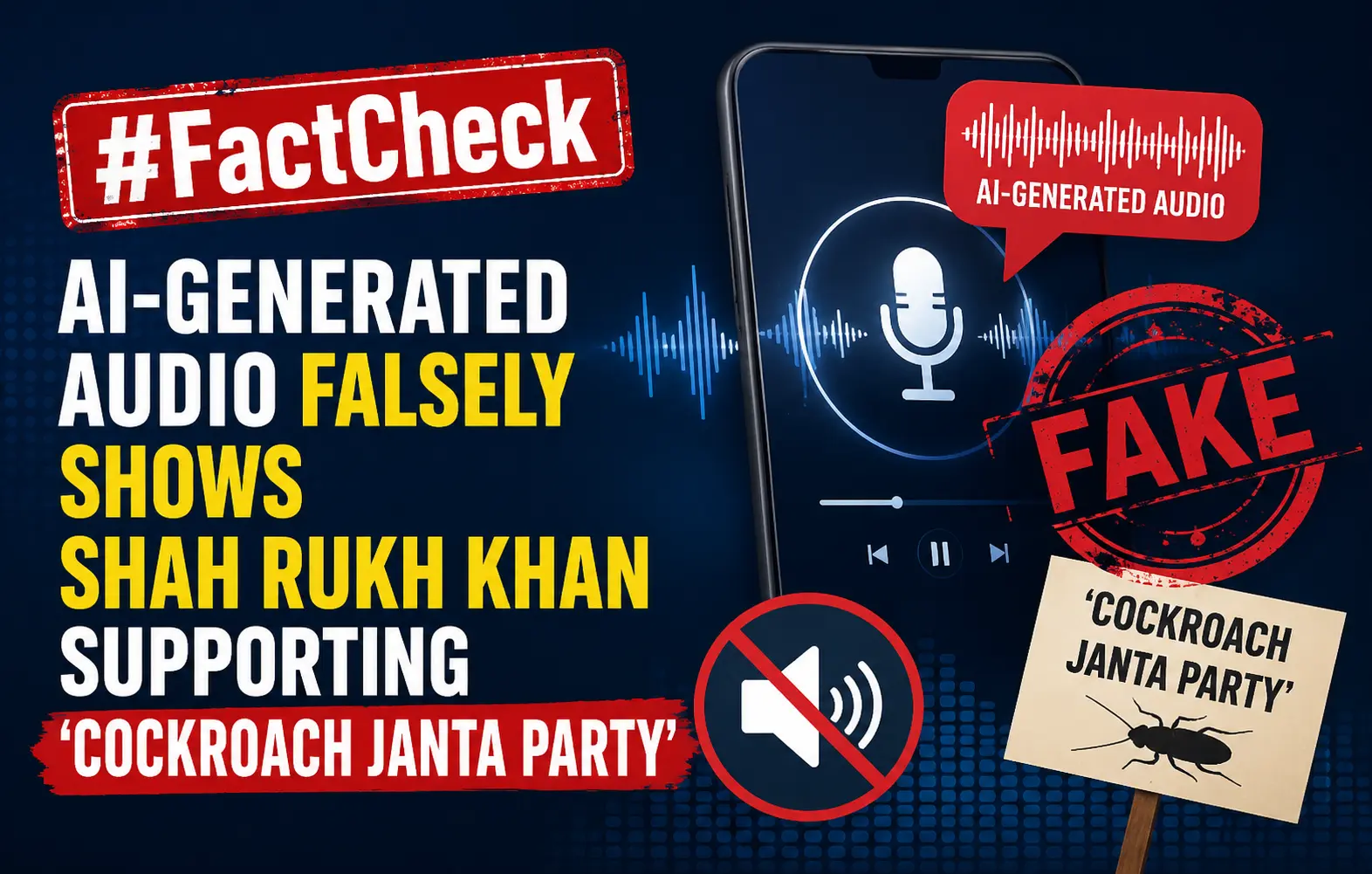
A video allegedly showing Bollywood actor Shah Rukh Khan supporting and expressing his intention to join the so-called ‘Cockroach Janta Party’ (CJP) is being widely shared on social media.In the viral clip, Shah Rukh Khan can allegedly be heard saying:“Friends, the common people of this country are now fully awakened, and the storm of Cockroach Janta Party on social media has become so huge that its name is echoing everywhere… In just a few days, it has gained more than 15 million followers on Instagram… and honestly, I too will soon join the Cockroach Janta Party…”
However, CyberPeace Research Wing investigation found the claim to be false. The voice heard in the viral clip is AI-generated.
Claim
The viral video is being shared with the claim that actor Shah Rukh Khan publicly endorsed the ‘Cockroach Janta Party’ (CJP) and announced that he would soon join the movement.
- https://archive.is/wWueV
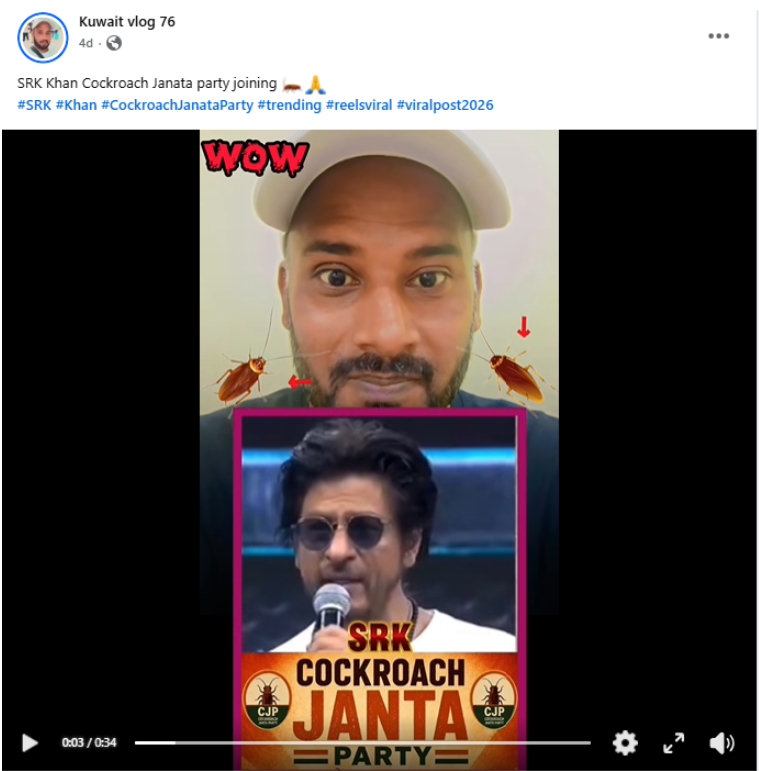
Fact Check
To verify the authenticity of the viral video, we first searched the internet using relevant keywords. However, we found no credible media reports, interviews, or posts from Shah Rukh Khan’s official social media accounts mentioning any support for the ‘Cockroach Janta Party’. Notably, if a major actor like Shah Rukh Khan had publicly supported any political or social media movement, it would have received widespread media coverage.
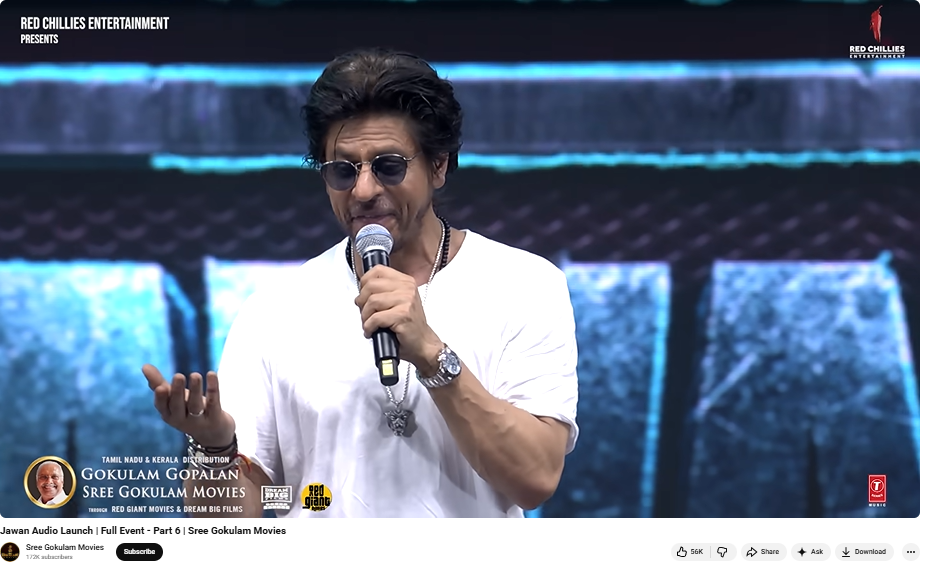
We then analysed key frames from the viral clip using Google Lens. During the investigation, we found an original video uploaded on September 10, 2023, on the YouTube channel of Sri Gokulam Movies. The footage was from the audio launch event of the film Jawan, where Shah Rukh Khan appeared in the same outfit seen in the viral clip.
वीडियो के डिस्क्रिप्शन में लिखा गया है, “शाहरुख़ In the original video, Shah Rukh Khan is seen speaking about the film, its cast, music, and his experience during the event. At no point does he mention the ‘Cockroach Janta Party’. The video description states that Shah Rukh Khan and the film’s team attended the audio launch event of Jawan in Chennai, where he praised music composer Anirudh Ravichander and thanked artists from the Tamil film industry. Additionally, the online trend related to the ‘Cockroach Janta Party’ emerged only in May 2026, whereas the original video is nearly three years old.
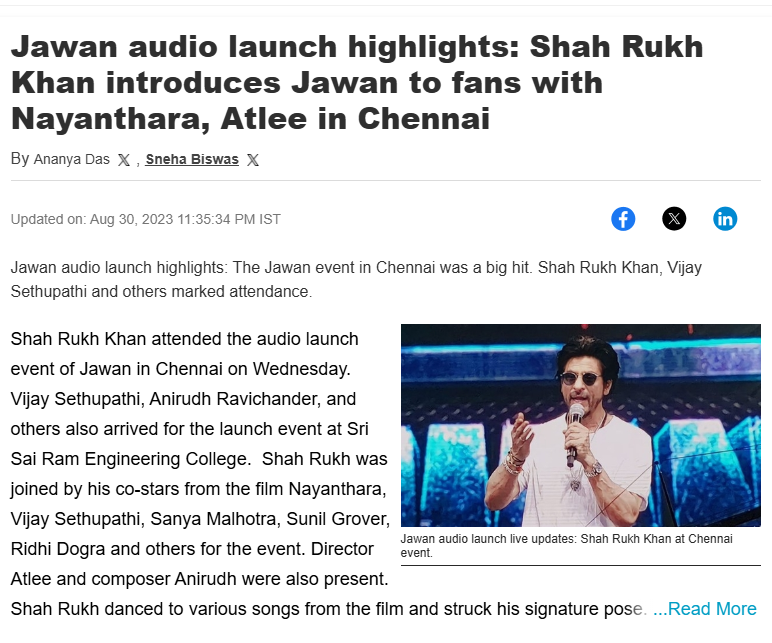
During the investigation, we also found several media reports covering the Jawan audio launch event, showing Shah Rukh Khan in the same attire as seen in the viral clip. For instance, a report published by Hindustan Times extensively covered the Chennai event, confirming that the viral footage was taken from the promotional event of the film.
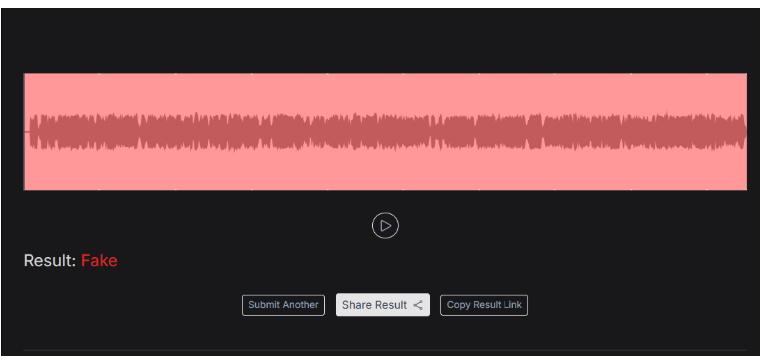
To further examine the audio in the viral clip, we analysed it using the AI detection tool Resemble AI. The tool flagged the voice in the video as likely fake and AI-generated.
Conclusion
The investigation clearly shows that the claim about Shah Rukh Khan supporting or joining the ‘Cockroach Janta Party’ (CJP) is false. The viral video is actually from the 2023 audio launch event of the film Jawan, while the audio added to the clip has been generated using AI.
