
#FactCheck -Viral Claim of Alcohol Ban in West Bengal by Amit Shah Is Fake, No Such Announcement Made
Executive Summary
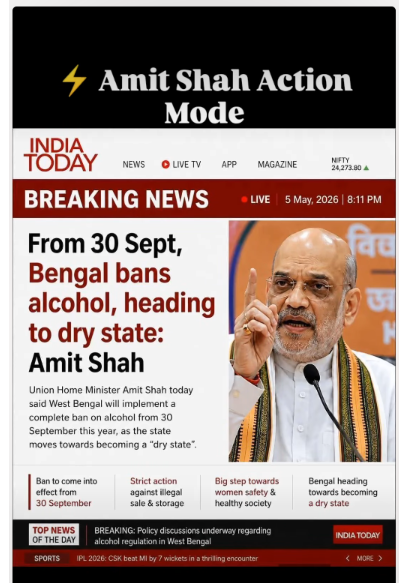
A graphic featuring Union Home Minister Amit Shah is being widely shared on social media, claiming that he has announced a complete ban on alcohol in West Bengal from September 30. The post further suggests that the state will move towards becoming a dry state. Notably, this claim surfaced soon after the BJP’s victory in the West Bengal Assembly elections. CyberPeace Research Wing research has found the viral claim to be false. Our research confirms that Home Minister Amit Shah has not made any such announcement.
Claim:
On Instagram, a user shared a viral graphic on May 8, 2026, alleging that Amit Shah announced a complete ban on alcohol in West Bengal starting September 30. The post link and archived version are provided below:
- https://www.instagram.com/reel/DYDy13zINV5/
- https://archive.ph/mYpZS
Fact Check
To verify the claim, we conducted a keyword-based search on Google. However, we did not find any credible media reports supporting the viral claim. Since the graphic carried the logo of India Today, we also checked the official website, YouTube channel, and social media handles of India Today. However, no matching report or graphic was found.
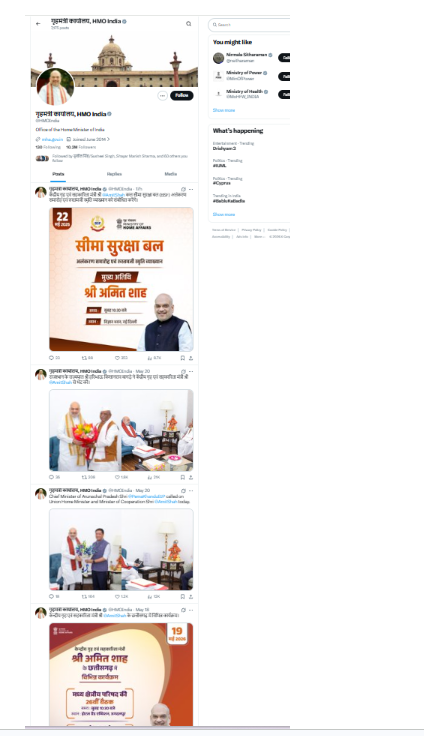
In the final step, we reviewed the official X account of the Ministry of Home Affairs. Even there, no statement or report confirming the viral claim was found. The relevant link is provided below:
- https://x.com/HMOIndia
Conclusion:
Our research confirms that Home Minister Amit Shah has made no such announcement regarding a complete alcohol ban in West Bengal.

Related Blogs
.webp)
Introduction
In the sprawling and ever-evolving landscape of cybercrime, phishing links, phoney emails, and dubious investment offers are no longer the only tools used by scammers. Cybercriminals are becoming skilled at taking advantage of commonplace digital behaviours, undermining confidence, and turning popular features of our most essential apps into weapons. A fast expanding international threat has been revealed by the National Cybercrime Threat Analytics Unit (NCTAU) of the Indian Cybercrime Coordination Centre(I4C)’s most recent advisory on “WhatsApp account renting”. This scam uses QR codes to trick users into connecting their WhatsApp accounts to fraudulent sites under the guise of a “quick income” opportunity. What initially appears innocuous turns into a tool for thieves to take control of accounts and use them for illicit purposes.
The Global Rise of Cyber Mule Networks
Initially the word “mule” in cybercrime networks referred to a bank account used, knowingly often unknowingly, to transfer or “launder” money obtained from fraud and illegal activities. In light of the evolving nature of this cybercrime, Cyber mules in the present scenario can be referred to as, individuals who knowingly or unknowingly allow their digital identities, devices, or bank accounts to be used for illegal activity.
Various cybersecurity companies as well as Europol and Interpol, have frequently cautioned that hackers are increasingly using digital mule recruiting, which frequently takes the form of the following:
- Work-from-home Offers
- Streams of passive income
- Monetisation of social media
- Roles for verification assistants
- Apps that earn commissions
Earlier versions involved money transfers through personal bank accounts . Criminals now want your digital identity rather than just your money, as the trend has been reported to be changing.
Scammers frequently “rent” victims’ Facebook, LINE, Telegram, and WeChat accounts in parts of Southeast Asia and Africa in order to conduct impersonation frauds or assist with criminal operations. The WhatsApp variant that is making its way to India is a logical progression, although it comes only with the widely used WhatsApp Web linked-device capability.
How the WhatsApp Account Renting Scam Works
I4C’s advisory dated 15th October, 2025, highlights a sophisticated yet psychologically simple scheme that exploits trust, curiosity, and the illusion of easy income.The scam’s lifetime is as follows:
1. The Hook: “Automatically Earn Passive Income”
Threat actors claim users can earn daily rewards by connecting their WhatsApp accounts to a new “partner platform” in their polished and professional Instagram and Facebook ads.
This strategy imitates international scam factories in Cambodia and Myanmar, where victims are lured into investment schemes or bogus tasks by social media advertisements.
2.The Redirect: Rogue APKs & Fake Websites
When victims click on the advertisement, they are sent to
- Fake dashboards for earnings
- Untrustworthy websites that imitate authentic financial interfaces
- Instructions for installing Android APKs from sources other than the Play Store
- These APKs often carry spyware or remote-access malware.
3.The Trap: Scanning a QR Code
The user is asked to scan a QR code through WhatsApp’s “Linked Devices” feature, which is normally used for WhatsApp Web.
Without ever touching the victim’s phone, the con artist obtains complete session access to their WhatsApp account as soon as the QR is scanned.
Threat actors are able to:
- Transmit and receive messages
- Get access to contact lists
- Participate in or start groups
- Assume the victim’s identity
- Conduct frauds using their identities
4.The Illusion: A Multi-Level Commission Structure
A pyramid-style earnings model is displayed to maintain credibility:
- 10% off direct invites
- 5% of secondary invites
- 2% of tertiary invitations
These figures are designed to encourage victims to recruit more users, increasing the number of compromised WhatsApp accounts.
5.The Misuse: “Mule WhatsApp accounts”
The victim’s account becomes a digital mule once it is connected, allowing fraudsters to:
- Start UPI fraud and phishing
- Distribute harmful links
- Impersonate the victim to scam their contacts
- Participate in bulk messaging campaigns
- Get additional mule accounts
Precautions Issued by I4C
I4C has advised citizens to take the following precautions:
- You could face criminal charges or similar consequences if you carelessly rent or link your WhatsApp account for money
- Installing APKs from non-official app shops should be avoided
- Advertisements that promise automatic revenue, referral bonuses, or passive income should be avoided.
- Regularly check linked devices on WhatsApp: Settings → Linked Devices
- Use WhatsApp’s Official support page to report hacked accounts or impersonation: https://www.whatsapp.com/contact/forms/1534459096974129
- Report financial fraud immediately by calling 1930 or visiting cybercrime.gov.in
CyberPeace Outlook
The WhatsApp account rental fraud is not an isolated phenomenon; rather, it is the latest mutation of a global cybercrime apparatus that feeds on social engineering, digital identity theft, and international mule networks. Its simplicity, all it takes to take over your digital life is a QR code scan, makes it especially hazardous. I4C’s timely warning serves as an important reminder that easy money is nearly always a trap in the digital world and that, if we let our guard down, our most reliable platforms can become attack surfaces. Stay informed, and stay safe. In order to protect our identities, data, and communities, cyber hygiene is now a must.
References
- https://www.cnbctv18.com/personal-finance/mule-account-fraud-on-the-rise-what-it-is-and-how-to-shttps://i4c.mha.gov.in/theme/resources/advisories/Mule%20Whatsapp%20V1.4.pdftay-safe-19662507.htm
- https://i4c.mha.gov.in/theme/resources/advisories/Mule%20Whatsapp%20V1.4.pdf

Executive Summary
A video is being widely shared on social media showing an Indian cargo vessel engulfed in flames. It is being claimed that the ship was carrying chemical weapons to Israel and was hit by a drone near the Strait of Hormuz off the coast of Oman, after which it caught fire. CyberPeace Research Wing research found the claim to be misleading. The viral video does not show any such incident. Instead, it shows an Indian cargo vessel on fire, but in a completely different context unrelated to any drone strike or weapons shipment allegation.
Claim
The video circulating online is being shared with the claim that it shows an Indian cargo ship carrying chemical weapons to Israel, which was struck by a drone near the Strait of Hormuz off the coast of Oman and subsequently caught fire. https://x.com/ThokaReturns/status/2070224570792251728 , https://x.com/ThokaReturns/status/2070224570792251728

FactCheck
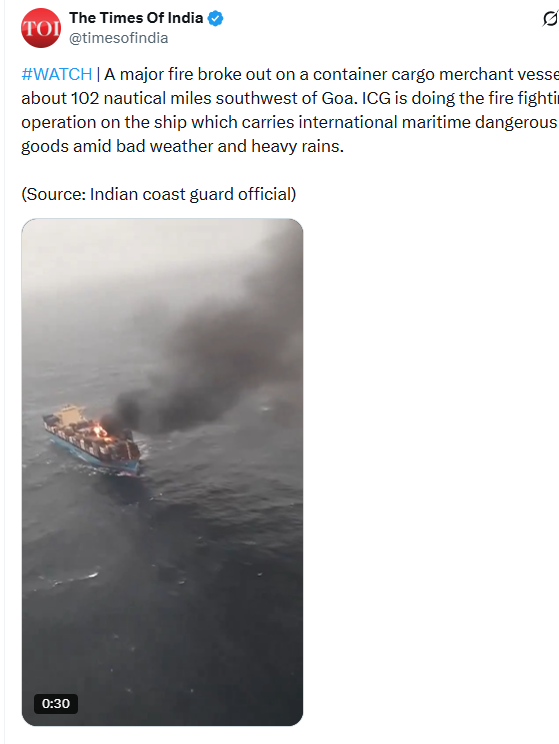
A reverse image search of keyframes from the viral video led us to a Times of India post dated July 19, 2024, on X (formerly Twitter), which contained the same visuals. The report stated that a major fire broke out on a container cargo vessel approximately 102 nautical miles southwest of Goa, following which the Indian Coast Guard launched firefighting operations. A comparison between the news footage and the viral video confirmed that both refer to the same incident. https://x.com/timesofindia/status/1814352708473856175
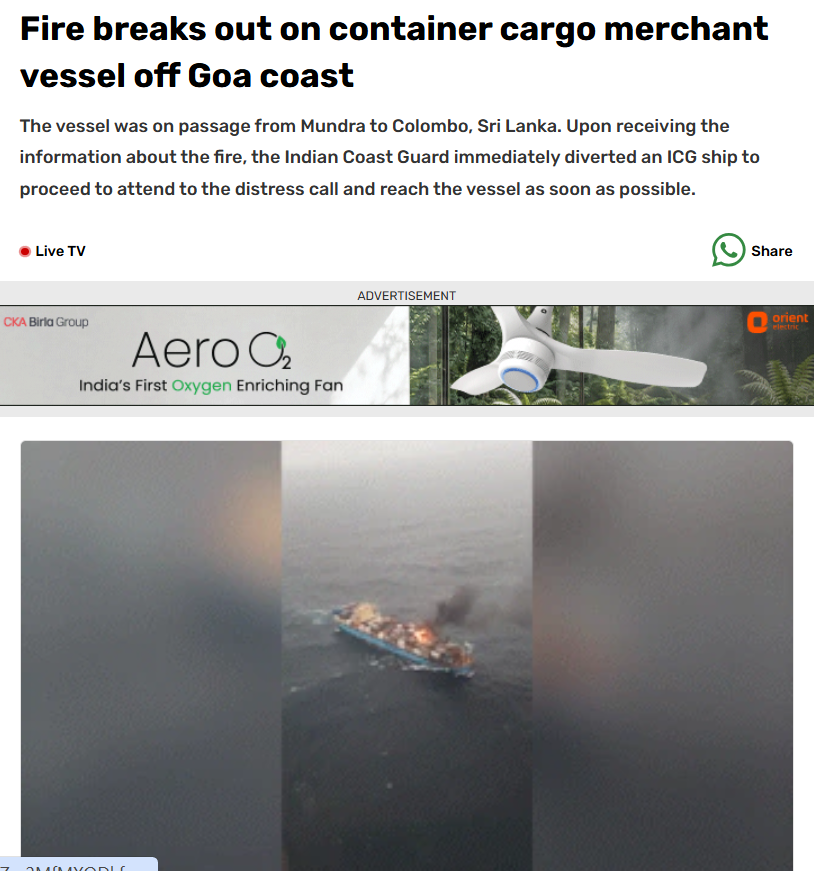
We also found an India Today report on the incident, which stated that the vessel was travelling from Mundra to Colombo, Sri Lanka, when the fire broke out. The Indian Coast Guard immediately diverted one of its ships to respond to the distress call. https://www.indiatoday.in/india/story/fire-breaks-out-container-cargo-merchant-vessel-off-goa-coast-rescue-ops-2569320-2024-07-19
Conclusion
Our research confirms that an old and unrelated video has been shared on social media as visuals of an Indian cargo vessel allegedly hit by a drone off the coast of Oman
Australia is set to make its most significant reform to online safety laws since the Online Safety Act 2021. On 8 September 2026, the government published a draft of the Online Safety Amendment (Digital Duty of Care) Bill 2026. This would shift the focus of the online safety regime from responding to harmful content to requiring platforms to take steps to prevent foreseeable harms. Consultation closed on 22 September 2026, and the government has signalled its intent to bring legislation to parliament this year. It should be noted that this is a draft document, and there may be changes before any law is made.
What the Bill Proposes
At its core is a single statutory duty: any person responsible for an online service must ensure, “so far as is reasonably practicable”, a safe online environment. The wording is borrowed from work health and safety law, a parallel the Rickard Review itself drew when recommending the duty. The bill would replace the Basic Online Safety Expectations and the industry codes and standards that currently govern harmful content, following a 12-month transition after Royal Assent.
Who Is Covered
The reach is deliberately wide. The duty applies to nine categories of “online service”: internet carriage services, social media, messaging services, designated internet services (websites and platforms), hosting services, search engines, app stores, equipment suppliers, and a new category for AI generation tools such as chatbots and image generators. It attaches both to the provider and to anyone in a position to exercise day-to-day control, so parent companies and subsidiaries could be caught. The minister may exempt low-risk services, and lawful private communications between consenting adults are excluded.
The “Reasonably Practicable” Test
Whether a provider has done enough is judged by weighing the likelihood and degree of harm, what the provider knows or ought reasonably to know, the availability and cost of safety measures, and the privacy impact of those measures. The privacy limb is notable: measures such as age assurance or AI moderation must not intrude on privacy in a way that is “grossly disproportionate” to the risk. Liability is systems-based, meaning a provider is judged on whether it maintains appropriate systems and processes, not on every individual piece of harmful content that slips through.
Three Tiers of Protection
The “safe online environment” is defined in three layers, each more demanding than the last:
- All people in Australia must be protected from seriously harmful material and conduct, including child sexual exploitation material, grooming, terrorism and violent extremism, and content promoting suicide or self-harm.
- Children under 18 must also be protected from material harmful to children, such as pornography, content promoting disordered eating, bullying, and content encouraging hostile attitudes towards women, as well as addictive design features.
- Children under 16 on social media must not be exposed to design features with negative behavioural impacts, regardless of whether they hold an account.
Design Features and “My Feed, My Way”
A distinctive element is the focus on how services are built. The Bill designates five categories of design feature as having negative behavioural impacts: recommender systems, endless feeds, feedback features such as likes and follower counts, time-limited content such as stories, and logged-in versions of these features. The minister could add more. Providers must manage these features appropriately, including by offering “user empowerment tools”. The flagship is “My Feed, My Way”, under which social media users could opt in to algorithmic recommendations or choose to see only content from accounts they follow, with the detail to be set by legislative instrument.
Compliance Obligations
Providers would need to complete a written risk assessment for each service at least annually and before making changes that could give rise to new risks. These assessments would need to be retained for six years and provided to the eSafety Commissioner within 30 days of a request. Additional requirements include transparency reporting, publication of safety information, accessible complaints processes, and, in some cases, an Australian point of contact.
The Bill also includes a number of other reforms, including take-down timeframes for removal notices reducing from 48 to 24 hours from the day after Royal Assent, the power for the Commissioner to direct the removal of 'nudify' apps, the ability to remove reposted material without a new complaint, and approved university researchers being given access to platform data.
Enforcement and Penalties
The Commissioner will have a range of tools available, including the power to issue formal warnings publicly, impose binding remedial directions, and obtain documents and sworn examinations. Civil pecuniary penalties up to 60,000 penalty units may be imposed for failure to comply with obligations, although for the largest platforms this represents a cap well below a hypothetical turnover-based calculation.
Implications
For businesses, the net is wider than just social media. So any website, app, messaging platform, hosting service or AI tool which is accessible in Australia may be subject to assessment. Risk assessments are effectively discoverable enforcement documents. As such they should be prepared with the same degree of rigour and regard for legal privilege as any document likely to come before a regulator. The reforms are also intersecting with the Privacy Act 'tranche two' draft, the Children's Online Privacy Code and the under-16 social media minimum age. So overlaps need to be mapped together. Uncertainty remains around whether compliance with existing codes would meet the new duty, and regulator guidance will be key.
For users, the likely benefits are greater control over algorithmic feeds, faster removal of harmful content and stronger protections for children. For regulators and policymakers, the bill represents a move from content-by-content moderation to regulation of the systems driving and amplifying harm.
Debate and Criticism
The proposal is contested. The Coalition has said it will oppose the Bill in its current form, citing risks to free speech and journalism. The US Government’s consultation submission warned that the Bill could encourage platforms to over-moderate and questioned how “foreseeable harm” would be defined. Academic commentary from Monash University observes that the Bill expressly protects privacy but not freedom of expression, while legal analysis points to broad delegated powers for the minister to expand the harms and services covered. The short consultation window of 18 days has also drawn comment.
Conclusion
The Digital Duty of Care Bill would change online safety in Australia from a complaints-and-takedown model to a proactive, design-focused duty with serious financial consequences. Because it is still an exposure draft, the sensible response is preparation rather than panic: work out whether your services are in scope, review existing safety and risk practices, map overlapping privacy and children’s obligations, and watch for the Bill’s introduction to Parliament.
