#FactCheck- Old March Strike Video from Tehran Falsely Linked to Recent Iran–Israel Attacks
Executive Summary
Following recent escalations between Iran and Israel, where both countries reportedly exchanged missile strikes over the weekend, a video is now circulating on social media claiming to show the latest attacks between the two nations. However, CyberPeace Research Wing research found that the viral video is not related to the recent developments. The footage is actually from a March incident involving reported US-Israeli strikes in Tehran’s Jannat Abad area.
Claim
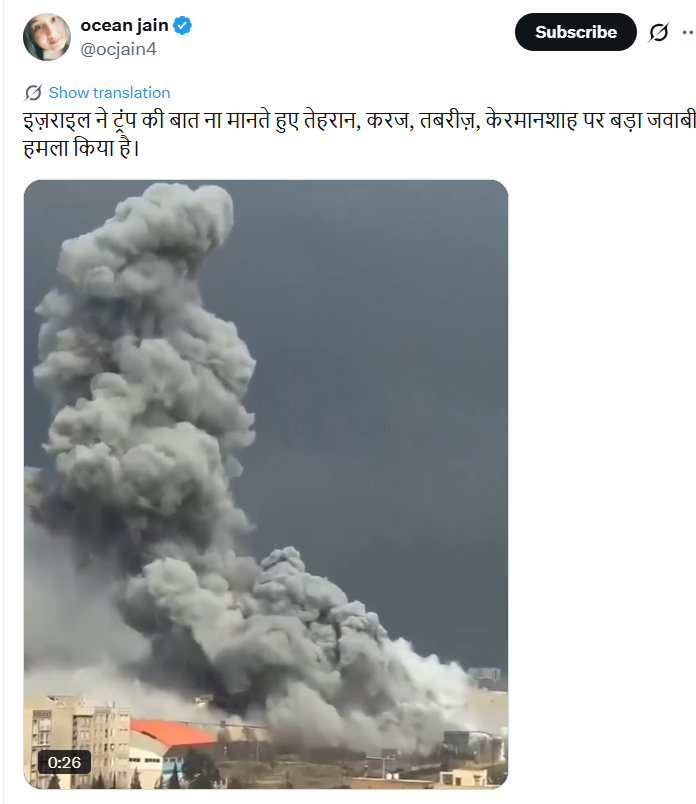
An X (formerly Twitter) user shared the viral video with the caption:“Israel, ignoring Trump’s advice, has carried out a major retaliatory strike on Tehran, Karaj, Tabriz, and Kermanshah.”
https://x.com/ocjain4/status/2063844698138239357?s=20
The video is being widely shared with claims that it shows recent Iran–Israel missile exchanges following Sunday’s reported attacks.
Fact Check
To verify the claim, we extracted keyframes from the viral video and conducted a reverse image search. The research led us to a post from BBC Persian journalist Ghoncheh Habibiazad’s X account dated 3 March. The video was shared with a caption describing it as showing a strike in Tehran attributed to US-Israeli action.
https://x.com/GhonchehAzad/status/2028632595156598874?s=20

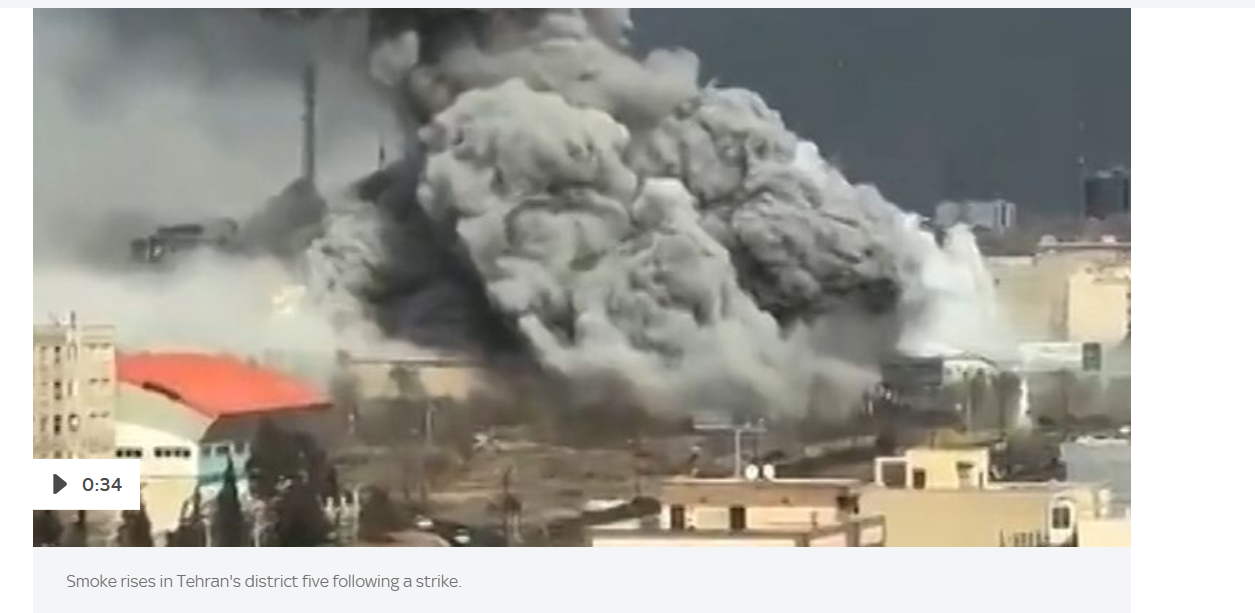
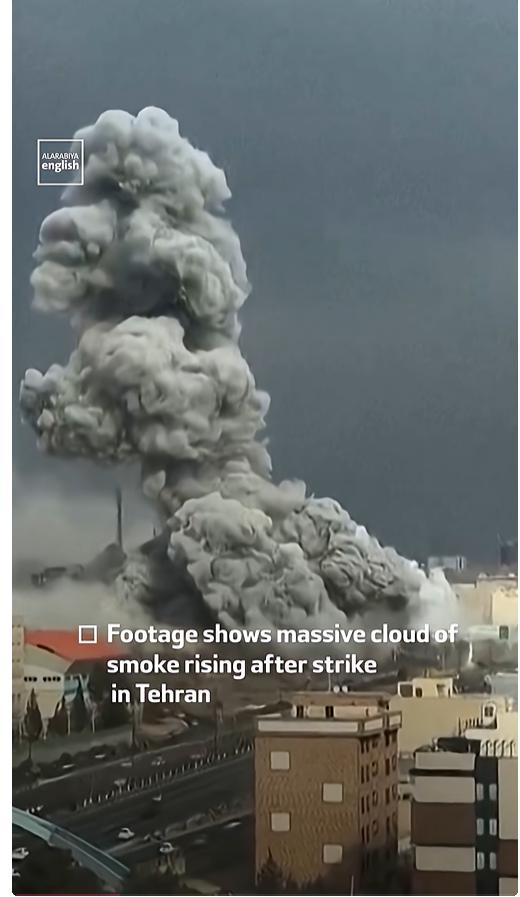
Further verification found the same footage published by Sky News and uploaded on Al Arabiya’s YouTube channel on 3 March 2026. The accompanying descriptions referred to smoke rising from Tehran’s District 5 and near the Hemmat Expressway following the strike.
https://news.sky.com/video/smoke-seen-rising-after-strike-in-tehran-13514731
https://www.youtube.com/shorts/AceFmYiBkuA
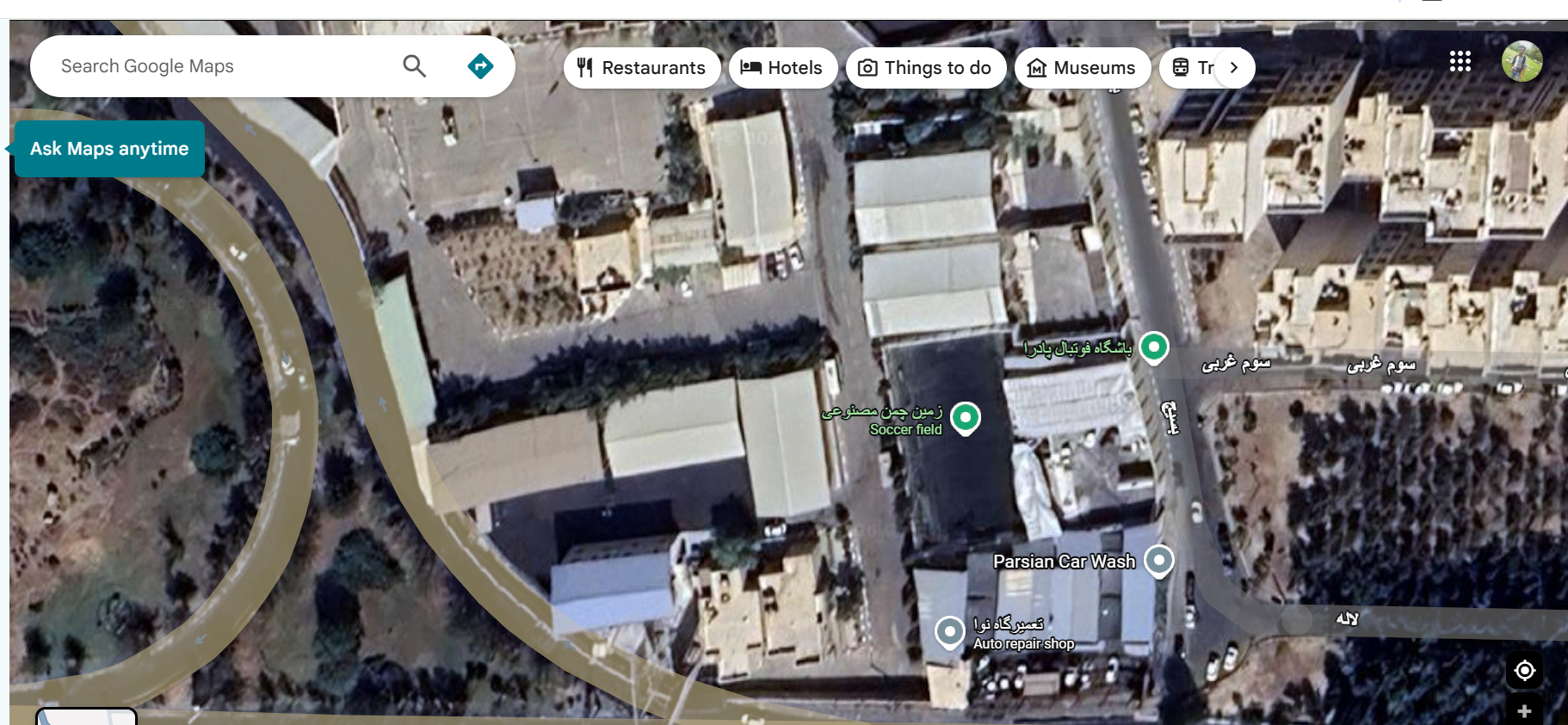
Additionally, a comparison using Google Satellite View confirmed that the location seen in the viral video matches the same area shown in the earlier March footage shared by BBC-affiliated reporting.
Conclusion
Our research confirms that the viral video has no connection to the recent Iran–Israel missile exchanges. The footage is from a March incident showing reported strikes in Tehran’s Jannat Abad area, and is being misleadingly shared as a recent escalation between the two countries.
Related Blogs

The United Nations in December 2019 passed a resolution that established an open-ended ad hoc committee. This committee was tasked to develop a ‘comprehensive international convention on countering the use of ICTs for criminal purposes’. The UN Convention on Cybercrime is an initiative of the UN member states to foster the principles of international cooperation and establish legal frameworks to provide mechanisms for combating cybercrime. The negotiations for the convention had started in early 2022. It became the first binding international criminal justice treaty to have been negotiated in over 20 years upon its adoption by the UN General Assembly.
This convention addresses the limitations of the Budapest Convention on Cybercrime by encircling a broader range of issues and perspectives from the member states. The UN Convention against Cybercrime will open for signature at a formal ceremony hosted in Hanoi, Viet Nam, in 2025. The convention will finally enter into force 90 days after being ratified by the 40th signatory.
Objectives and Features of the Convention
- The UN Convention against Cybercrime addresses various aspects of cybercrime. These include prevention, investigation, prosecution and international cooperation.
- The convention aims to establish common standards for criminalising cyber offences. These include offences like hacking, identity theft, online fraud, distribution of illegal content, etc. It outlines procedural and technical measures for law enforcement agencies for effective investigation and prosecution while ensuring due process and privacy protection.
- Emphasising the importance of cross-border collaboration among member states, the convention provides mechanisms for mutual legal assistance, extradition and sharing of information and expertise. The convention aims to enhance the capacity of developing countries to combat cybercrime through technical assistance, training, and resources.
- It seeks to balance security measures with the protection of fundamental rights. The convention highlights the importance of safeguarding human rights and privacy in cybercrime investigations and enforcement.
- The Convention emphasises the importance of prevention through awareness campaigns, education, and the promotion of a culture of cybersecurity. It encourages collaborations through public-private partnerships to enhance cybersecurity measures and raise awareness, such as protecting vulnerable groups like children, from cyber threats and exploitation.
Key Provisions of the UN Cybercrime Convention
Some key provisions of the Convention are as follows:
- The convention differentiates cyber-dependent crimes like hacking from cyber-enabled crimes like online fraud. It defines digital evidence and establishes standards for its collection, preservation, and admissibility in legal proceedings.
- It defines offences against confidentiality, integrity, and availability of computer data and includes unauthorised access, interference with data, and system sabotage. Further, content-related offences include provisions against distributing illegal content, such as CSAM and hate speech. It criminalises offences like identity theft, online fraud and intellectual property violations.
- LEAs are provided with tools for electronic surveillance, data interception, and access to stored data, subject to judicial oversight. It outlines the mechanisms for cross-border investigations, extradition, and mutual legal assistance.
- The establishment of a central body to coordinate international efforts, share intelligence, and provide technical assistance includes the involvement of experts from various fields to advise on emerging threats, legal developments, and best practices.
Comparisons with the Budapest Convention
The Budapest Convention was adopted by the Committee of Ministers of the Council of Europe at the 109th Session on 8 November 2001. This Convention was the first international treaty that addressed internet and computer crimes. A comparison between the two Conventions is as follows:
- The global participation in the UNCC is inclusive of all UN member states whereas the latter had primarily European with some non-European signatories.
- The scope of the UNCC is broader and covers a wide range of cyber threats and cybercrimes, whereas the Budapest convention is focused on specific offences like hacking and fraud.
- UNCC strongly focuses on privacy and human rights protections and the Budapest Convention had limited focus on human rights.
- UNCC has extensive provisions for assistance to developing countries and this is in contrast to the Budapest Convention which did not focus much on capacity building.
Future Outlook
The development of the UNCC was a complex process. The diverse views on key issues have been noted and balancing different legal systems, cultural perspectives and policy priorities has been a challenge. The rapid technology evolution that is taking place requires the Convention to be adaptable to effectively address emerging cyber threats. Striking a balance remains a critical concern. The Convention aims to provide a blended approach to tackling cybercrime by addressing the needs of countries, both developed and developing.
Conclusion
The resolution containing the UN Convention against Cybercrime is a step in global cooperation to combat cybercrime. It was adopted without a vote by the 193-member General Assembly and is expected to enter into force 90 days after ratification by the 40th signatory. The negotiations and consultations are finalised for the Convention and it is open for adoption and ratification by member states. It seeks to provide a comprehensive legal framework that addresses the challenges posed by cyber threats while respecting human rights and promoting international collaboration.
References
- https://consultation.dpmc.govt.nz/un-cybercrime-convention/principlesandobjectives/supporting_documents/Background.pdf
- https://news.un.org/en/story/2024/12/1158521
- https://www.interpol.int/en/News-and-Events/News/2024/INTERPOL-welcomes-adoption-of-UN-convention-against-cybercrime#:~:text=The%20UN%20convention%20establishes%20a,and%20grooming%3B%20and%20money%20laundering
- https://www.cnbctv18.com/technology/united-nations-adopts-landmark-global-treaty-to-combat-cybercrime-19529854.htm

Introduction
AI has revolutionized the way we look at growing technologies. AI is capable of performing complex tasks in fasten time. However, AI’s potential misuse led to increasing cyber crimes. As there is a rapid expansion of generative AI tools, it has also led to growing cyber scams such as Deepfake, voice cloning, cyberattacks targeting Critical Infrastructure and other organizations, and threats to data protection and privacy. AI is empowered by giving the realistic output of AI-created videos, images, and voices, which cyber attackers misuse to commit cyber crimes.
It is notable that the rapid advancement of technologies such as generative AI(Artificial Intelligence), deepfake, machine learning, etc. Such technologies offer convenience in performing several tasks and are capable of assisting individuals and business entities. On the other hand, since these technologies are easily accessible, cyber-criminals leverage AI tools and technologies for malicious activities or for committing various cyber frauds. By such misuse of advanced technologies such as AI, deepfake, and voice clones. Such new cyber threats have emerged.
What is Deepfake?
Deepfake is an AI-based technology. Deepfake is capable of creating realistic images or videos which in actuality are created by machine algorithms. Deepfake technology, since easily accessible, is misused by fraudsters to commit various cyber crimes or deceive and scam people through fake images or videos that look realistic. By using the Deepfake technology, cybercriminals manipulate audio and video content which looks very realistic but, in actuality, is fake. Voice cloning is also a part of deepfake. To create a voice clone of anyone's, audio can be deepfaked too, which closely resembles a real one but, in actuality, is a fake voice created through deepfake technology.
How Deepfake Can Harm Organizations or Enterprises?
- Reputation: Deepfakes have a negative impact on the reputation of the organization. It’s a reputation which is at stake. Fake representations or interactions between an employee and user, for example, misrepresenting CEO online, could damage an enterprise’s credibility, resulting in user and other financial losses. To be protective against such incidents of deepfake, organisations must thoroughly monitor online mentions and keep tabs on what is being said or posted about the brand. Deepfake-created content can also be misused to Impersonate leaders, financial officers and officials of the organisation.
- Misinformation: Deepfake can be used to spread misrepresentation or misinformation about the organisation by utilising the deepfake technology in the wrong way.
- Deepfake Fraud calls misrepresenting the organisation: There have been incidents where bad actors pretend to be from legitimate organisations and seek personal information. Such as helpline fraudsters, fake representatives from hotel booking departments, fake loan providers, etc., where bad actors use voice clones or deepfake-oriented fake video calls in order to propose themselves as belonging to legitimate organisations and, in actuality, they are deceiving people.
How can organizations combat AI-driven cybercrimes such as deepfake?
- Cybersecurity strategy: Organisations need to keep in place a wide range of cybersecurity strategies or use advanced tools to combat the evolving disinformation and misrepresentation caused by deepfake technology. Cybersecurity tools can be utilised to detect deepfakes.
- Social media monitoring: Social media monitoring can be done to detect any unusual activity. Organisations can select or use relevant tools and implement technologies to detect deepfakes and demonstrate media provenance. Real-time verification capabilities and procedures can be used. Reverse image searches, like TinEye, Google Image Search, and Bing Visual Search, can be extremely useful if the media is a composition of images.
- Employee Training: Employee education on cybersecurity will also play a significant role in strengthening the overall cybersecurity posture of the organisation.
Conclusion
There have been incidents where AI-driven tools or technology have been misused by cybercriminals or bad actors. Synthetic videos developed by AI are used by bad actors. Generative AI has gained significant popularity for many capabilities that produce synthetic media. There are concerns about synthetic media, such as its misuse of disinformation operations designed to influence the public and spread false information. In particular, synthetic media threats that organisations most often face include undermining the brand, financial gain, threat to the security or integrity of the organisation itself and Impersonation of the brand’s leaders for financial gain.
Synthetic media attempts to target organisations intending to defraud the organisation for financial gain. Example includes fake personal profiles on social networking sites and deceptive deepfake calls, etc. The organisation needs to have the proper cyber security strategy in place to combat such evolving threats. Monitoring and detection should be performed by the organisations and employee training on empowering on cyber security will also play a crucial role to effectively deal with evolving threats posed by the misuse of AI-driven technologies.
References:
- https://media.defense.gov/2023/Sep/12/2003298925/-1/-1/0/CSI-DEEPFAKE-THREATS.PDF
- https://www.securitymagazine.com/articles/98419-how-to-mitigate-the-threat-of-deepfakes-to-enterprise-organizations

Introduction
After the tragic bomb blast at RedFort on November 10, 2025, there is a trail of misinformation and false narratives spread rapidly across social media platforms, messaging and news channels. It can not only unfold into a public misunderstanding but can also incite panic, communal tensions and endanger lives. To prevent all of these from happening, we, as responsible citizens, can play a critical role by verifying information before sharing it with friends, family, or colleagues. This article provides guidance on practical, evidence-based strategies to navigate the information landscape and protect yourself and your community from the harm caused by misinformation and disinformation.
Digital Scams in the Aftermath of the Blast
Cybercriminals increased their activity in the hours after the Red Fort explosion, using the country’s sorrow as a chance to take advantage of fear.
Numerous allegations surfaced of residents receiving threatening calls that falsely claimed they were “digitally arrested” or that their phones, bank accounts, or Aadhaar were being “seized for investigation”, accusing them of being involved in the explosion. These fictitious intimidation calls sent innocent people into worry, anxiety, and doubt spirals.
The pattern is common after major national crises:
- Fear rises.
- People seek urgent answers.
- Cybercriminals exploit the confusion.
Knowing this makes it easier for us to remain watchful. No law enforcement organisation uses phone conversations, WhatsApp communications, or threats of “digital detention” to make arrests or conduct investigations.
Verify breaking news from trusted official channels
Whenever a crisis like bomb blasts occurs, people look for information on social media, news channels, and YouTube channels to stay fully informed about the situation. This is a very chaotic moment, and due to the lack of government verification of the initial information, false news spread rapidly.
Where to seek verified information:
a. Press Information Bureau (PIB): The official government news agency that, from time to time, clarifies viral news.
b. Delhi Police Official Channels: Check social media handles of Delhi Police.
c. Ministry of Home Affairs (MHA): MHA is responsible for internal security, and gives information about this information through official press releases and notifications.
d. Major Credible news outlets: Some news channels can be trusted with news, as they typically verify information before publishing, like The Hindu, Indian Express.
What to do:
Cross-check every unverified social media post and news that you come across from credible news channels and official government press releases.
Verify Images and videos using reverse search tools
Recently, many social media handles have been sharing old photos of different bomb blasts from Ukraine, Israel, and Palestine in the name of the Red Fort blasts. While it can create a false narrative, the same should be verified before sharing.
Reliable fact-checking resources and how to use them.
Every country has dedicated fact-checking organisations that systematically verify viral claims.
Fact-checking organisations based in India:
a. PIB Fact Check (https://factcheck.pib.gov.in/ )
· It is the official fact-checking unit of the PIB, which focuses on demystifying government-related misinformation.
· email: socialmedia@pib.gov.in
· Telegram: http://t.me/PIB_FactCheck
· Follow it on: Twitter (@PIBFactCheck), Facebook, Instagram, Telegram and WhatsApp.
How to use these resources:
· Whenever you come across any viral post, use exact keywords or quotes to find those on these resources.
· Look for the verdict (true, false, misleading), then share the verified fact-checks with your network to debunk false narratives.
Practice Digital Hygiene and Be Cautious When Sharing
Digital hygiene refers to the practices and habits individuals adopt to maintain a healthy and secure digital lifestyle. Simple digital practices can restrict the spread of misinformation. A vigilant individual can reduce the spread of misinformation. It can be done by below steps
i. Check URLs and Links: We can verify the URLs and links of any news and websites using different tools to check the credibility of any news
ii. How to Evaluate the Trustworthiness of Sources:
· Verify if the account sharing the information has a blue checkmark on most platforms.
· Examine the account's background, whether it is a recognised media source, an official government profile, or a newly created anonymous account?
· Approach posts featuring intense emotional language ("URGENT!", "SHOCKING!", "MUST SHARE!") with scepticism.
· Refrain from posting screenshots of tweets or posts while providing a link to the source, allowing others to confirm its validity.
iii. Before You Distribute:
· Question yourself: "Am I certain this is accurate based on a reliable source?"
· Avoid the temptation to share breaking news immediately; hold off until it has been confirmed by government sources.
· If you're uncertain, include a comment such as "I haven't confirmed this yet; please consult reliable sources" instead of sharing unverified information.
· Reflect on the consequences, as it might lead to panic, provoke communal violence, or damage an individual's reputation
6. How to report misinformation to platforms and authorities?
While it is important to verify news before sharing it to prevent fake news, it is also important to report it to reduce misinformation and the violence caused due to it. On social media like Facebook, Instagram, Twitter/X, WhatsApp, and Telegram, anyone can report the same on the platform.
Reporting to the Government Authorities:
a. PIB Fact Check WhatsApp (+91 8799711259):
Send Screenshots or texts of suspected government-related misinformation for verification, and then an automated acknowledgement is generated.
b. Delhi Police Cyber Crime Unit
Cyber Crimes such as Email Frauds, Social Media Crimes, Mobile App-related crimes, Business Email Compromise, Data Theft, Ransomware, Net Banking/ ATM Frauds and fake calls frauds, insurance frauds, lottery scam, bitcoin, cheating scams, online transactions frauds can be reported to the Delhi Police Cyber Crime Unit.
7. Quick checklist: What to do When You See Breaking News
· Wait before sharing any breaking news.
· Go through official channels like PIB and other official channels like MHA.
· If not available there, then cross-reference it from 2-3 credible news sources for the same information.
· Check timestamps and metadata, and compare metadata dates with claims about when events occurred.
· In case you find any information, news or any social media posts as misleading, then report the same.
CyberPeace Resolves: Pause. Reflect. Then Respond
Misinformation becomes the infection that spreads the fastest when people are confused and afraid. Every citizen is urged by CyberPeace to remain composed, stand tall, and not panic, particularly in times of national emergency.
Prior to experiencing an emotional response to any concerning call, message, or widely shared news:
Pause. Reflect. Acknowledge.
- Pause before sharing or responding.
- Reflect on whether the information is from a credible source.
- Acknowledge what you know—and what is just rumour.
CyberPeace is still dedicated to helping people and communities deal with online dangers, safeguard mental health, and dispel false information with clarity and truth.