
#FactCheck- Edited Navbharat Times Postcard Falsely Attributes Statement on Gold Sales to PM Modi
Executive Summary
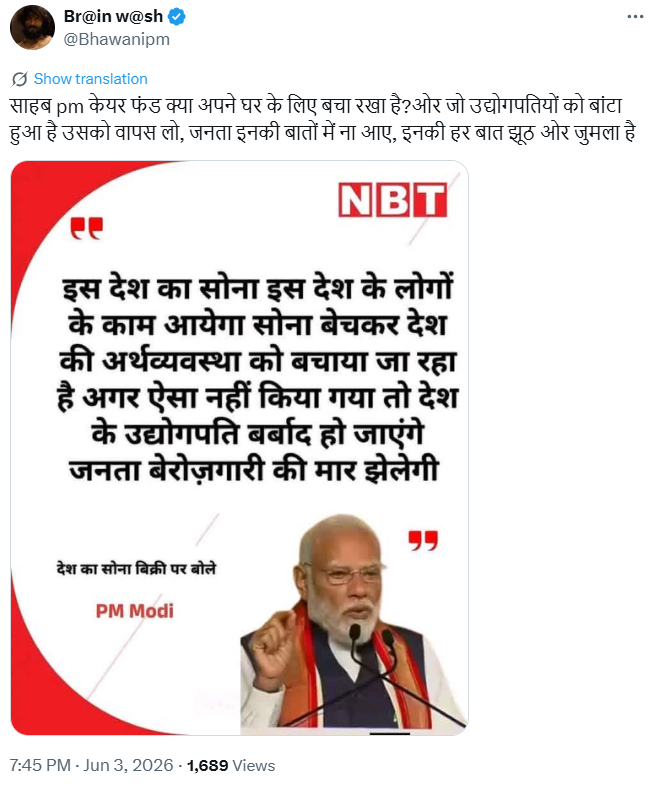
A postcard carrying the logo of Navbharat Times and featuring Prime Minister Narendra Modi is being widely shared on social media. The postcard quotes Modi as allegedly saying, “The gold of this country will be used for the people of this country. Gold is being sold to save the economy. If this is not done, the country's industrialists will be ruined and people will suffer from unemployment.”Based on this postcard, users are claiming that Prime Minister Modi justified the sale of the country's gold reserves by saying it was necessary to protect the economy and prevent industrialists from facing losses. However, CyberPeace Research Wing research found that Prime Minister Modi never made such a statement. The viral Navbharat Times postcard has been digitally edited.
Claim
An X user with the handle “Brainwash” shared the postcard and wrote: “Sir, have you kept the PM CARES Fund for your own household? Take back the money distributed to industrialists. People should not fall for these claims. Everything they say is false and mere rhetoric.”
https://x.com/Bhawanipm/status/2062259463084785666
Fact Check
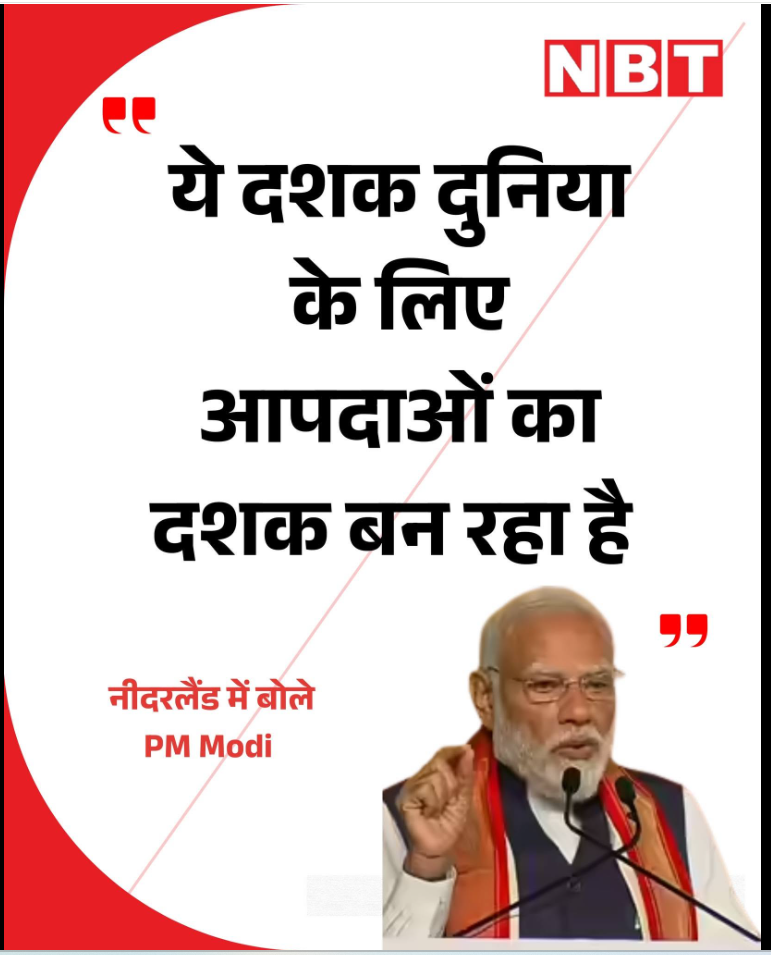
To verify the claim, we conducted keyword searches related to the purported statement. However, we found no credible reports, speeches, interviews, or official records in which Prime Minister Modi made such remarks about selling the country's gold reserves. We then examined the viral postcard and searched the social media handles of Navbharat Times for the original post. During this process, we found a similar postcard published on the Facebook page of Navbharat Times Uttar Pradesh on May 16, 2026. The design, layout, and image matched the viral postcard. However, the original post carried a completely different quote attributed to Prime Minister Modi.
The original postcard quoted Modi as saying: “This decade is becoming a decade of disasters for the world.”
https://www.facebook.com/photo/?fbid=1505172121619709&set=a.685493923587537
Conclusion
Prime Minister Narendra Modi has not made any statement claiming that the country's gold is being sold to save the economy or to protect industrialists from losses. The viral Navbharat Times postcard has been digitally edited, and the quote attributed to Modi is fabricated.

Related Blogs
Executive Summary:
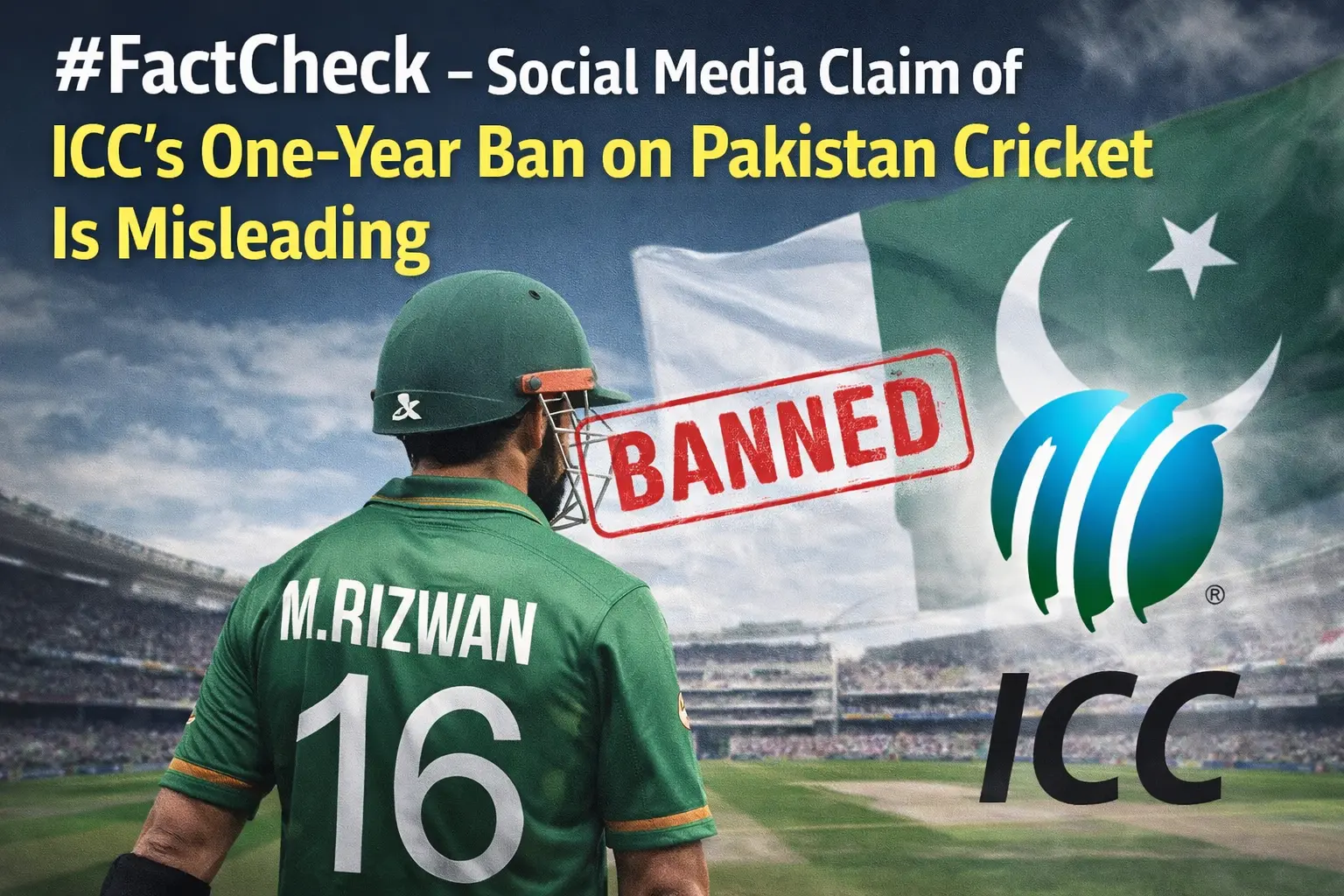
A purported media release allegedly issued in the name of the International Cricket Council (ICC) is being widely circulated on social media. The release claims that the ICC has decided to impose a one-year ban on Pakistan cricket. CyberPeace’s research found this claim to be false.The research revealed that the media release circulating on social media is fake, and no such letter or official statement has been issued by the ICC.
Claim:
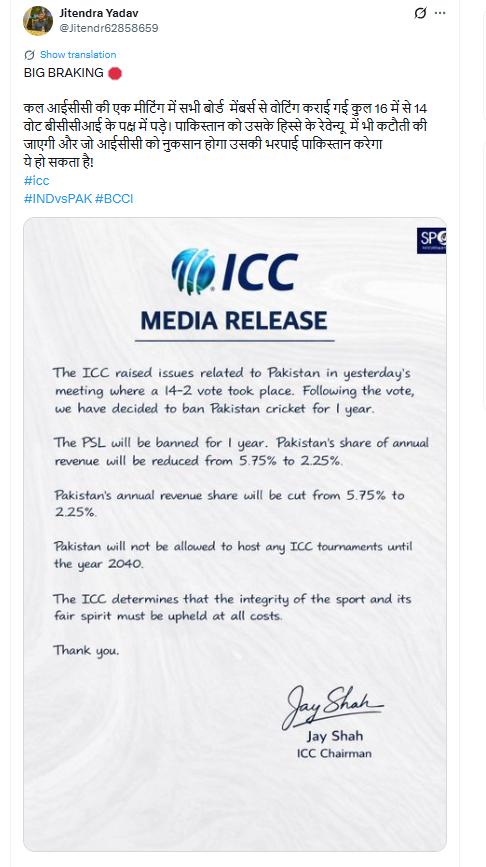
On social media platform X (formerly Twitter), a user shared the viral letter on February 3, 2026, claiming that an ICC meeting was held in which board members voted on issues related to Pakistan. The post alleged that 14 out of 16 votes were cast in favour of the BCCI. The user further claimed that Pakistan’s share of ICC revenue would be reduced and that Pakistan might be asked to compensate for losses incurred by the ICC.
The viral letter, written in English, stated that matters related to Pakistan were discussed in an ICC meeting and that a 14–2 majority vote led to the decision to impose a one-year ban on Pakistan cricket. It further claimed that the Pakistan Super League (PSL) would be suspended for one year, Pakistan’s annual revenue share would be reduced from 5.75 percent to 2.25 percent, and Pakistan would not be allowed to host any ICC tournaments until 2040. The letter also claimed that these decisions were taken to safeguard the integrity and spirit of the game. Links to the viral post, archive link, and screenshots can be seen below.
Fact Check:
To verify the viral claim, CyberPeace conducted a Google search using relevant keywords. However, no credible or reliable media reports supporting the claim were found. In the next step of the research , an official press release uploaded on DD Sports’ Facebook page on February 2, 2026, was found. The press release responded to Pakistan’s decision not to play against India in a Group A match. The DD Sports statement said that the Pakistan Cricket Board should consider the long-term and serious implications of such a decision, as it could impact the global cricket ecosystem—of which Pakistan is itself a member and beneficiary.
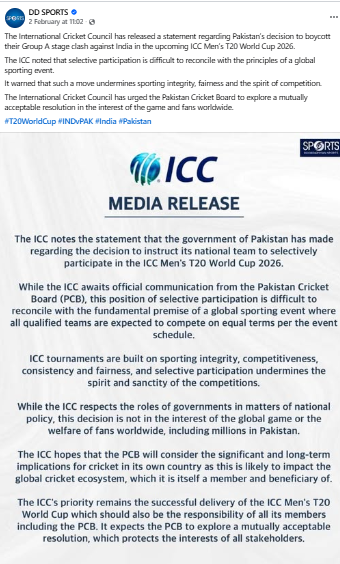
Notably, the official press release made no mention of any ban on Pakistan cricket, reduction in revenue share, suspension of the PSL, or restrictions on hosting ICC tournaments, contrary to the claims made in the viral letter. Further, the same official statement was found published on the ICC’s website on February 1, 2026. This release also did not mention any decision related to banning Pakistan cricket or barring the country from hosting ICC tournaments for the next 40 years.
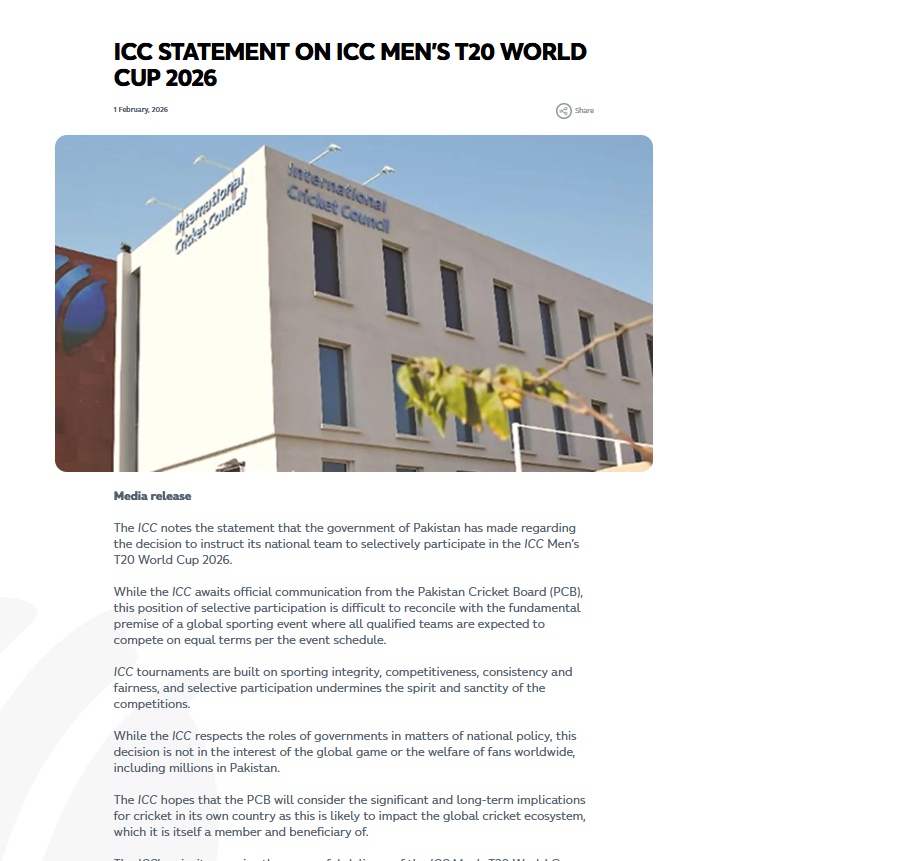
Conclusion
CyberPeace concludes that the media release circulating on social media is fake. The ICC has not issued any official letter or statement announcing a one-year ban on Pakistan cricket, revenue cuts, or restrictions on hosting ICC tournaments.

Introduction
In the past few decades, technology has rapidly advanced, significantly impacting various aspects of life. Today, we live in a world shaped by technology, which continues to influence human progress and culture. While technology offers many benefits, it also presents certain challenges. It has increased dependence on machines, reduced physical activity, and encouraged more sedentary lifestyles. The excessive use of gadgets has contributed to social isolation. Different age groups experience the negative aspects of the digital world in distinct ways. For example, older adults often face difficulties with digital literacy and accessing information. This makes them more vulnerable to cyber fraud. A major concern is that many older individuals may not be familiar with identifying authentic versus fraudulent online transactions. The consequences of such cybercrimes go beyond financial loss. Victims may also experience emotional distress, reputational harm, and a loss of trust in digital platforms.
Why Senior Citizens Are A Vulnerable Target
Digital exploitation involves a variety of influencing tactics, such as coercion, undue influence, manipulation, and frequently some sort of deception, which makes senior citizens easy targets for scammers. Senior citizens have been largely neglected in research on this burgeoning type of digital crime. Many of our parents and grandparents grew up in an era when politeness and trust were very common, making it difficult for them to say “no” or recognise when someone was attempting to scam them. Seniors who struggle with financial stability may be more likely to fall for scams promising financial relief or security. They might encounter obstacles in learning to use new technologies, mainly due to unfamiliarity. It is important to note that these factors do not make seniors weak or incapable. Rather, it is the responsibility of the community to recognise and address the unique vulnerabilities of our senior population and work to prevent them from falling victim to scams.
Senior citizens are the most susceptible to social engineering attacks. Scammers may impersonate people, such as family members in distress, government officials, and deceive seniors into sending money or sharing personal information. Some of them are:
- The grandparent scam
- Tech support scam
- Government impersonation scams
- Romance scams
- Digital arrest
Protecting Senior Citizens from Digital Scams
As a society, we must focus on educating seniors about common cyber fraud techniques such as impersonation of family members or government officials, the use of fake emergencies, or offers that seem too good to be true. It is important to guide them on how to verify suspicious calls and emails, caution them against sharing personal information online, and use real-life examples to enhance their understanding.
Larger organisations and NGOs can play a key role in protecting senior citizens from digital scams by conducting fraud awareness training, engaging in one-on-one conversations, inviting seniors to share their experiences through podcasts, and organising seminars and workshops specifically for individuals aged 60 and above.
Safety Tips
In today's digital age, safeguarding oneself from cyber threats is crucial for people of all ages. Here are some essential steps everyone should take at a personal level to remain cyber secure:
- Ensuring that software and operating systems are regularly updated allows users to benefit from the latest security fixes, reducing their vulnerability to cyber threats.
- Avoiding the sharing of personal information online is also essential. Monitoring bank statements is equally important, as it helps in quickly identifying signs of potential cybercrime. Reviewing financial transactions and reporting any unusual activity to the bank can assist in detecting and preventing fraud.
- If suspicious activity is suspected, it is advisable to contact the company directly using a different phone line. This is because cybercriminals can sometimes keep the original line open, leading individuals to believe they are speaking with a legitimate representative. In such cases, attackers may impersonate trusted organisations to deceive users and gain sensitive information.
- If an individual becomes a victim of cybercrime, they should take immediate action to protect their personal information and seek professional guidance.
- Stay calm and respond swiftly and wisely. Begin by collecting and preserving all evidence—this includes screenshots, suspicious messages, emails, or any unusual activity. Report the incident immediately to the police or through an official platform like www.cybercrime.gov.in and the helpline number 1930.
- If financial information is compromised, the affected individual must alert their bank or financial institution without delay to secure their accounts. They should also update passwords and implement two-factor authentication as additional safeguards.
Conclusion: Collective Action for Cyber Dignity and Inclusion
Elder abuse in the digital age is an invisible crisis. It’s time we bring it into the spotlight and confront it with education, empathy, and collective action. Safeguarding senior citizens from cybercrime necessitates a comprehensive approach that combines education, vigilance, and technological safeguards. By fostering awareness and providing the necessary tools and support, we can empower senior citizens to navigate the digital world safely and confidently. Let us stand together to support these initiatives, to be the guardians our elders deserve, and to ensure that the digital world remains a place of opportunity, not exploitation.
REFERENCES -
- https://portal.ct.gov/ag/consumer-issues/hot-scams/the-grandparents-scam
- https://www.fbi.gov/how-we-can-help-you/scams-and-safety/common-frauds-and-scams/tech-support-scams
- https://consumer.ftc.gov/articles/how-avoid-government-impersonation-scam
- https://www.jpmorgan.com/insights/fraud/fraud-mitigation/helping-your-elderly-and-vulnerable-loved-ones-avoid-the-scammers
- https://www.fbi.gov/how-we-can-help-you/scams-and-safety/common-frauds-and-scams/romance-scams
- https://www.jpmorgan.com/insights/fraud/fraud-mitigation/helping-your-elderly-and-vulnerable-loved-ones-avoid-the-scammers

Executive Summary
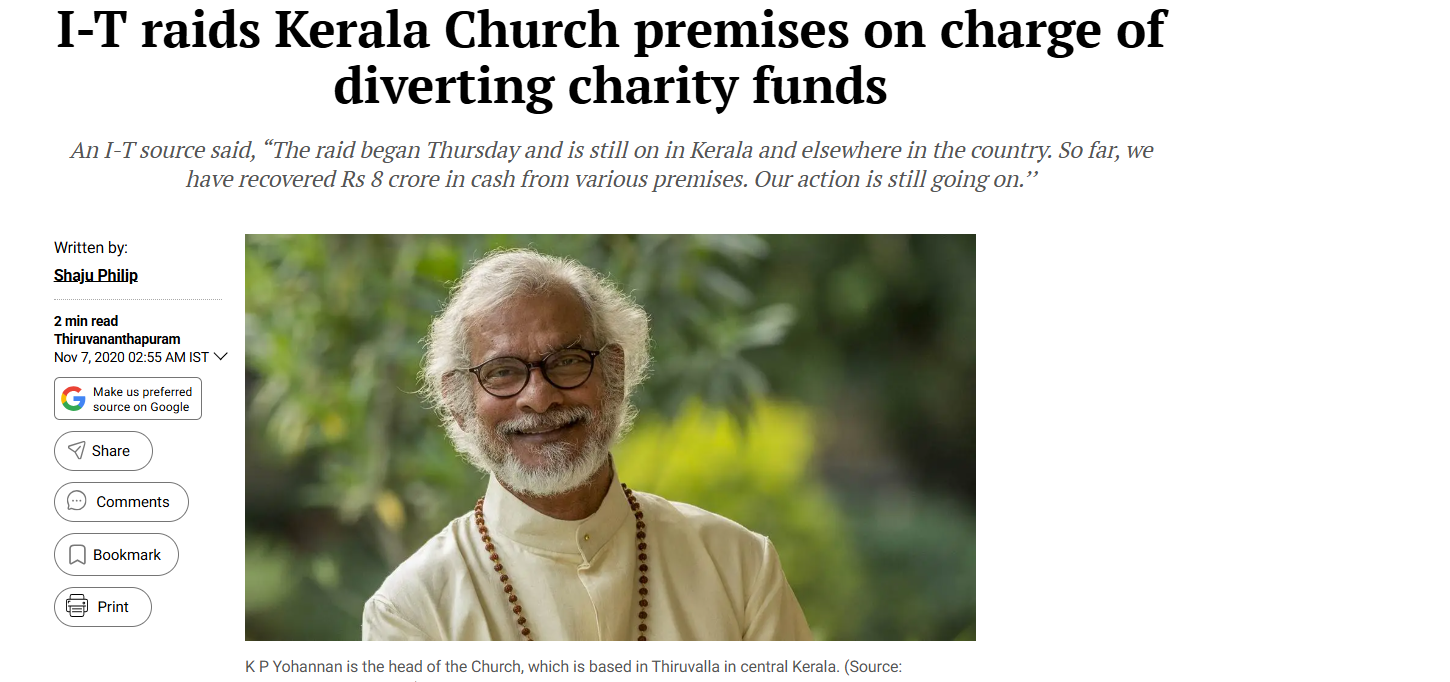
A set of two images is being widely circulated on social media claiming that the Enforcement Directorate (ED) recently raided a church in Kerala and seized ₹7000 crore in black money. The viral post also alleges that the media deliberately suppressed the news. CyberPeace Research Wing research found the claim to be misleading. The visuals are not recent and are linked to an Income Tax Department action conducted in 2020 at the Believers Eastern Church in Kerala.
Claim:
A Facebook user shared the viral post claiming that ₹7000 crore in black money was seized from a Kerala-based church run by a bishop named Yohannan, and alleged that mainstream media ignored the incident.
Post link: https://www.facebook.com/reel/2143680196569943 , https://archive.ph/submit/

Fact Check:
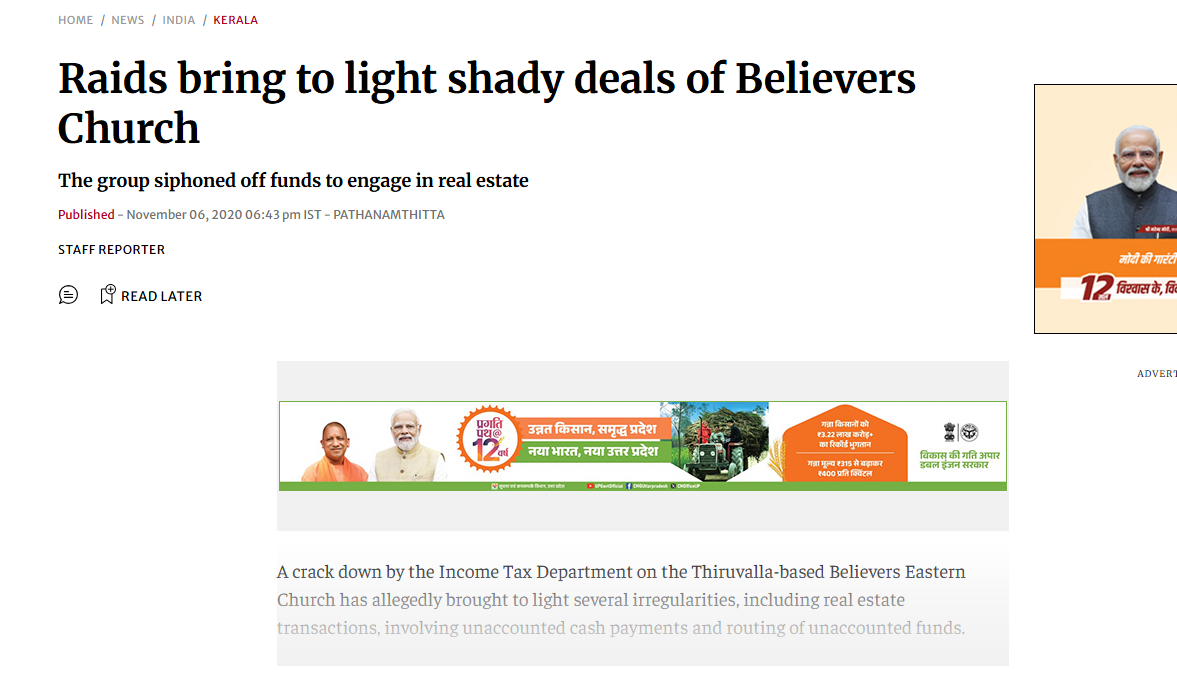
A keyword search related to the alleged raid on Believers Church in Kerala led to several news reports published in November 2020. A report published in The Hindu on November 6, 2020 stated that a crackdown by the Income Tax Department on the Thiruvalla-based Believers Eastern Church had reportedly uncovered several irregularities. https://www.thehindu.com/news/national/kerala/raids-bring-to-light-shady-deals-of-believers-church/article33041420.ece
Further verification from the official Income Tax Department website confirmed details of the search operation. According to the press release, approximately ₹6 crore in unexplained cash was recovered during the raid, including ₹3.85 crore from a place of worship in Delhi. https://www.incometaxindia.gov.in/Lists/Press%20Releases/Attachments/872/PressRelease_ITD_conducts_searches_in_Kerala_6_11_20.pdf
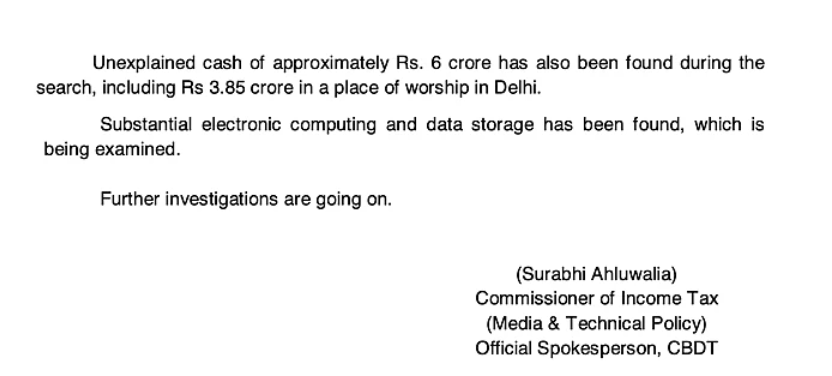
The release also noted that evidence suggested possible cash siphoning running into hundreds of crores of rupees.Additional media reports, including The Indian Express, stated that the total seizure amounted to around ₹14 crore. https://indianexpress.com/article/india/kerala/i-t-raids-kerala-church-premises-on-charge-of-diverting-charity-funds-6984466/
Conclusion:
The research confirms that the viral claim is misleading. The incident is from 2020 and not recent. During the Income Tax Department raid on the Believers Eastern Church in Kerala, around ₹6 crore in cash was recovered, with total seizures reported up to ₹14 crore in media reports. There is no evidence of any ₹7000 crore seizure as claimed in the viral post.
