
#FactCheck- Deepfake Video Falsely Shows Former CDS Anil Chauhan Criticising Government Over ‘Operation Sindoor’
Executive Summary
A video purportedly showing former Chief of Defence Staff (CDS) General Anil Chauhan criticizing the government over “Operation Sindoor” is being widely shared on social media. In the viral clip, Chauhan is allegedly heard saying that the Indian military was unable to complete the operation due to political interference and that, unlike Pakistan’s military, India’s armed forces did not receive adequate political support. Users claim that he made these remarks while announcing his resignation.
CyberPeace Research Wing research found the claim to be false. The viral video is a deepfake created by manipulating an original video of General Chauhan’s farewell ceremony at the end of his tenure. In the authentic footage, the former CDS expressed satisfaction with his tenure and thanked the three armed services for their support. The altered clip appears to have been shared with the intention of spreading misinformation. Similar AI-manipulated videos targeting senior Indian military officials have surfaced on social media in the past.
Claim
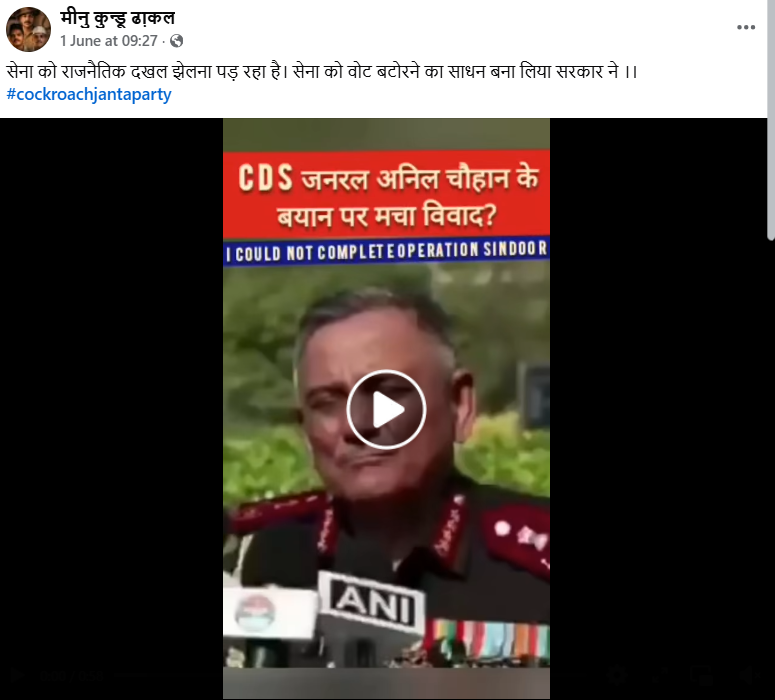
On June 1, 2026, Facebook user “Meenu Kundu Dhakal” shared the viral video with the caption: “The army is facing political interference. The government has turned the armed forces into a tool for gathering votes.”
https://www.facebook.com/100092961600658/posts/1669160500794363/
https://perma.cc/SE6J-5JC6
Fact Check
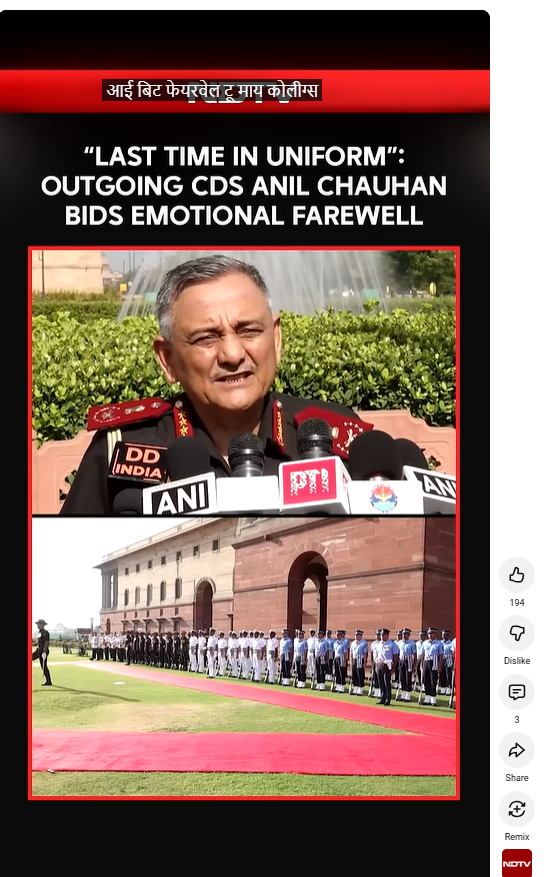
To verify the claim, we extracted keyframes from the viral video and conducted reverse-image searches. The original video was found on the official Instagram account of ANI, where it was posted on May 30, 2026. In the authentic footage, General Chauhan says:“I thank the three services and Headquarters IDS for it. With the conclusion of the guard of honour, I bid farewell to my colleagues in uniform, comrades in arms forever. I just laid the wreath at the War Memorial for the last time in uniform, as a humble tribute to those who laid down their lives in the line of duty. After the wreath-laying, I was welcomed by friends, relatives, and well-wishers. This is symbolic of my transition from uniform to civilian life. I had a very satisfying and excellent tenure. Thank you. Jai Hind.”
https://www.instagram.com/reels/DY8-5sqgF1B/

The same footage was also found on multiple news platforms covering General Chauhan’s farewell ceremony upon completion of his tenure. None of the reports mentioned any criticism of the government or comments regarding political interference in military affairs.
https://www.youtube.com/shorts/J-Fi8F32huo
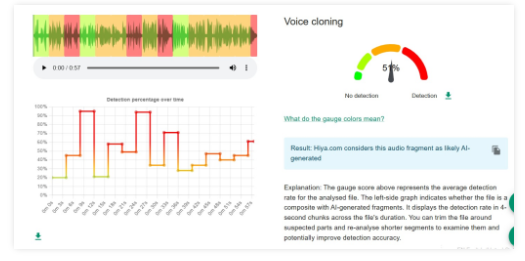
To assess whether the viral clip had been manipulated, we analyzed the audio using AI-detection tools. The tool “Hiya” indicated a 51 percent likelihood that the audio was AI-generated.
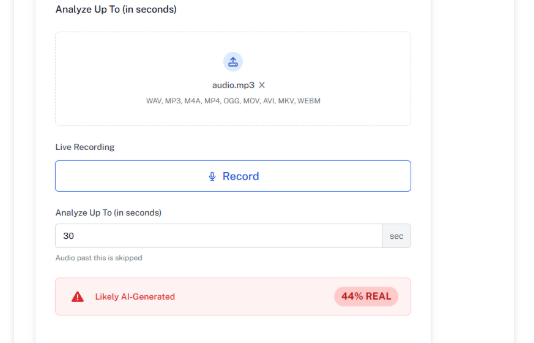
Another detection tool, “Undetectable,” found indicators suggesting a 44 percent probability of AI-generated audio content.
Conclusion
The viral video claiming to show former CDS General Anil Chauhan criticizing the government’s handling of “Operation Sindoor” is a deepfake. The original video was recorded during his farewell ceremony at the conclusion of his tenure. In the authentic footage, General Chauhan described his tenure as “very satisfying and excellent” and thanked the armed forces for their support. The viral clip has been digitally manipulated and is being shared to spread misinformation.

Related Blogs
Introduction
Earlier this month, lawmakers in Colorado, a U.S. state, were summoned to a special legislative session to rewrite their newly passed Artificial Intelligence (AI) law before it even takes effect. Although the discussion taking place in Denver may seem distant, evolving regulations like this one directly address issues that India will soon encounter as we forge our own course for AI governance.
The Colorado Artificial Intelligence Act
Colorado became the first U.S. state to pass a comprehensive AI accountability law, set to come into force in 2026. It aims to protect people from bias, discrimination, and harm caused by predictive algorithms since AI tools have been known to reproduce societal biases by sidelining women from hiring processes, penalising loan applicants from poor neighbourhoods, or through welfare systems that wrongly deny citizens their benefits. But the law met resistance from tech companies who threatened to pull out form the state, claiming it is too broad in scope in its current form and would stifle innovation. This brings critical questions about AI regulation to the forefront:
- Who should be responsible when AI causes harm? Developers, deployers, or both?
- How should citizens seek justice?
- How can tech companies be incentivised to develop safe technologies?
Colorado’s governor has called a special session to update the law before it kicks in.
What This Means for India
India is on its path towards framing a dedicated AI-specific law or directions, and discussions are underway through the IndiaAI Mission, the proposed Digital India Act, committee set by the Delhi High Court on deepfake and other measures. But the dilemmas Colorado is wrestling with are also relevant here.
- AI uptake is growing in public service delivery in India. Facial recognition systems are expanding in policing, despite accuracy and privacy concerns. Fintech apps using AI-driven credit scoring raise questions of fairness and transparency.
- Accountability is unclear. If an Indian AI-powered health app gives faulty advice, who should be liable- the global developer, the Indian startup deploying it, or the regulator who failed to set safeguards?
- India has more than 1,500 AI startups (NASSCOM), which, like Colorado’s firms, fear that onerous compliance could choke growth. But weak guardrails could undermine public trust in AI altogether.
Lessons for India
India’s Ministry of Electronics and IT ( MEITy) favours a light-touch approach to AI regulation, and exploring and advancing ways for a future-proof guideline. Further, lessons from other global frameworks can guide its way.
- Colorado’s case shows us the necessity of incorporating feedback loops in the policy-making process. India should utilise regulatory sandboxes and open, transparent consultation processes before locking in rigid rules.
- It will also need to explore proportionate obligations, lighter for low-risk applications and stricter for high-risk use cases such as policing, healthcare, or welfare delivery.
- Europe’s AI Act is heavy on compliance, the U.S. federal government leans toward deregulation, and Colorado is somewhere in between. India has the chance to create a middle path, grounded in our democratic and developmental context.
Conclusion
As AI becomes increasingly embedded in hiring, banking, education, and welfare, opportunities for ordinary Indians are being redefined. To shape how this pans out, states like Tamil Nadu and Telangana have taken early steps to frame AI policies. Lessons will emerge from their initiative in addressing AI governance. Policy and regulation will always be contested, but contestations are a part of the process.
The Colorado debate shows us how participative law-making, with room for debate, revision, and iteration, is not a weakness but a necessity. For India’s emerging AI governance landscape, the challenge will be to embrace this process while ensuring that citizen rights and inclusion are balanced well with industry concerns. CyberPeace advocates for responsible AI regulation that balances innovation and accountability.
References
- https://www.cbsnews.com/colorado/news/colorado-lawmakers-look-repeal-replace-controversial-artificial-intelligence-law/
- https://www.naag.org/attorney-general-journal/a-deep-dive-into-colorados-artificial-intelligence-act/
- https://carnegieendowment.org/research/2024/11/indias-advance-on-ai-regulation?lang=en
- https://the-captable.com/2024/12/india-ai-regulation-light-touch/
- https://indiaai.gov.in/article/tamilnadu-s-ai-policy-six-step-tamdef-guidance-framework-and-deepmax-scorecard
Introduction
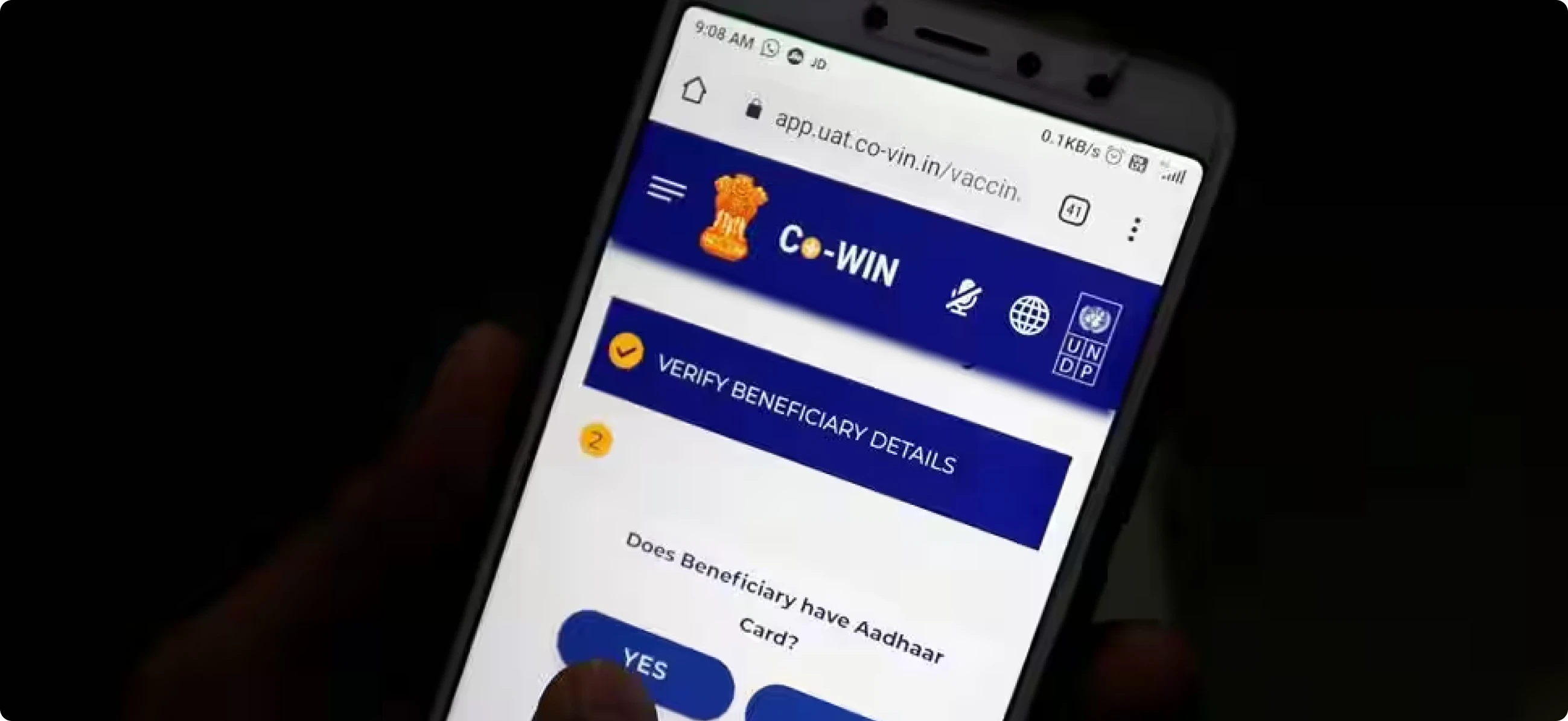
The information of hundreds of thousands of Indians who received the COVID vaccine was Leaked in a significant data breach and posted on a Telegram channel. Numerous reports claim that sensitive information, including a person’s phone number, gender, ID card details, and date of birth, leaked over Telegram. It could be obtained by typing a person’s name into a Telegram bot.
What really happened?
The records pertaining to the mobile number registered in the CoWin portal are accessible on the Malayalam news website channel. It is also feasible to determine which vaccination was given and where it was given.
According to The Report, the list of individuals whose data was exposed includes BJP Tamil Nadu president K Annamalai, Congress MP Karti Chidambaram, and former BJP union minister for health Harsh Vardhan. Telangana’s minister of information and communication technology, Kalvakuntla Taraka Rama Rao, is also on the list.
MEITY stated in response to the data leak, “It is old data, we are still confirming it. We have requested a report on the matter.
After the media Report, the bot was disabled, but experts said the incident raised severe issues because the information might be used for identity theft, phishing emails, con games, and extortion calls. The Indian Computer Emergency Response Team (CERT-In), the government’s nodal body, has opened an investigation into the situation
The central government declared the data breach reports regarding the repository of beneficiaries against Covid to be “mischievous in nature” on Monday and claimed the ‘bot’ that purportedly accessed the confidential data was not directly accessing the CoWIN database.
According to the first complaint by CERT-In, the government’s cybersecurity division, the government claimed the bot might be displaying information from “previously stolen data.” Reports.
The health ministry refuted the claim, asserting that no bots could access the information without first verifying with a one-time password.
“It is made clear that all of these rumours are false and malicious. The health ministry’s CoWIN interface is entirely secure and has sufficient data privacy protections. The security of the data on the CoWIN portal is being ensured in every way possible, according to a statement from the health ministry.
Meity said the CoWin program or database was not directly compromised, and the shared information appeared to be taken from a previous intrusion. But the hack again highlights the growing danger of cyber assaults, particularly on official websites.

Recent cases of data leak
Dominos India 2021– Dominos India, a division of Jubilant FoodWorks, faced a cyberattack on May 22, 2021, which led to the disclosure of information from 180 million orders. The breach exposed order information, email addresses, phone numbers, and credit card information. Although Jubilant FoodWorks acknowledged a security breach, it refuted any illegal access to financial data.
Air India – A cyberattack that affected Air India in May 2021 exposed the personal information of about 4.5 million customers globally. Personal information recorded between August 26, 2011, and February 3, 2021, including names, dates of birth, contact information, passport information, ticket details, frequent flyer information from Star Alliance and Air India, and credit card information, were exposed in the breach.
Bigbasket – BigBasket, an online supermarket, had a data breach in November 2020, compromising the personal information of approximately 20 million consumers. Email IDs, password hashes, PINs, phone numbers, addresses, dates of birth, localities, and IP addresses were among the information released from an insecure database containing over 15 GB of customer data. BigBasket admitted to the incident and reported it to the Bengaluru Cyber Crime Department.
Unacademy – Unacademy, an online learning platform, experienced a data breach in May 2020, compromising the email addresses of approximately 11 million subscribers. While no sensitive information, such as financial data or passwords, was compromised, user data, including IDs, passwords, date joined, last login date, email IDs, names, and user credentials, was. The breach was detected when user accounts were uncovered for sale on the dark web.
2022 Card Data- Cybersecurity researchers from AI-driven Singapore-based CloudSEK found a threat actor offering a database of 1.2 million cards for free on a Dark Web forum for crimes on October 12, 2022. This came after a second problem involving 7.9 million cardholder records that were reported on the BidenCash website. This comprised information pertaining to State Bank of India (SBI) clients. And other well-known companies were among those targeted in high-profile data breach cases that have surfaced in recent years.

Conclusion
Data breach cases are increasing daily, and attackers are mainly attacking the healthcare sectors and health details as they can easily find personal details. This recent CoWIN case has compromised thousands of people’s data. The All-India Institute of Medical Sciences’ systems were compromised by hackers a few months ago. Over 95% of adults have had their vaccinations, according to the most recent data, even if the precise number of persons impacted by the CoWin privacy breach could not be determined.

Introduction:
The Ministry of Civil Aviation, GOI, established the initiative ‘DigiYatra’ to ensure hassle-free and health-risk-free journeys for travellers/passengers. The initiative uses a single token of face biometrics to digitally validate identity, travel, and health along with any other data needed to enable air travel.
Cybersecurity is a top priority for the DigiYatra platform administrators, with measures implemented to mitigate risks of data loss, theft, or leakage. With over 6.5 million users, DigiYatra is an important step forward for India, in the direction of secure digital travel with seamless integration of proactive cybersecurity protocols. This blog focuses on examining the development, challenges and implications that stand in the way of securing digital travel.
What is DigiYatra? A Quick Overview
DigiYatra is a flagship initiative by the Government of India to enable paperless travel, reducing identity checks for a seamless airport experience. This technology allows the entry of passengers to be automatically processed based on a facial recognition system at all the checkpoints at the airports, including main entry, security check areas, aircraft boarding, and more.
This technology makes the boarding process quick and seamless as each passenger needs less than three seconds to pass through every touchpoint. Passengers’ faces essentially serve as their documents (ID proof and if required, Vaccine Proof) and their boarding passes.
DigiYatra has also enhanced airport security as passenger data is validated by the Airlines Departure Control System. It allows only the designated passengers to enter the terminal. Additionally, the entire DigiYatra Process is non-intrusive and automatic. In improving long-standing security and operational airport protocols, the platform has also significantly improved efficiency and output for all airport professionals, from CISF personnel to airline staff members.
Policy Origins and Framework
Rooted in the Government of India's Digital India campaign and enabled by the National Civil Aviation Policy (NCAP) 2016, DigiYatra aims to modernise air travel by integrating Aadhaar-based passenger identification. While Aadhaar is currently the primary ID, efforts are underway to include other identification methods. The platform, supported by stakeholders like the Airports Authority of India (26%) and private airports (14.8% each), must navigate stringent cybersecurity demands. Compliance with the Digital Personal Data Protection Act, 2023, ensures the secure use of sensitive facial recognition data, while the Aircraft (Security) Rules, 2023, mandate robust interoperability and data protection mechanisms across stakeholders. DigiYatra also aspires to democratise digital travel, extending its reach to underserved airports and non-tech-savvy travellers. As India refines its cybersecurity and privacy frameworks, learning from global best practices is essential to safeguarding data and ensuring seamless, secure air travel operations.
International Practices
Global practices offer crucial lessons to strengthen DigiYatra's cybersecurity and streamline the seamless travel experience. Initiatives such as CLEAR in the USA and Seamless Traveller initiatives in Singapore offer actionable insights into further expanding the system to its full potential. CLEAR is operational in 58 airports and has more than 17 million users. Singapore has made Seamless Traveller active since the beginning of 2024 and aims to have a 95% shift to automated lanes by 2026.
Some additional measures that India can adopt from international initiatives are regular audits and updates to the cybersecurity policies. Further, India can aim for a cross-border policy for international travel. By implementing these recommendations, DigiYatra can not only improve data security and operational efficiency but also establish India as a leader in global aviation security standards, ensuring trust and reliability for millions of travellers
CyberPeace Recommendations
Some recommendations for further improving upon our efforts for seamless and secure digital travel are:
- Strengthen the legislation on biometric data usage and storage.
- Collaborate with global aviation bodies to develop standardised operations.
- Cybersecurity technologies, such as blockchain for immutable data records, should be adopted alongside encryption standards, data minimisation practices, and anonymisation techniques.
- A cybersecurity-first culture across aviation stakeholders.
Conclusion
DigiYatra represents a transformative step in modernising India’s aviation sector by combining seamless travel with robust cybersecurity. Leveraging facial recognition and secure data validation enhances efficiency while complying with the Digital Personal Data Protection Act, 2023, and Aircraft (Security) Rules, 2023.
DigiYatra must address challenges like secure biometric data storage, adopt advanced technologies like blockchain, and foster a cybersecurity-first culture to reach its full potential. Expanding to underserved regions and aligning with global best practices will further solidify its impact. With continuous innovation and vigilance, DigiYatra can position India as a global leader in secure, digital travel.
References
- https://government.economictimes.indiatimes.com/news/governance/digi-yatra-operates-on-principle-of-privacy-by-design-brings-convenience-security-ceo-digi-yatra-foundation/114926799
- https://www.livemint.com/news/india/explained-what-is-digiyatra-how-it-will-work-and-other-questions-answered-11660701094885.html
- https://www.civilaviation.gov.in/sites/default/files/2023-09/ASR%20Notification_published%20in%20Gazette.pdf
