
#FactCheck -Bangladesh protest video falsely shared as police firing incident in Bihar’s Siwan
Executive Summary
A video is being widely shared on social media with the claim that a youth was killed in police firing in Bihar’s Siwan. The viral 1-minute-22-second video shows a young man standing with a stick in his hand. Moments later, gunfire is heard, after which he appears to be injured and collapses. His associates are then seen carrying him away from the spot. CyberPeace Research Wing’s research found that the claim is false. The research revealed that the viral video is not from Bihar’s Siwan but dates back to the student protests in Bangladesh in July 2024.
Claim:
The video was shared on X with a caption claiming that it shows a police firing incident in Bihar’s Siwan, where a student was allegedly killed after police opened fire with AK-47 rifles.
The caption stated, “This video is going viral on social media. It is being claimed that this video is from Siwan, Bihar, where police fired AK-47s at students. During the firing, a youth was hit by two bullets and died.”
https://x.com/Deshmukh_0/status/2082053481993740701

Fact Check:
To verify the authenticity of the viral claim, we extracted keyframes from the video and conducted a reverse image search. During the research, we found a longer version of the same video uploaded on the YouTube channel of a Bangladeshi news portal on July 16, 2024.
According to the video description, the footage shows the death of student Abu Sayed during protests in Rangpur, Bangladesh, on July 16, 2024.
https://www.youtube.com/watch?v=iuf7H0MNIaI

Further research led us to a report published by bdnews24, which also carried visuals matching those seen in the viral video. The report stated that on July 16, 2024, Abu Sayed, an English Department student at Begum Rokeya University in Rangpur, Bangladesh, died after being shot during the protests.
https://bdnews24.com/bangladesh/87ef7e69c496#google_vignette

Conclusion:
The evidence gathered during the research confirms that the viral video claiming to show a youth being killed in police firing in Bihar’s Siwan is misleading. The video is actually from Bangladesh and shows the death of student Abu Sayed during the July 2024 protests in Rangpur. The old footage is being shared with a false claim linking it to a recent incident in Bihar.

Related Blogs

Brief Overview of the EU AI Act
The EU AI Act, Regulation (EU) 2024/1689, was officially published in the EU Official Journal on 12 July 2024. This landmark legislation on Artificial Intelligence (AI) will come into force just 20 days after publication, setting harmonized rules across the EU. It amends key regulations and directives to ensure a robust framework for AI technologies. The AI Act, a set of EU rules governing AI, has been in development for two years and now, the EU AI Act enters into force across all 27 EU Member States on 1 August 2024, with certain future deadlines tied up and the enforcement of the majority of its provisions will commence on 2 August 2026. The law prohibits certain uses of AI tools, including those that threaten citizens' rights, such as biometric categorization, untargeted scraping of faces, and systems that try to read emotions are banned in the workplace and schools, as are social scoring systems. It also prohibits the use of predictive policing tools in some instances. The law takes a phased approach to implementing the EU's AI rulebook, meaning there are various deadlines between now and then as different legal provisions will start to apply.
The framework puts different obligations on AI developers, depending on use cases and perceived risk. The bulk of AI uses will not be regulated as they are considered low-risk, but a small number of potential AI use cases are banned under the law. High-risk use cases, such as biometric uses of AI or AI used in law enforcement, employment, education, and critical infrastructure, are allowed under the law but developers of such apps face obligations in areas like data quality and anti-bias considerations. A third risk tier also applies some lighter transparency requirements for makers of tools like AI chatbots.
In case of failure to comply with the Act, the companies in the EU providing, distributing, importing, and using AI systems and GPAI models, are subject to fines of up to EUR 35 million or seven per cent of the total worldwide annual turnover, whichever is higher.
Key highlights of EU AI Act Provisions
- The AI Act classifies AI according to its risk. It prohibits Unacceptable risks such as social scoring systems and manipulative AI. The regulation mostly addresses high-risk AI systems.
- Limited-risk AI systems are subject to lighter transparency obligations and according to the act, the developers and deployers must ensure that the end-users are aware that the interaction they are having is with AI such as Chatbots and Deepfakes. The AI Act allows the free use of minimal-risk AI. This includes the majority of AI applications currently available in the EU single market like AI-enabled video games, and spam filters, but with the advancement of Gen AI changes with regards to this might be done. The majority of obligations fall on providers (developers) of high-risk AI systems that intend to place on the market or put into service high-risk AI systems in the EU, regardless of whether they are based in the EU or a third country. And also, a third-country provider where the high-risk AI system’s output is used in the EU.
- Users are natural or legal persons who deploy an AI system in a professional capacity, not affected end-users. Users (deployers) of high-risk AI systems have some obligations, though less than providers (developers). This applies to users located in the EU, and third-country users where the AI system’s output is used in the EU.
- General purpose AI or GPAI model providers must provide technical documentation, and instructions for use, comply with the Copyright Directive, and publish a summary of the content used for training. Free and open license GPAI model providers only need to comply with copyright and publish the training data summary, unless they present a systemic risk. All providers of GPAI models that present a systemic risk – open or closed – must also conduct model evaluations, and adversarial testing, and track and report serious incidents and ensure cybersecurity protections.
- The Codes of Practice will account for international approaches. It will cover but not necessarily be limited to the obligations, particularly the relevant information to include in technical documentation for authorities and downstream providers, identification of the type and nature of systemic risks and their sources, and the modalities of risk management accounting for specific challenges in addressing risks due to the way they may emerge and materialize throughout the value chain. The AI Office may invite GPAI model providers, and relevant national competent authorities to participate in drawing up the codes, while civil society, industry, academia, downstream providers and independent experts may support the process.
Application & Timeline of Act
The EU AI Act will be fully applicable 24 months after entry into force, but some parts will be applicable sooner, for instance the ban on AI systems posing unacceptable risks will apply six months after the entry into force. The Codes of Practice will apply nine months after entry into force. Rules on general-purpose AI systems that need to comply with transparency requirements will apply 12 months after the entry into force. High-risk systems will have more time to comply with the requirements as the obligations concerning them will become applicable 36 months after the entry into force. The expected timeline for the same is:
- August 1st, 2024: The AI Act will enter into force.
- February 2025: Prohibition of certain AI systems - Chapters I (general provisions) & II (prohibited AI systems) will apply; Prohibition of certain AI systems.
- August 2025: Chapter III Section 4 (notifying authorities), Chapter V (general purpose AI models), Chapter VII (governance), Chapter XII (confidentiality and penalties), and Article 78 (confidentiality) will apply, except for Article 101 (fines for General Purpose AI providers); Requirements for new GPAI models.
- August 2026: The whole AI Act applies, except for Article 6(1) & corresponding obligations (one of the categories of high-risk AI systems);
- August 2027: Article 6(1) & corresponding obligations apply.
The AI Act sets out clear definitions for the different actors involved in AI, such as the providers, deployers, importers, distributors, and product manufacturers. This means all parties involved in the development, usage, import, distribution, or manufacturing of AI systems will be held accountable. Along with this, the AI Act also applies to providers and deployers of AI systems located outside of the EU, e.g., in Switzerland, if output produced by the system is intended to be used in the EU. The Act applies to any AI system within the EU that is on the market, in service, or in use, covering both AI providers (the companies selling AI systems) and AI deployers (the organizations using those systems).
In short, the AI Act will apply to different companies across the AI distribution chain, including providers, deployers, importers, and distributors (collectively referred to as “Operators”). The EU AI Act also has extraterritorial application and can also apply to companies not established in the EU, or providers outside the EU if they -make an AI system or GPAI model available on the EU market. Even if only the output generated by the AI system is used in the EU, the Act still applies to such providers and deployers.
CyberPeace Outlook
The EU AI Act, approved by EU lawmakers in 2024, is a landmark legislation designed to protect citizens' health, safety, and fundamental rights from potential harm caused by AI systems. The AI Act will apply to AI systems and GPAI models. The Act creates a tiered risk categorization system with various regulations and stiff penalties for noncompliance. The Act adopts a risk-based approach to AI governance, categorizing potential risks into four tiers: unacceptable, high, limited, and low. Violations of banned systems carry the highest fine: €35 million, or 7 percent of global annual revenue. It establishes transparency requirements for general-purpose AI systems. The regulation also provides specific rules for general-purpose AI (GPAI) models and lays down more stringent requirements for GPAI models with 'high-impact capabilities' that could pose a systemic risk and have a significant impact on the internal market. For high-risk AI systems, the AI Act addresses the issues of fundamental rights impact assessment and data protection impact assessment.
The EU AI Act aims to enhance trust in AI technologies by establishing clear regulatory standards governing AI. We encourage regulatory frameworks that strive to balance the desire to foster innovation with the critical need to prevent unethical practices that may cause user harm. The legislation can be seen as strengthening the EU's position as a global leader in AI innovation and developing regulatory frameworks for emerging technologies. It sets a global benchmark for regulating AI. The companies to which the act applies will need to make sure their practices align with the same. The act may inspire other nations to develop their own legislation contributing to global AI governance. The world of AI is complex and challenging, the implementation of regulatory checks, and compliance by the concerned companies, all pose a conundrum. However, in the end, balancing innovation with ethical considerations is paramount.
At the same hand, the tech sector welcomes regulatory progress but warns that overly-rigid regulations could stifle innovation. Hence flexibility and adaptability are key to effective AI governance. The journey towards robust AI regulation has begun in major countries, and it is important that we find the right balance between safety and innovation and also take into consideration the industry reactions.
References:
- https://eur-lex.europa.eu/legal-content/EN/TXT/PDF/?uri=OJ:L_202401689
- https://www.theverge.com/2024/7/12/24197058/eu-ai-act-regulations-bans-deadline
- https://techcrunch.com/2024/07/12/eus-ai-act-gets-published-in-blocs-official-journal-starting-clock-on-legal-deadlines/
- https://www.wsgr.com/en/insights/eu-ai-act-to-enter-into-force-in-august.html
- https://www.techtarget.com/searchenterpriseai/tip/Is-your-business-ready-for-the-EU-AI-Act
- https://www.simmons-simmons.com/en/publications/clyimpowh000ouxgkw1oidakk/the-eu-ai-act-a-quick-guide
Executive Summary
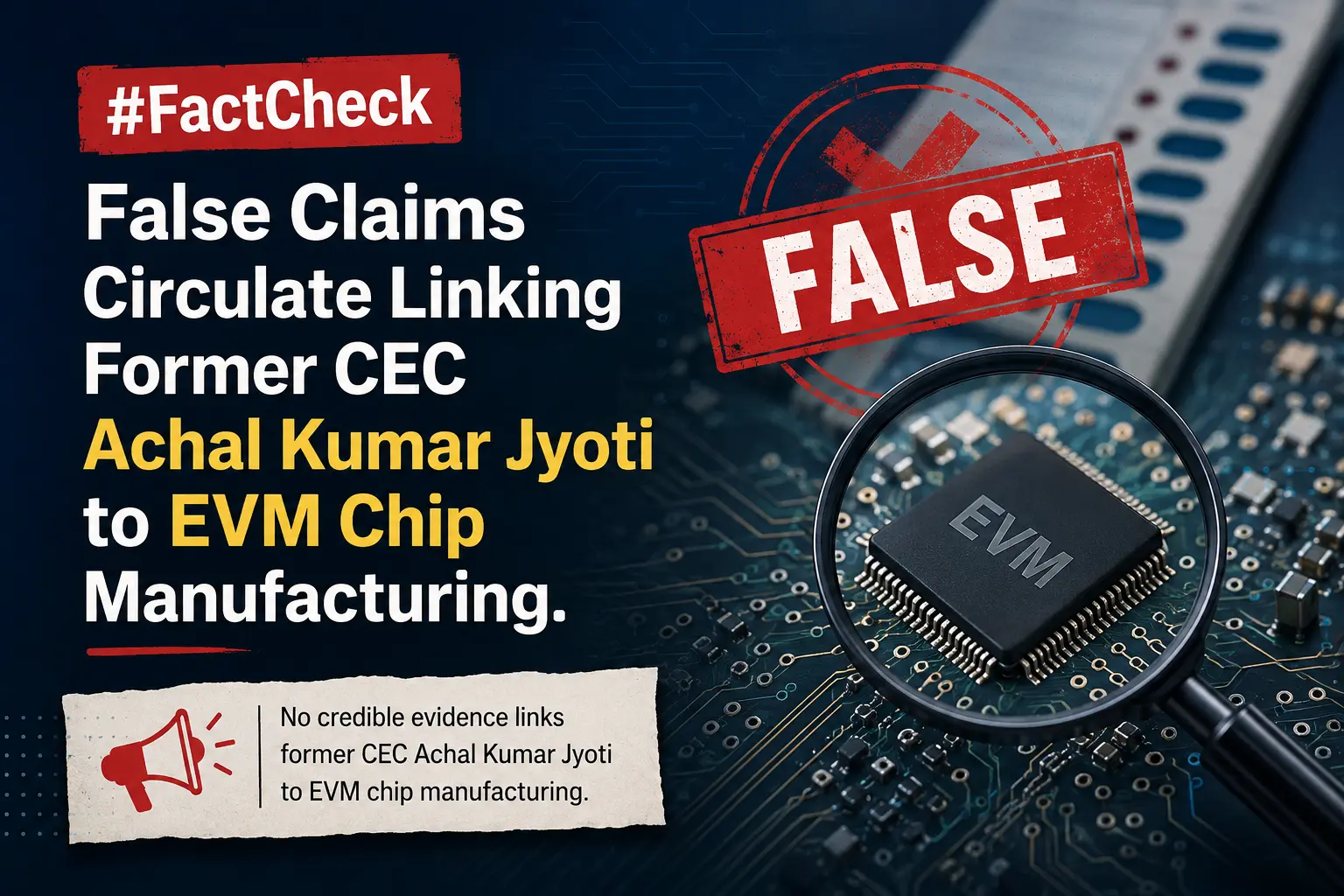
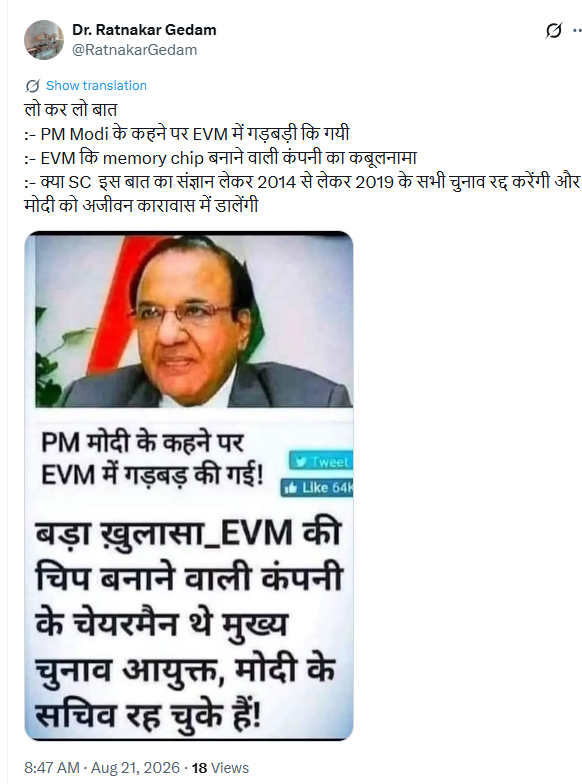
A viral social media post featuring a picture of former Chief Election Commissioner Achal Kumar Jyoti claims he served as the chairman of the company manufacturing EVM microchips and altered EVM settings at the behest of PM Modi. According to a research done by CyberPeace's research wing, the claim that former Chief Election Commissioner Achal Kumar Jyoti was the chairman of an EVM chip manufacturing company and altered EVMs at the behest of PM Modi is completely false.
Claim
Social media posts circulated statements claiming: "PM Modi ordered EVM tampering; the company manufacturing EVM memory chips confessed. Will the SC take note, cancel all elections from 2014 to 2019, and send Modi to life imprisonment?"
https://x.com/RatnakarGedam/status/2090639442411470936?s=20
Fact-Check
Relevant keyword searches yield no credible news reports, official statements, or legal documentation supporting claims that Achal Kumar Jyoti tampered with EVMs or issued any such confession. Achal Kumar Jyoti served as the Chief Election Commissioner of India from July 6, 2017, to January 22, 2018. Prior to this, he was a 1975-batch IAS officer of the Gujarat cadre who served in various administrative roles, including Chief Secretary of Gujarat.
https://www.eci.gov.in/former-cec-ec?utm_source

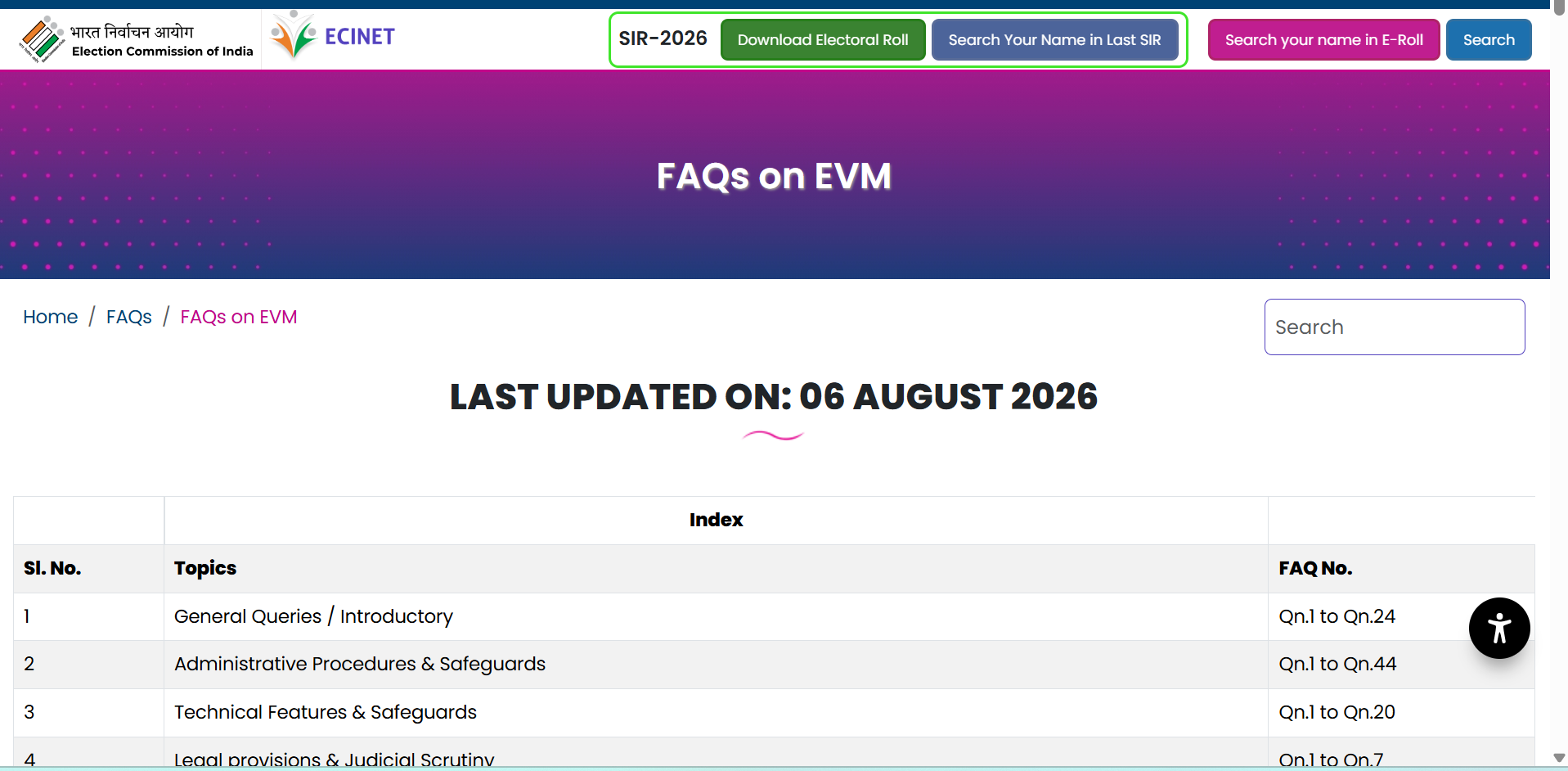
According to official information, Electronic Voting Machines (EVMs) used in Indian elections are manufactured exclusively by two Public Sector Undertakings (PSUs): Bharat Electronics Limited (BEL) and Electronics Corporation of India Limited (ECIL). Official records confirm that Achal Kumar Jyoti was never appointed as the Chairman or Director of BEL, ECIL, or any entity manufacturing microchips for EVMs.
https://www.eci.gov.in/evm-faqs/?utm_source
Conclusion
The claim that former Chief Election Commissioner Achal Kumar Jyoti headed an EVM chip manufacturing company and tampered with voting machines is completely fabricated and baseless.
.webp)
On 6 June 2025, the EU Council officially adopted the revised Cybersecurity Blueprint, marking a significant evolution from the 2017 guidance. This framework, formalised through Council Recommendation COM(2025) 66 final, responds to a transformed threat environment and reflects new legal milestones like the NIS2 Directive (Network and Information Security Directive) and the Cyber Solidarity Act.
From Fragmented Response to Cohesive Strategy
Between 2017 and now, EU member states have built various systems to manage cyber incidents. Still, real-world events and exercises highlighted critical gaps - uncoordinated escalation procedures, inconsistent terminology, and siloed information flows. The updated Blueprint addresses these issues by focusing on a harmonised operational architecture for the EU. It defines a clear crisis lifecycle with five stages: Detection, Analysis, Escalation, Response, and Recovery. Each stage is supported by common communication protocols, decision-making processes, and defined roles. Consistency is key; standardised terminology along with a broad scope of application that eases cross-border collaboration and empowers coherent response efforts.
Legal Foundations: NIS2, ENISA & EU‑CyCLONe
Several core pillars of EU cybersecurity directly underpin the Blueprint:
- ENISA – The European Union Agency for Cybersecurity continues to play a central role. It supports CSIRTs' Network operations, leads EU‑CyCLONe ( European cyber crisis liaison organisation network) coordination, conducts simulation exercises, and gives training on incident management
- NIS2 Directive, particularly Article 16, is a follow-up of NIS. NIS2 mandates operators of critical infrastructure and essential services to implement appropriate security measures and report incidents to the relevant authorities. Compared to NIS, NIS2 expands its EU-wide security requirements and scope of covered organisations and sectors to improve the security of supply chains, simplify reporting obligations, and enforce more stringent measures and sanctions throughout Europe. It also formally legitimises the EU‑CyCLONe network, which is the crisis liaison mechanism bridging technical teams from member states.
These modern tools, integrated with legal backing, ensure the Blueprint isn’t just theoretical; it’s operationally enforceable.
What’s Inside the Blueprint?
The 2025 Blueprint enhances several critical areas:
- Clear Escalation Triggers - It spells out when a national cyber incident merits EU-level attention, especially those affecting critical infrastructure across borders. Civilian Military Exchange. The Blueprint encourages structured information sharing with defence institutions and NATO, recognising that cyber incidents often have geopolitical implications
- Recovery & Lessons Learned – A dedicated chapter ensures systematic post-incident reviews and shared learning among member states.
Adaptive & Resilient by Design
Rather than a static document, the Blueprint is engineered to evolve:
- Regular Exercises: Built into the framework are simulation drills that are known as Blueprint Operational Level Exercises—to test leadership response and cross-border coordination via EU‑CyCLONe
- Dynamic Reviews: The system promotes continuous iteration- this includes revising protocols, learning from real incidents, and refining role definitions.
This iterative, learning-oriented architecture aims to ensure the Blueprint remains robust amid rapidly evolving threats, including AI-boosted hacks and hybrid cyber campaigns.
Global Implications & Lessons for Others
The EU’s Cybersecurity Blueprint sets a global benchmark in cyber resilience and crisis governance:
- Blueprint for Global Coordination: The EU’s method of defined crisis stages, empowered liaison bodies (like EU‑CyCLONe), and continuous exercise can inspire other regional blocs or national governments to build their own crisis mechanisms.
- Public–Private Synergy: The Blueprint’s insistence on cooperation between governments and private-sector operators of essential services (e.g., energy, telecom, health) provides a model for forging robust ecosystems.
- Learning & Sharing at Scale: Its requirement for post-crisis lessons and peer exchange can fuel a worldwide knowledge network, cultivating resilience across jurisdictions.
Conclusion
The 2025 EU Cybersecurity Blueprint is more than an upgrade; it’s a strategic shift toward operational readiness, legal coherence, and collaborative resilience. Anchored in NIS2 and ENISA, and supported by EU‑CyCLONe, it replaces fragmented guidance with a well-defined, adaptive model. Its adoption signals a transformative moment in global cyber governance as for nations building crisis frameworks, the Blueprint offers a tested, comprehensive template: define clear stages, equip liaison networks, mandate drills, integrate lessons, and legislate coordination. In an era where cyber threats transcend borders, this proves to be an important development that can offer guidance and set a precedent.
For India, the EU Cybersecurity Blueprint offers a valuable reference point as we strengthen our own frameworks through initiatives like the DPDP Act, the upcoming Digital India Act and CERT-In’s evolving mandates. It reinforces the importance of coordinated response systems, cross-sector drills, and legal clarity. As cyber threats grow more complex, such global models can complement our national efforts and enhance regional cooperation.
References
- https://industrialcyber.co/expert/the-eus-cybersecurity-blueprint-and-the-future-of-cyber-crisis-management/
- https://www.consilium.europa.eu/en/press/press-releases/2025/06/06/eu-adopts-blueprint-to-better-manage-european-cyber-crises-and-incidents/
- https://www.enisa.europa.eu/topics/eu-incident-response-and-cyber-crisis-management
- https://www.enisa.europa.eu/news/new-cyber-blueprint-to-scale-up-the-eu-cybersecurity-crisis-management
- https://www.isc2.org/Insights/2025/01/EU-Cyber-Solidarity-Act
- https://www.enisa.europa.eu/topics/eu-incident-response-and-cyber-crisis-management/eu-cyclone
- https://nis2directive.eu/what-is-nis2/
