
Digital Recruitment Networks and the Silent Challenges to Information Security
Introduction
In today’s digital environment, national security challenges extend well beyond traditional military domains. One growing concern is the unauthorised extraction of information, which is increasingly being used through subtle and gradual methods rather than overt force. Recent advisories point to a rising pattern in which foreign organisations seek to recruit individuals to collect and handle sensitive material, often using financial cybercrime networks as part of their operational ecosystem. This trend has implications for journalists, defence personnel, researchers, students, and academics working in strategic, geopolitical, and security-related fields. The core risk lies in the fact that these activities can proceed quietly and without coercion, with participants sometimes unaware that their actions may contribute to intelligence gathering efforts.
Digital Platforms as Vectors for Targeted Recruitment
Professional networking and job portals have become central to modern career development. The same visibility that supports professional advancement is being misused by others. Foreign entities reportedly use these platforms to identify individuals with experience in journalism, defence services, strategic studies, cybersecurity, and international relations.
Early-career professionals and students from reputed Higher Education Institutions (HEIs) are particularly vulnerable because they seek freelance work, research experience and international partnerships. Initial outreach is often framed as legitimate consultancy, research assistance, or content development work, which creates the impression of professional credibility through normal business operations.
Task-Based Information Extraction
The organisation assigns writing and research duties to new employees, which seem simple to perform. The topics of source-based articles and analytical pieces include the following two subjects about India.
- The first subject examines India's foreign relations with its strategic partnerships.
- The second subject investigates how armed forces operate through different military movements.
- The third subject focuses on defence procurement activities, which include weapon system development and modernisation projects.
- The fourth subject investigates military activities through joint training exercises and war simulation exercises.
The public possesses most of this knowledge, but its threat emerges from the process of collecting and interpreting data with contextual information. The collection of insights from various sources enables organisations to identify operational patterns, strategic priorities and capacity evaluations which go beyond particular data points.
The Financial Cybercrime Nexus
The financial system that pays contributors presents itself as a major problem for this activity. Payments are often routed through:
- Indian bank accounts, including student accounts
- Funds originating from cyber fraud or financial crimes
- Occasional overseas transfers structured to avoid scrutiny
The system establishes a direct connection between financial cybercrime activities and the theft of confidential information, which brings unintentional danger of legal issues and public image damage to those involved. The Indian legal system considers all connections to illegal financial activities as serious offenses even when the person involved did not intend to commit any crime.
Concealed Identities and Data Harvesting
The entities that conduct recruitment activities willfully hide their real identities. The organisation uses intermediaries for their operations, which they present as foreign consulting firms, think tanks and analytics companies. Contributors who have defence or security experience will face requests to provide their personal data, which includes their PAN and Aadhaar information.
The collection of such data raises significant concerns. The system creates permanent privacy hazards that permit unauthorised access to personal data and identity theft and coercive practices. The ultimate use of this information often remains opaque to the individuals providing it.
Why Incremental Leakage Matters
The threat operates silently because it lacks the visibility of major cyberattacks. The combined effect of all articles and research notes becomes dangerous because no single element can cause harm. Hostile organisations can use incremental information leakage to undermine national security because they can analyse their gathered data to create:
- maps of strategic capabilities,
- defence readiness evaluations,
- security and foreign policy narrative control.
The process of information sovereignty erosion occurs through the establishment of undefined boundaries between journalism and academic research, and consultancy and strategic analysis. The lack of clear boundaries between journalism and academic research, consultancy and strategic analysis makes it difficult to determine who is responsible for research outcomes.
The Role of Institutions and Individuals
The universities and media outlets, together with the professional organizations have essential functions in their quest to diminish environmental effects. The organisation should perform the following proactive steps:
- The organisation should organise training programs which will educate people about its services.
- The organisation should require researchers to conduct thorough investigations before they accept paid assignments for research work and writing tasks.
- The organisation should recommend that people do not share their identity documents except when their institution requires it for authentication purposes.
- The organisation should create specific methods to report any suspicious activities that people might encounter.
Students and professionals need to understand that their specialised knowledge and trustworthiness can be used against them. People must protect their digital identities through three actions, which include verifying their affiliations and assessing the complete effects of their daily activities.
Conclusion
Cyber enabled threats to national security increasingly operate in grey zones, which makes their legality, legitimacy, and true intent difficult to assess. The convergence of foreign recruitment efforts, financial cybercrime, and covert information gathering creates a persistent risk that is still not widely recognised or fully understood. The state does not bear exclusive responsibility for protecting sensitive information. National resilience in an interconnected knowledge economy requires organisations to develop three core capacities, which include institutional awareness and restraint and institutional vigilance. Cyber resilience depends on two essential factors, which include secure systems and informed citizens, because data continues to determine power relationships.
References
- https://reports.weforum.org/docs/WEF_Global_Cybersecurity_Outlook_2025.pdf
- https://www.cyber-espionage.ch/
- https://www.theguardian.com/world/2025/nov/18/mi5-issues-alert-to-mps-and-peers-over-chinese-espionage
- http://cybercrimejournal.com/menuscript/index.php/cybercrimejournal/article/download/263/92
- https://www.researchgate.net/publication/368461675_Cyber_Espionage_Consequences_as_a_Growing_Threat

Related Blogs

Executive Summary
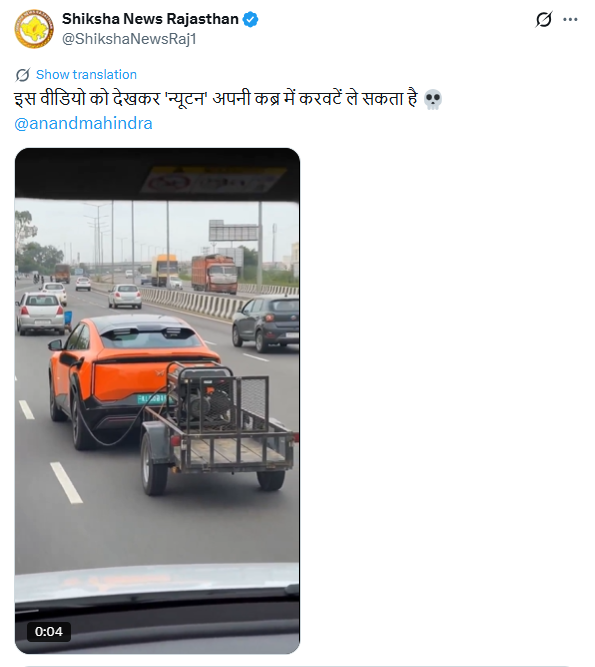
A video circulating on social media shows an electric car allegedly being powered by a portable generator attached to it. The clip is being shared with the claim that the generator is directly running the vehicle, suggesting a groundbreaking or unusual technological feat. However, research conducted by the CyberPeace found the viral claim to be false. Our research revealed that the video is not authentic but AI-generated.
Claim
On February 22, 2026, a user on X (formerly Twitter) shared the viral video with the caption: “After watching this video, Newton might turn in his grave.” The post implied that the video demonstrates a scientific impossibility.
Fact Check:
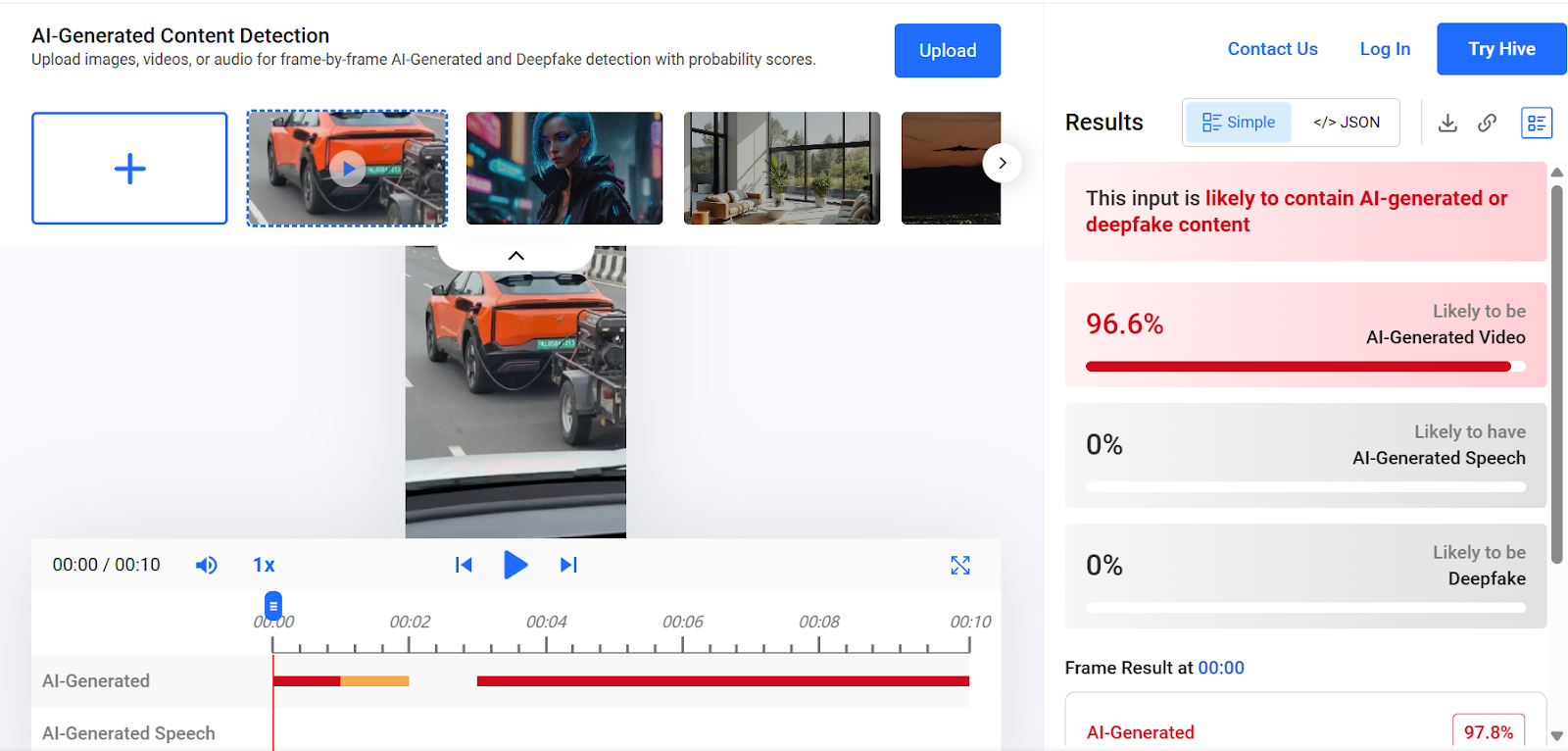
To verify the claim, we conducted a keyword search on Google. However, we found no credible reports from any reputable media organization supporting the assertion made in the viral post. A close examination of the video revealed several visual inconsistencies and unnatural elements, raising suspicion that the footage may have been generated using artificial intelligence. We then analyzed the video using the AI detection tool Hive Moderation. The results indicated a 96 percent probability that the video was AI-generated.
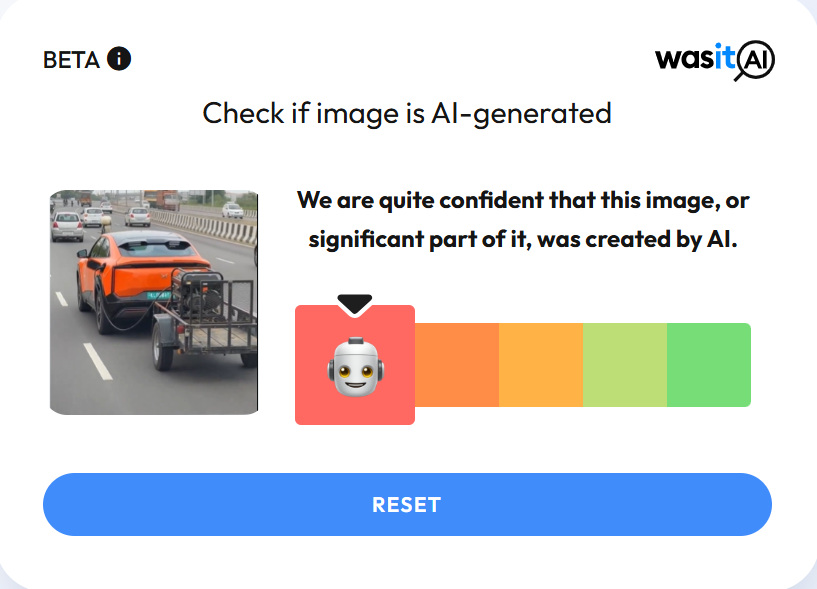
In the next step of our research , we scanned the video using another AI detection platform, WasItAI, which also concluded that the viral video was AI-generated.
Conclusion
Our research confirms that the viral video is not real. It has been artificially created using AI technology and is being circulated with a misleading claim.

Introduction
Children today are growing up amidst technology, and the internet has become an important part of their lives. The internet provides a wealth of recreational and educational options and learning environments to children, but it also presents extensively unseen difficulties, particularly in the context of deepfakes and misinformation. AI is capable of performing complex tasks in a fast time. However, misuse of AI technologies led to increasing cyber crimes. The growing nature of cyber threats can have a negative impact on children wellbeing and safety while using the Internet.
India's Digital Environment
India has one of the world's fastest-growing internet user bases, and young netizens here are getting online every passing day. The internet has now become an inseparable part of their everyday lives, be it social media or online courses. But the speed at which the digital world is evolving has raised many privacy and safety concerns increasing the chance of exposure to potentially dangerous content.
Misinformation: The raising Concern
Today, the internet is filled with various types of misinformation, and youngsters are especially vulnerable to its adverse effects. With the diversity in the language and culture in India, the spread of misinformation can have a vast negative impact on society. In particular, misinformation in education has the power to divulge young brains and create hindrances in their cognitive development.
To address this issue, it is important that parents, academia, government, industry and civil society start working together to promote digital literacy initiatives that educate children to critically analyse online material which can ease navigation in the digital realm.
DeepFakes: The Deceptive Mirage:
Deepfakes, or digitally altered videos and/or images made with the use of artificial intelligence, pose a huge internet threat. The possible ramifications of deepfake technology are concerning in India, since there is a high level of dependence on the media. Deepfakes can have far-reaching repercussions, from altering political narratives to disseminating misleading information.
Addressing the deepfake problem demands a multifaceted strategy. Media literacy programs should be integrated into the educational curriculum to assist youngsters in distinguishing between legitimate and distorted content. Furthermore, strict laws as well as technology developments are required to detect and limit the negative impact of deepfakes.
Safeguarding Children in Cyberspace
● Parental Guidance and Open Communication: Open communication and parental guidance are essential for protecting children's internet safety. It's a necessity to have open discussions about the possible consequences and appropriate internet use. Understanding the platforms and material children are consuming online, parents should actively participate in their children's online activities.
● Educational Initiatives: Comprehensive programs for digital literacy must be implemented in educational settings. Critical thinking abilities, internet etiquette, and knowledge of the risks associated with deepfakes and misinformation should all be included in these programs. Fostering a secure online environment requires giving young netizens the tools they need to question and examine digital content.
● Policies and Rules: Admitting the threats or risks posed by misuse of advanced technologies such as AI and deepfake, the Indian government is on its way to coming up with dedicated legislation to tackle the issues arising from misuse of deepfake technology by the bad actors. The government has recently come up with an advisory to social media intermediaries to identify misinformation and deepfakes and to make sure of the compliance of Information Technology (IT) Rules 2021. It is the legal obligation of online platforms to prevent the spread of misinformation and exercise due diligence or reasonable efforts are made to identify misinformation and deepfakes. Legal frameworks need to be equipped to handle the challenges posed by AI. Accountability in AI is a complex issue that requires comprehensive legal reforms. In light of various cases reported about the misuse of deepfakes and spreading such deepfake content on social media, It is advocated that there is a need to adopt and enforce strong laws to address the challenges posed by misinformation and deepfakes. Working with technological companies to implement advanced content detection tools and ensuring that law enforcement takes swift action against those who misuse technology will act as a deterrent among cyber crooks.
● Digital parenting: It is important for parents to keep up with the latest trends and digital technologies. Digital parenting includes understanding privacy settings, monitoring online activity, and using parental control tools to create a safe online environment for children.
Conclusion
As India continues to move forward digitally, protecting children in cyberspace has become a shared responsibility. By promoting digital literacy, encouraging open communication and enforcing strong laws, we can create a safer online environment for younger generations. Knowledge, understanding, and active efforts to combat misinformation and deeply entrenched myths are the keys to unlocking the safety net in the online age. Social media Intermediaries or platforms must ensure compliance under IT Rules 2021, IT Act, 2000 and the newly enacted Digital Personal Data Protection Act, 2023. It is the shared responsibility of the government, parents & teachers, users and organisations to establish safe online space for children.
References:
Executive Summary
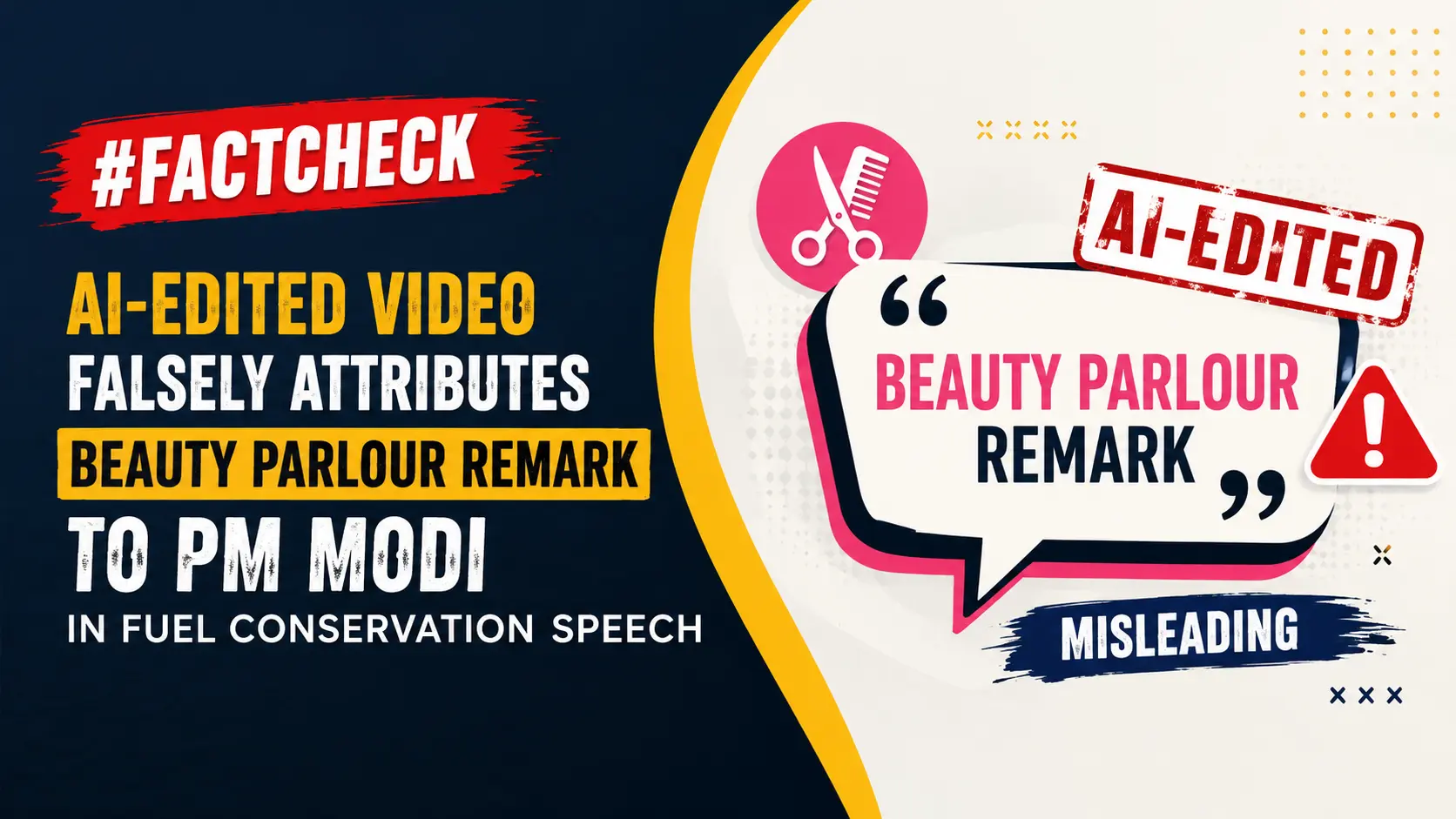
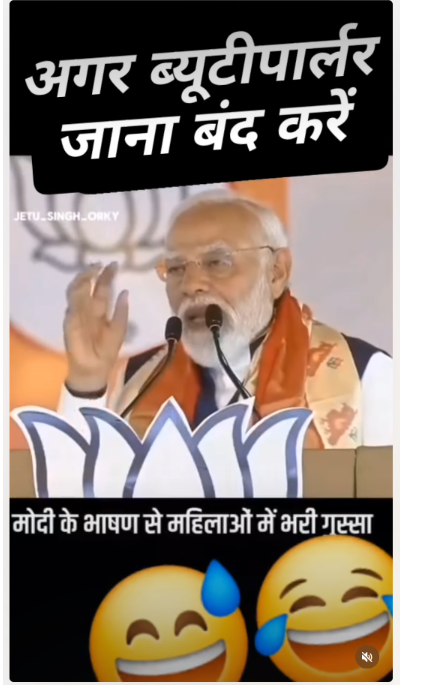
Amid ongoing tensions in West Asia, a video has been circulating on social media claiming that Prime Minister Narendra Modi urged women not to visit beauty parlours as part of an appeal related to fuel conservation. Users are widely sharing the clip as genuine. However, a fact-check by CyberPeace Research Wing has found the claim to be false. The research revealed that the original video, which discussed saving petrol, diesel and cooking gas, has been digitally edited using AI tools and shared with a misleading narrative.
Claim
An Instagram user shared the viral video on May 15, 2026, claiming that the Prime Minister advised women against visiting beauty parlours.
Fact Check
A keyword-based search on Google did not return any credible media reports supporting the viral claim. To verify the video, keyframes were extracted and run through reverse image search. The original footage was traced to the official YouTube channel of Prime Minister Narendra Modi, uploaded on May 10, 2026.
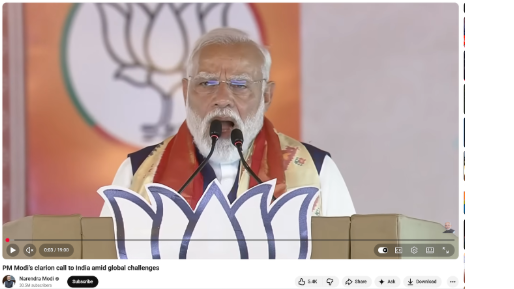
The video shows a rally held in Hyderabad, where the Prime Minister appealed to the public to save fuel by adopting work-from-home practices, promoting swadeshi goods, and refraining from purchasing gold for one year. However, nowhere in the full video is there any mention of advising women not to visit beauty parlours.
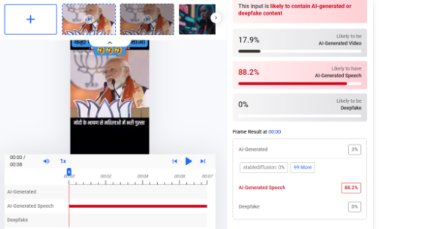
Further analysis also raised suspicion that the viral clip had been digitally altered using AI tools. The video was scanned using the HIVE Moderation AI detection tool, which indicated that it is approximately 88% likely to be AI-generated or manipulated.
Conclusion
The viral video is misleading. The original speech by Prime Minister Narendra Modi about conserving petrol, diesel and cooking gas has been edited using AI tools and circulated with a false claim targeting women visiting beauty parlours.
