
Digital Rape Is Not Cyber Rape: What "Digital" Actually Means in Criminal Law
A word rooted in medical terminology keeps getting mistaken for a word rooted in technology, and that confusion is not just semantic. On 6 August 2026, it sat at the heart of a case where police in Uttar Pradesh reportedly treated the absence of WhatsApp chats, call recordings, and social media material as grounds to disbelieve a sexual assault complaint altogether, before the Allahabad High Court intervened. For an organisation working at the intersection of digital literacy and public safety, this case is less a story about a legal term and more a case study in how assumptions about digital evidence, when left unchecked, can become a barrier to justice rather than a tool for it. "Digital" here refers to a finger, not a device, and the gap between what police expected and what the law actually required is exactly where this case becomes instructive. Digital rape has nothing to do with the internet. Digit simply means finger, and the word describes non-consensual penetration by a finger, thumb, toe, or similar body part or object. That basic clarification matters because the same investigating officers who were expected to know the law also appear to have leaned on a mistaken evidentiary standard, one where a complaint without a digital trail was treated as a complaint without merit. The judgment that followed says as much about how the criminal justice system treats sexual assault complaints, and how it treats digital evidence, as it does about legal terminology.
The case, in brief
The matter is Arpit Gupta v. State of U.P. and 2 others, 2026 LiveLaw (AB) 571, neutral citation 2026:AHC:168404-DB, decided by a Division Bench of Justice Chandra Dhari Singh and Justice Tarun Saxena. Arpit Gupta, the owner of a Noida based real estate firm, Parit Associates (OPC) Private Limited, approached the High Court under Article 226 of the Constitution seeking to quash an FIR registered against him at Wave City police station, Ghaziabad, alleging rape, sexual harassment, and criminal intimidation. The complainant, a former employee of Gupta's company, alleged sustained workplace sexual harassment culminating in an act legally categorised as digital penetration, along with subsequent threats and intimidation. She resigned in April 2026. What followed procedurally is where the case becomes significant: Gupta filed a separate extortion complaint against her, she was arrested and later released on bail, and only after that sequence did she attempt to formally report the sexual assault, a report the police initially declined to register.
What followed complicates the picture considerably, and is central to why the case reached the High Court at all. On 14 April 2026, Gupta filed his own FIR against the complainant alleging extortion, claiming she had demanded 10 crore rupees from him. She was arrested in connection with that case and secured bail on 21 May 2026. After her release, she attempted to register her own complaint of sexual assault, but police at Wave City station declined to register an FIR. A written complaint dated 7 July 2026 addressed directly to the Commissioner of Police, Ghaziabad, also produced no result. The police investigating officer's report, dated 16 July 2026, went further still, terming her allegations false and characterising the sexual assault complaint as a retaliatory counter-blast to Gupta's extortion case, citing in particular the absence of supporting electronic material such as WhatsApp chats, call recordings, or social media evidence. Only after she approached a Magistrate under Section 173(4) of the Bharatiya Nagarik Suraksha Sanhita, 2023, did the FIR finally get registered, by Magisterial order dated 20 July 2026.
The legal terminology: what "digital rape" actually means under BNS
Section 63 of the Bharatiya Nyaya Sanhita, 2023, which replaced Section 375 of the erstwhile Indian Penal Code, defines rape. Clause (b) of Section 63 extends that definition to cover non-penile penetrative acts, specifically insertion, to any extent, of any object or body part other than the penis into specified parts of a woman's body, done without her consent or against her will, subject to the circumstances of absent consent set out in the section. Digital penetration, meaning penetration by finger or thumb, falls squarely within this clause. There is no standalone offence in the BNS titled "digital rape"; the term is a widely used medico-legal shorthand, not a separate statutory category, and the offence itself is prosecuted and punished as rape under Section 64 BNS, which prescribes the punishment provisions. In this particular case, the FIR reportedly also invoked Sections 74, 75(2), and 76 BNS, provisions dealing with assault or use of criminal force with intent to outrage modesty, sexual harassment by a person in a position of authority, and related offences, alongside Section 351(3) BNS concerning criminal intimidation.
CyberPeace View
This is where the case circles back to the concern raised at the outset. The most instructive part of this judgment for the wider public may not be the definition of digital rape at all, but the police's original insistence on WhatsApp chats and call recordings before treating the complaint as credible. That reflex, a growing habit of associating the credibility of any complaint with the existence of a corresponding digital trail, reflects a wider and increasingly common misunderstanding about how evidence actually works in criminal law. Not every offence leaves an electronic footprint, and sexual assault, by its nature, frequently occurs without any accompanying digital record at all. Treating the absence of a chat log or a recording as evidence of falsehood inverts the legal presumption entirely, and risks turning digital literacy gaps within law enforcement into a structural barrier for genuine complainants who have no messages to produce because none were ever exchanged. As India's criminal justice system increasingly interacts with digital evidence, this case is a useful reminder that digital forensics should supplement an investigation, never gatekeep its starting point.
There is a genuinely technology rooted counterpart to this terminology confusion worth flagging, and it sits at the opposite end of the spectrum from where this case began. While "digital rape" has nothing to do with computers, "virtual rape" very much does, and it is an emerging harm India's legal framework is still catching up to. In January 2024, British police opened what was reported as the first investigation of its kind after a minor's avatar was allegedly gang assaulted by other avatars on Meta's metaverse platform, and similar incidents, avatars groped or sexually harassed within minutes of entering platforms like Horizon Worlds, have been documented repeatedly since, including a widely reported case involving psychotherapist Nina Jane Patel as far back as 2021. These incidents involve no physical contact whatsoever, yet researchers and legal scholars studying virtual reality note that immersive VR environments are specifically engineered to create a sense of embodiment, where the brain processes an avatar's violation as something closer to a real bodily experience than a typical online interaction, producing genuine trauma responses in victims. India's legal position here remains only partially settled. The POCSO Act's coverage of non-contact sexual abuse of minors likely extends to avatar based assaults on children, but adult victims of virtual sexual violence in India currently have no clearly dedicated statutory provision, leaving prosecutors to stretch existing harassment and outraging modesty provisions, originally drafted for a physical world, onto a form of harm the legislature has not yet explicitly addressed. As metaverse and VR platforms grow their user base in India, that gap is one worth closing before, rather than after, a case forces the question, much as this one forced the question of how police ought to treat digital evidence.
Conclusion
Two lessons run through this judgment. First, that the law's protection of bodily autonomy extends well beyond narrow, traditional definitions of penetration, a principle Section 63(b) BNS makes explicit. Second, that a complainant reporting a cognizable offence cannot be made to investigate her own case before the police will even open a file. FIR registration is not conviction, and conviction requires investigation, evidence, and trial to follow. What this case asks of the system is simpler than any of that: register the complaint, then do the work of finding out what happened.
References
- https://www.barandbench.com/news/digital-rape-allahabad-hc-orders-inquiry-against-senior-ghaziabad-police-officers-for-not-filing-fir
- https://www.livelaw.in/high-court/allahabad-high-court/allahabad-hc-police-cant-refuse-fir-sexual-complaint-non-production-evidence-545374

Related Blogs

For years, Malaysia governed artificial intelligence the way most countries did before they had to, with guidelines nobody could be fined for ignoring. The National Guidelines on AI Governance and Ethics, published by Malaysia's Ministry of Science, Technology and Innovation back in September 2024, told developers and deployers what "responsible AI" should look like. It just never made anyone legally responsible for anything.
Malaysia is now attempting to change that. On 10 July 2026, the National AI Office (NAIO), operating under the Ministry of Digital, released a Public Consultation Paper for what would become Malaysia's first horizontal AI statute: a single law covering AI across every sector, rather than a patchwork of guidelines, data protection rules, and whatever a particular regulator happens to think about algorithms this year. Written submissions closed on 31 July 2026, and the government has said it wants the Bill tabled and completed before the year is out. That is an aggressive timeline for a law this broad, and it tells you something about how urgently Putrajaya wants this on the books.
Why "horizontal" matters here
Most of the world's AI rules so far have been vertical. A banking regulator handles AI in banking, a health authority handles AI in diagnostics, and everything in between is grey space. Malaysia's own consultation paper is refreshingly candid about the problem this creates: it warns of "differing standards and approaches" building up across sectors, and notes that existing tools only really respond after something has already gone wrong.
The Bill tries to fix that by sitting above the sector specific rules rather than replacing them. It rests on three pillars.
- First, a Central AI Authority, which would still lean on existing regulators (think Bank Negara Malaysia for financial services or the Securities Commission for capital markets) through what the paper calls "Sectoral Leads."
- Second, a set of baseline principles written into law rather than left as suggestions: human dignity, transparency and explainability, accountability, safety and security, and data governance.
- Third, a structure that scales obligations to how dangerous a given AI system actually is, instead of regulating a spam filter and a hospital triage algorithm with the same rulebook.
The mechanics: three tiers, two roles, one authority
The risk framework itself splits into three tiers: Tier 1 for unacceptable risk, Tier 2 for high risk, and Tier 3 for low risk, with obligations scaling up as the potential for harm does. Obligations fall on two kinds of actors: Developers, who materially shape what a system can do, and Deployers, who actually run it in the real world. A single company can be both. This split deliberately echoes the controller and processor distinction from Malaysia's Personal Data Protection Act, though not perfectly, a point several legal commentators have already flagged as a source of future confusion, since a Deployer processing personal data will usually be a controller under the PDPA, while a Developer offering a hosted model might only be a processor.
The Central AI Authority itself is proposed to run three functions: an AI Safety function that maintains the risk framework and oversees testing and incident reporting; an Investigation and Enforcement function with power to demand fact finding and issue directions after incidents; and an AI Enablement function that produces guidance, templates, training, and runs the AI Sandbox, a controlled testing environment meant to let companies experiment before the full weight of compliance lands on them. For smaller businesses without in house compliance teams, that enablement mandate may end up mattering more day to day than the enforcement powers do.
Two more features round out the design. An incident reporting mechanism would require Developers and Deployers to flag not just failures but near misses and unexpected effects, with the public also able to lodge complaints directly. And the Bill's territorial reach is broad by design: it would apply to any AI system designed, developed, or used in Malaysia, regardless of where the underlying infrastructure sits, carving out exemptions only for personal use and national security matters.
How this stacks up against the EU AI Act
Malaysia's drafters have clearly been reading Brussels' homework, and it shows in the structure: a tiered risk model, a central authority, mandatory obligations tied to risk level. But the resemblance is more skeletal than skin deep once you look at the details.
The EU AI Act is a fully codified regulation running to hundreds of pages, with named prohibited practices spelled out in an annex, specific high risk categories listed by sector, and detailed conformity assessment procedures before a system ever reaches the market. Malaysia's Bill, at consultation stage, is still working from principles and a harm list rather than an exhaustive catalogue of prohibited or high risk use cases, closer in spirit to a framework law that leaves the granular detail to subsidiary guidelines and Sectoral Leads. That's partly a function of timeline: the EU spent roughly three years negotiating its Act before adoption, while Malaysia is trying to move from consultation paper to finished statute inside a single year.
Enforcement philosophy differs too. Brussels built the AI Act around compliance that happens before deployment: conformity assessments, technical documentation, and sign off procedures similar to product safety certification, particularly for high risk systems. Malaysia's design leans more on an enablement first posture, with sandboxes, guidance, and incident reporting sitting alongside enforcement powers rather than in front of them, at least as currently framed. Whether that survives contact with the final legislative text is an open question. The consultation drew real pushback from law firms wanting harsher penalty ranges and clearer thresholds, so the version tabled in Parliament may look tougher than the one made public in July.
There's also a jurisdictional difference worth flagging. The EU AI Act has genuine extraterritorial teeth backed by the largest single market in the developed world, which is why companies far outside Europe still comply with it. Malaysia's Bill claims similarly broad reach on paper, covering any system used in Malaysia regardless of where it's hosted, but the practical leverage to enforce that against a foreign Developer is a different question entirely, and one the Edwin Lee and Partners (Law firm based in malaysia) submission specifically raised as a gap needing an international cooperation mechanism.
India and AI Regulation
India has spent the past year deliberately walking in the evolving direction. Through MeitY's India AI Governance Guidelines, released in November 2025 ahead of the India AI Impact Summit, explicitly reject a standalone AI statute in favour of what officials have repeatedly called a "light touch" model: seven guiding principles, trust, people first, innovation, fairness, accountability, transparency, and safety, layered on top of existing law rather than a new one. The Digital Personal Data Protection Act, 2023 and the IT Act, 2000 with amendment rules, do most of the actual legal work, with sector regulators like the RBI and SEBI handling the specifics for their own industries.
The contrast with Malaysia is almost a case study in two governance philosophies. Where Malaysia is building a central authority with enforcement teeth from day one, India has so far preferred advisory bodies, an AI Governance Group and a proposed AI Safety Institute, that shape norms without imposing binding cross sectoral obligations.
Where Malaysia's Bill would be justiciable law with penalties attached, India's framework is closer to a philosophy statement with sandboxes and a national incident database bolted on. That is not a weaker approach so much as a different, and arguably shrewd, bet. India is the world's largest testing ground for AI adoption at scale, from welfare delivery to vernacular language tools, and a heavy compliance regime risks slowing exactly the kind of grassroots experimentation the government is trying to encourage. Betting on existing law and institutional judgment, at least for now, keeps that door open, and it has let India move fast without waiting for a perfect law first.
That said, India's position has been visibly shifting. In July 2026, MeitY Secretary S. Krishnan signalled the government is now exploring dedicated AI legislation after all, a notable departure from the "no early regulation" stance the ministry had held in 2023, and this is likely accelerated by growing concern over deepfakes and synthetic media, which already prompted binding traceability and labelling obligations under amended intermediary rules earlier this year.
The stakes for the next few months
None of this is finished. Malaysia's Bill is still a consultation paper, not enacted law, and the gap between what NAIO proposed in July and what Parliament eventually passes could be significant. Several submissions are already pushing for a wider harm list, sharper enforcement thresholds, and clearer rules for foreign Developers who never set foot in Kuala Lumpur. But the direction is set. Malaysia has decided AI governance can no longer run on goodwill and voluntary guidelines, and it now attempts to write enforceable AI law on a real deadline rather than settling for guidelines. However, the final Bill lives up to that ambition, or gets watered down in the process, is something only the next few months will show.
References
- Ministry of Digital. "Kementerian Digital Mulakan Libat Urus Cadangan Rang Undang Undang Tadbir Urus Kecerdasan Buatan (AI)." 10 July 2026. https://www.digital.gov.my/en-GB/siaran/Kementerian-Digital-Mulakan-Libat-Urus-Cadangan-Rang-Undang-Undang-Tadbir-Urus-Kecerdasan-Buatan-(AI)
- Digital Watch Observatory. "Malaysia launches consultations on AI Governance Bill." July 2026. https://dig.watch/updates/malaysia-ai-governance-bill-consultation
- Baker McKenzie, Wong and Partners. "Malaysia: Public Consultation on the AI Governance Bill." July 2026. https://www.bakermckenzie.com/en/insight/publications/2026/07/malaysia-public-consultation-on-the-ai-governance-bill
- Digital Policy Alert. "Testing requirements in AI Governance Bill" and related entries on the National AI Office consultation. https://digitalpolicyalert.org
- Rahmat Lim and Partners. "National AI Office issues public consultation paper on proposed Artificial Intelligence (AI) Governance Bill." https://www.rahmatlim.com/perspectives/articles/33264/mykh-national-ai-office-issues-public-consultation-paper-on-proposed-artificial-intelligence-ai-governance-bill
- Edwin Lee and Partners. "Malaysia's AI Governance Bill: Our Submission to the Consultation." https://lpplaw.my/ai-governance-malaysia/
- Kiizen. "Overview of the Proposed Malaysia's AI Governance Bill." https://www.kiizen.com.my/proposed-malaysias-ai-governance-bill/
- Zicelegal. "Consultation Alert: Public Consultation on Malaysia's AI Governance Bill." https://www.ziclegal.com/resources/consultation-alert-public-consultation-on-malaysias-ai-governance-bill
- Welcome.AI. "Malaysia's AI Governance Bill Expands Regulation and Accountability for Businesses." July 2026. https://www.welcome.ai/content/malaysias-ai-governance-bill-expands-regulation-and-accountability-for-businesses
- Regulations.ai. "Malaysia AI Regulation Overview." https://regulations.ai/regulations/RAI-MY-NA-SUMMARY-2026
- w.media. "Malaysia to enact AI law." https://w.media/malaysia-to-enact-ai-law/
- VisionIAS. "India's New AI Governance Guidelines Push Hands Off Approach." November 2025. https://visionias.in/blog/current-affairs/indias-new-ai-governance-guidelines-push-hands-off-approach
- EY India. "AI governance guidelines: A bet on innovation." https://www.ey.com/en_in/insights/ai/ai-governance-guidelines-a-bet-on-innovation
- TechnoSports. "Airegulation: Indian Government Finalizes AI Regulation." May 2026. https://technosports.co.in/airegulation-india-framework/
- The AI Track. "India AI Governance Guidelines Released for 2025 to 26." https://theaitrack.com/india-ai-governance-guidelines-2025/
- Lexology, contributed by a law firm. "India's AI Governance Model: MeitY's AI Guidelines and The Evolving Copyright Landscape." March 2026. https://www.lexology.com/library/detail.aspx?g=ffc0c58c-3727-4472-9914-5fa6a33ffffd
- Srishti IAS. "India's First AI Governance Framework 2026: Principles, Oversight, and Inclusive Growth Strategy." February 2026. https://srishtiias.com/india-first-ai-governance-framework-ahead-of-impact-summit-2026/
- Whalesbook. "India Plans Dedicated AI Law, Shifting From Light Touch Approach." July 2026. https://www.whalesbook.com/news/English/other/India-Plans-Dedicated-AI-Law-Shifting-From-Light-Touch-Approach/6a4811c9c7db2a6cf1650f24
- Saikrishna and Associates. "Decoding the India AI Governance Guidelines." November 2025. https://www.saikrishnaassociates.com/decoding-the-india-ai-governance-guidelines/
- News on Air. "MeitY Unveils India AI Governance Guidelines to Promote Safe and Responsible AI Adoption." 5 November 2025. https://www.newsonair.gov.in/meity-unveils-india-ai-governance-guidelines-to-promote-safe-and-responsible-ai-adoption
Contributors
- Maj. Vineet Kumar, Founder & Global President, CyberPeace
- Mr. Neeraj Soni, Senior Research Analyst, Policy & Advocacy, CyberPeace

Executive Summary
A video of Prime Minister Narendra Modi is being widely shared on social media, in which he appears to announce that all ration card holders will receive free mobile phones, provided no member of their family is a government employee. However, research by the CyberPeace has found this claim to be false. Our research reveals that the viral video is AI-generated and does not reflect any real announcement.
Claim:
An Instagram user shared the viral video with the caption, “If you have a ration card, you will get a free mobile phone.”
- Post link: https://www.instagram.com/reels/DWqDKWxy6lJ/
- Archived link: https://archive.ph/wip/dmpIf

Fact Check
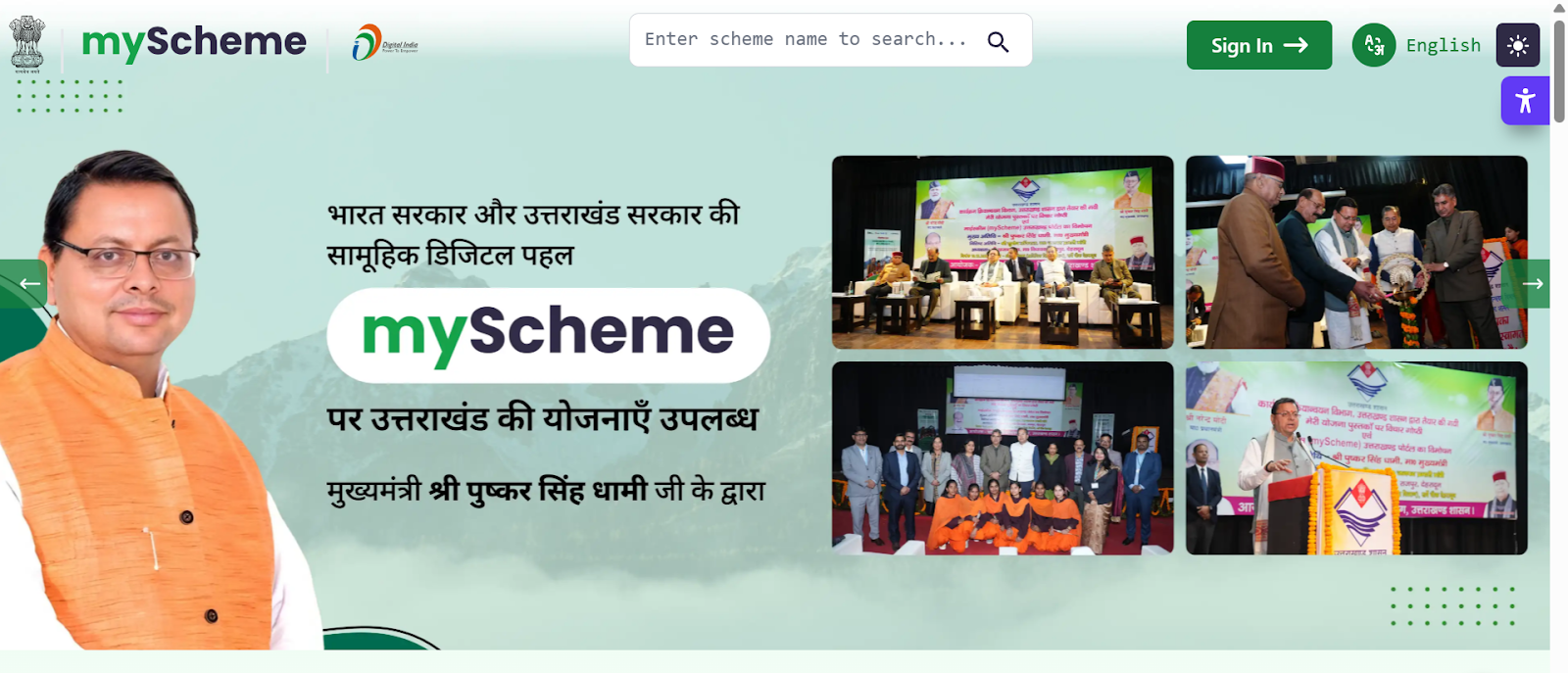
To verify the claim, we first conducted a keyword-based search on Google. However, we did not find any credible media reports supporting such an announcement, raising doubts about the authenticity of the video. We then checked the official government welfare schemes portal, myscheme.gov.in, which provides verified information about central government schemes. No such scheme offering free mobile phones to ration card holders was found on the platform.
Conclusion
Our research confirms that the viral video is fake and AI-generated. There is no official announcement or credible report suggesting that ration card holders will receive free mobile phones under any government scheme. The video has been digitally manipulated using artificial intelligence and is being circulated with a misleading claim. This serves as another example of how AI-generated content can be used to spread misinformation.

Executive Summary
Amid heightened tensions in West Asia following the conflict involving the United States, Israel and Iran, a video showing a large explosion behind a building is being widely shared on social media.
Users claim that the footage shows an Iranian missile strike on a US military base in Kuwait. However, CyberPeace Research Wing research found the claim to be misleading. The viral video is actually from an Israeli airstrike in southern Lebanon. While Kuwait said its air defence systems intercepted missiles and drones during regional hostilities, the viral footage has no connection to any alleged attack on a US base in Kuwait.
Claim
An Instagram user, “indiscope24hr,” shared the video on May 28, 2026, with text overlaid on the clip stating:“Iran launches a deadly missile attack on a US base in Kuwait.”The caption claimed that Iran targeted a US airbase in retaliation for American military action and that Kuwait’s air defence systems were intercepting incoming missiles and drones.

Fact Check
To verify the claim, we extracted key frames from the viral video and conducted a reverse image search using Google Lens. This led us to a post shared on May 28, 2026, by the Instagram account “iltv_israel,” which identified the footage as an Israeli Air Force strike on a Hezbollah target in the southern Lebanese city of Tyre.

Further research found the same footage in a video report uploaded by the New York Post’s YouTube channel on May 28, 2026. According to the report, Israel carried out strikes targeting Hezbollah positions in Tyre, southern Lebanon.

We also found the clip in a video report published by NBC News. The report stated that Israel intensified strikes in southern Lebanon despite an existing ceasefire agreement.


The matching visuals across these reports confirm that the viral footage originated from Lebanon and not from Kuwait.
Conclusion
The viral claim is misleading. The video does not show an Iranian missile strike on a US military base in Kuwait. It actually depicts an Israeli airstrike carried out in the Lebanese city of Tyre on May 28, 2026, and is being shared with a false context on social media.
