
Data Centres, Ecological Limits, and the Cost of AI Sovereignty
Governments in nations across the globe are consequently vying to draw in data centre investments as components of the wider AI sovereignty policies. However, recent events in Ireland make it clear that such an infrastructure is associated with significant environmental and social price tags. In geographically dense and resource-strained countries such as India, these trade-offs pose some pressing questions of whether today's AI ambitions are socially or environmentally sustainable. The data centre crisis in Ireland provides a handy reminder. It puts emphasis on the capacity of land use, water stress, energy demand, and disruption of communities to amplify quickly as digital infrastructure continues to increase at a faster rate than the regulatory and ecological capacity. These lessons should be paid close attention to as India continues to develop the IndiaAI Mission and establish itself as an AI hub in the future.
Why Data Centres Are Ecological Stress Multipliers
The data centres are sometimes referred to as clean digital infrastructure; however, in an actual sense, they are heavy industrial guardians of resources. Centres of large proportions demand an extensive amount of land, constant electricity, and a significant amount of water to cool down.
The most apparent effect is on energy consumption. Data centres are 24/7, round the clock, and need to be powered with a high-quality and stable electricity supply. By 2022, data centres had more than a quarter of the overall national electricity demand in Ireland, which created problems regarding grid stability and energy security (EirGrid, 2022). This compelled regulators to limit new connections in some of the areas. These trends also bring some similarities to certain regions of the United States, especially in Virginia, where particular data centres have led to peaks in the electricity demand in the region (U.S. Energy Information Administration, 2023).
Another primary source of pressure is the use of water. Heavy liquid coolers are very intensive systems in data centres, which tend to use the local freshwater sources. This may directly compete with residential and agricultural requirements in case of heatwaves or drought. In the western US, environmental advocates have issued notices that data centres contribute to a water deficit in other overextended basins (New York Times, 2023).
It also depends on local pollution and land use. Data centres are normally constructed on large plots close to urban or peri-urban centres, having good accessibility. This may push aside farmlands, increase property rates, and change local ecologies. The backup diesel generators, which are employed during power cuts, add to air and noise pollutants, and they thus impact the adjacent communities.
Ireland’s Experience and the Social Backlash
The low corporate taxes, cool climate, and PIC access to the EU market made Ireland a big data centre hub. The concentration of facilities around Dublin was, however, done unintentionally, leading to its rapid concentration. The population in their local communities also experienced mounting housing pressure, power competition, and underemployment because the number of long-term jobs created by a data centre is comparatively low.
The Irish government later realised that data centre expansion was causing strain on climate commitments and electricity infrastructure on a national level. The grid operators started denying new connections to data centres in sections of the country, which amounted to a kind of moratorium on further growth (TechPolicy.Press, 2024). What was initially a digital success story became a government issue, an ecology versus economic plan clash.
This experience particularly applies to smaller or densely populated countries. Countries such as Ireland and India have concentrated influences on fewer points, unlike the United States or China, which are able to spread data centres over wide areas.
India’s Emerging Data Centre Geography
India is advertising data centres as a way of advancing its digital and AI platforms. There are a number of states that have published data centre policies, such as Maharashtra, Tamil Nadu, Telangana, and Uttar Pradesh. The connectivity, financial infrastructure, and location to large user bases are making Mumbai, Chennai, Hyderabad, and Noida major hubs (MeitY, 2023).
Nevertheless, these areas are already stressed in terms of the environment. Mumbai also suffers from land shortage and flooding. There is a permanent water scarcity in Chennai. Hyderabad and Noida cannot cope with the intensity of population growth and energy demand in urban areas. Locating such large-scale data centres in these locations will pose a risk of augmenting the existing vulnerabilities instead of decentralising the benefits of development.
India, in contrast to the United States or China, does not have continental-scale low-density areas with spare water and power near demand centres. Each additional data centre in India is thus likely to have an impact on an increasing number of people per unit of infrastructure, by land acquisition, water diversion, grid pressure, or environmental externalities.
Community Impacts and Uneven Costs
The cost incurred by local communities to increase their data centre expansion is not proportionate to the benefits enjoyed. The after construction efforts to generate employment is minimal and the long term effects include strains on infrastructure. Tariffs can be increased with the growth of electric power demand. The extraction of water may have impacts on local supply. The prices of real estate may crowd out the lower-income population.
These impacts may be enhanced in India, where urban inequality is already high. The informal settlements along the industrial areas are such that they are vulnerable to pollution as well as diversion of resources. Data centres will otherwise be yet another project that creates unequal development without proper consultation with the community and other environmental protection measures.
What This Means for India’s AI Sovereignty Plans
The IndiaAI Mission of India focuses on developing local AI potential, data networks, and processing units to minimise the use of external systems ( IndiaAI Mission Document, 2024). This vision is based on data centres. Nevertheless, the concept of simple AI autonomy is made difficult by ecological limits.
An AI infrastructure that compromises water security, energy availability, or climate objectives could come under opposition and regulation backlash, as in the case of Ireland. This would delay deployment and add up to more expenses. Physical expansion is not sufficient to have true AI sovereignty. It should also take into consideration sustainability, decentralisation, and efficiency.
This brings about strategic concerns. India must invest more vigorously in energy-efficient computing, edge AI and model optimisation as opposed to scale. Is renewable energy integration viable to maintain the information centre demand? Is data centre siting to comply with long term water and land use planning, and not the short-term incentives of investment?
Towards a Sustainable Digital Infrastructure Strategy
India can still afford to learn not to repeat the errors experienced elsewhere. This will necessitate data centres being regarded as digital assets, not important infrastructures that have an environmental and social impact. Both more robust environmental impact assessments and public water and energy accounting and community involvement must become unavoidable.
From an AI policy perspective, sustainability should be seen as a pillar of sovereignty. An AI ecosystem that depends on fragile ecological foundations is not resilient. By learning from Ireland and adapting global lessons to local realities, India can pursue AI leadership without creating new environmental crises.
The future of AI will not be decided only by algorithms and talent. It will also be shaped by land, water, energy, and the communities that live alongside digital infrastructure. Ignoring those realities would make AI ambition fragile rather than sovereign.
References
- TechPolicy.Press. What Ireland’s Data Center Crisis Means for the EU’s AI Sovereignty Plans. 2024. https://techpolicy.press
- EirGrid. Electricity Demand Forecast Statement. 2022. https://www.eirgridgroup.com
- U.S. Energy Information Administration. Data Centers and Energy Demand. 2023. https://www.eia.gov
- New York Times. Data Centers Are Straining Water Supplies in the American West. 2023. https://www.nytimes.com
- Ministry of Electronics and Information Technology. India Data Centre Policy and Digital Infrastructure Initiatives. 2023. https://www.meity.gov.in
- IndiaAI Mission. Official Mission Document and Framework. 2024. https://indiaai.gov.in

Related Blogs

Introduction
In the rapidly evolving landscape of cyber threats, a novel menace has surfaced the concept of Digital Arrest. The impostors impersonating law enforcement officers deceive the victims into believing that their bank account, SIM card, Aadhaar card, or bank card has been used unlawfully. They coerce victims into paying them money. Digital Arrest involves the virtual restraint of individuals. These suspensions can vary from restricted access to the account(s), and digital platforms, to implementing measures to prevent further digital activities or being restrained on video calling or being monitored through video calling. In the era of digitisation where the technology is growing on an exponential phase, various existing loopholes are being utilised by the wrongdoers which has given rise to this sinister trend known as “digital arrest fraud”. In this scam, the defrauder manipulates the victims, who impersonate law enforcement officials and further traps the victims into a web of deception involving threats of imminent digital restraint and coerced financial transactions.
Recognizing the Danger of Digital Arrest
A recent case involving an interactive voice response (IVR) call that targeted a victim sheds light on the complexities of the "digital arrest" cybercrime. The victim was notified by the scammers—who were pretending to be law enforcement officers—that a SIM card in her name had apparently been utilised in a criminal incident in Mumbai. The call proceeded to a video conversation with an FBI agent who falsely accused her of being involved in money laundering. The victim was forced into a web of dishonesty because she now believed she was involved in a criminal case, underscoring the psychological manipulation these hackers were using.
Recent incidents of digital arrest fraud
- Recently, a complaint was registered at the Noida Cyber Crime Police Station made by a 50-year-old victim, who was deceived of over Rs 11 lakh and exposed to "digital arrest". By using the identities of an IPS officer in the CBI and the founder of an airline that was grounded, the attackers, masquerading as law enforcement officers, falsely accused the victim of being involved in a fake money-laundering case. She was told that she had another SIM card in her name that was used for fraudulent activities in Mumbai. The complaint made by the victim asserted “Victim’s call was transferred to a person (who identified himself as a Mumbai Police officer) who conducted the initial interrogation over the call and then on Skype VC, where she stayed from 9:30 AM to around 7 in the evening. The woman ended up transferring around ₹11.11 lakh. The scammers then ended contact with her, after which she realised she had been scammed.
- Another recent case of digital arrest fraud came from Faridabad. Where a 23-year-old girl got a call from a fraudster posing as a Lucknow customs officer. The caller said that a package was being shipped to Cambodia that included cards and passports associated with the victim's Aadhaar number. The victim was forced to believe that she was a part of illegal activity, which included trafficking in humans. Under the guise of police officials, the hackers made up allegations before extorting money from the victim. After that, she was told by a man acting as a CBI official that she needed to pay five per cent of the total which was Rs 15 lakh. She said the cybercriminals instructed her not to log off Skype. In the meantime, she ended up transferring Rs 2.5 lakh to a bank account shared by cybercriminals.
Measures to protect oneself from digital arrest
Sustaining a practical and observant approach towards cybersecurity is the key to lowering the peril of being targeted and experiencing digital arrest. Following are certain best practices for ensuring the same:
- Cyber Hygiene: This includes maintaining cyber hygiene by regularly updating passwords, and software and also enabling two-factor authentications to reduce the chances of unauthorized access.
- Phishing Attempts: These can be evaded by refraining from clicking on dubious links or downloading attachments from unknown sources and also authenticating the legitimacy of emails and messages before sharing any personal information.
- Secured devices: By installing reputable antivirus and anti-malware solutions and keeping operating systems and applications up to date with the latest security protocols.
- Virtual Private Networks (VPNs): VPNs can be employed to encrypt internet connections thus enhancing privacy and security. However one must be cautious of free VPN services and OTP only for trustworthy providers.
- Monitor online services: A regular review of online accounts for any unauthorized or unlawful activities and setting up alerts for any changes to account settings or login attempts may help in the early detection of cybercrime and coping with it.
- Secure communication channels: Using secure communication techniques such as encryption can be done for the protection of sensitive information. Sharing of passwords and other information must be cautiously done especially in public forums.
- Awareness: The increasing prevalence of cybercrime known as "digital arrest" underscores the need for preventive measures and increased public awareness. Educational initiatives that draw attention to prevalent cyber threats—especially those that include law enforcement impersonation—can enable people to identify and fend off scams of this kind. The collaboration of law enforcement agencies and telecommunication companies can effectively limit the access points used by fraudsters by identifying and blocking susceptible calls.
Conclusion
The rise of Digital Arrest presents a noteworthy and innovative threat to cybersecurity by taking advantage of people's weaknesses through deceitful impersonation and coercive measures. The case in Noida is a prime example of the boldness and skill of cybercriminals who use fear and false information to trick victims into thinking they are in danger of suffering harsh legal repercussions and taking large amounts of money. In order to combat this increasing cybercrime, people need to take a proactive and watchful stance when it comes to cybersecurity. Cyber hygiene techniques, such as two-factor authentication and frequent password changes, are essential for lowering the possibility of unwanted access. Important precautions include being aware of phishing efforts, protecting devices with reliable antivirus software, and using Virtual Private Networks (VPNs) to increase privacy. Cybercriminals and fraudsters often use fear as a powerful tool to manipulate people and exploit their vulnerabilities for illicit gains in the realms of cybercrime and financial fraud. To protect themselves against the sneaky threat of Digital Arrest, netizens must traverse the constantly changing cyber threat landscape with collective knowledge, educated practices, and strong cybersecurity measures.
References:
- https://www.business-standard.com/india-news/new-cyber-crime-trend-unravelled-in-up-woman-held-under-digital-arrest-123120200485_1.html
- https://www.businessinsider.in/india/news/noida-woman-scammed-11-lakh-in-digital-arrest-scam-everything-you-need-to-know/articleshow/105727970.cms
- https://m.timesofindia.com/life-style/parenting/moments/23-year-old-faridabad-girl-on-digital-arrest-for-17-days-how-to-protect-your-children-from-cyber-crime/photostory/105442556.cms
Executive Summary
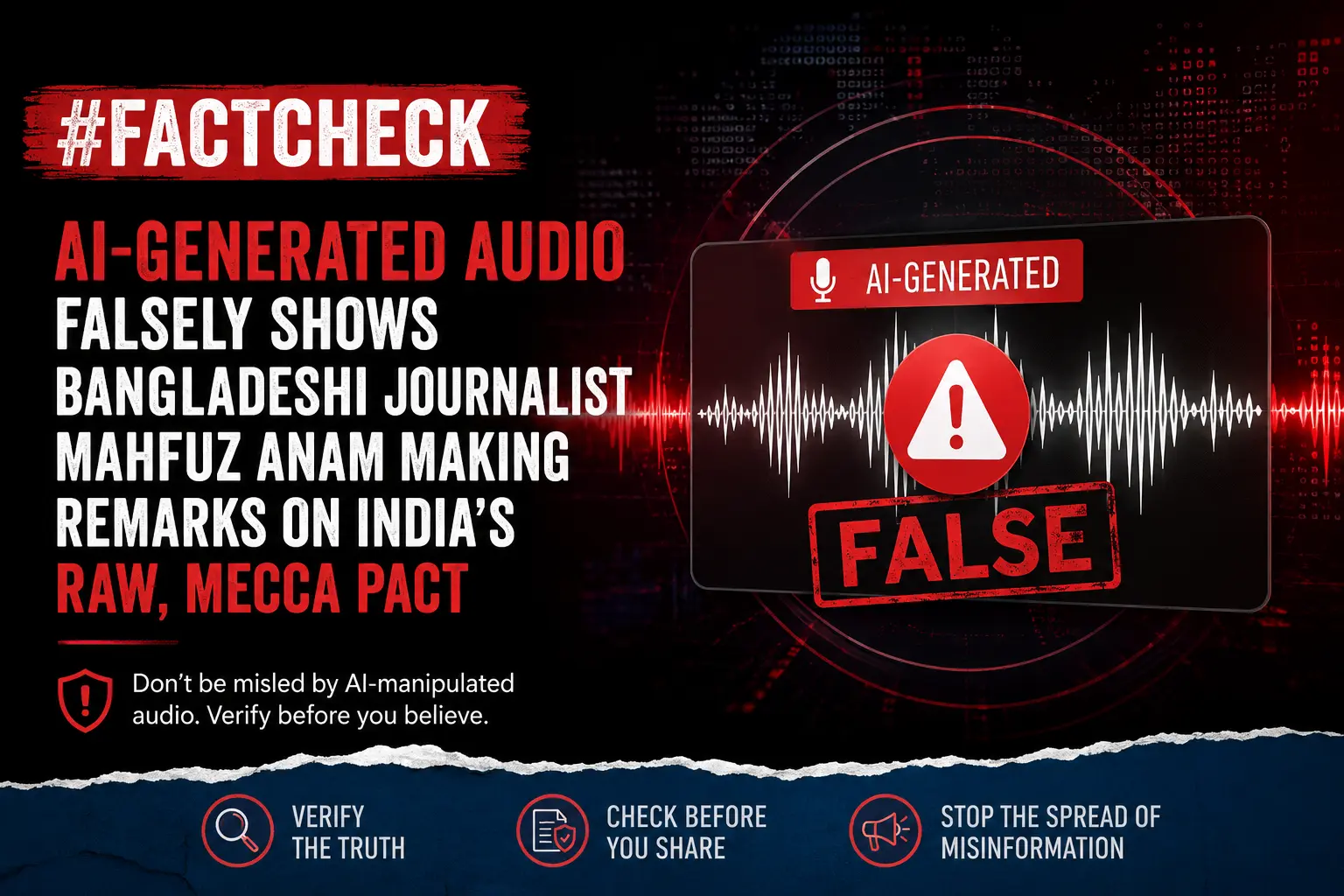
Several social media users shared an India Today news clipping showing an exclusive interaction between senior journalist Rajdeep Sardesai and Bangladeshi journalist Mahfuz Anam. In the purported conversation, Anam was heard claiming that India’s intelligence agency RAW was trying to prevent Bangladesh from joining the Mecca Pact. He was also allegedly heard saying that New Delhi was promoting an alternative defence pact with Bangladesh involving a Middle Eastern country and Israel. However, the CyberPeace Research Wing found that the viral video had been digitally manipulated using AI-generated audio. The original video, uploaded by India Today, showed Anam in conversation with Sardesai in 2024, discussing Bangladesh’s July uprising and the developments that followed.
Claim
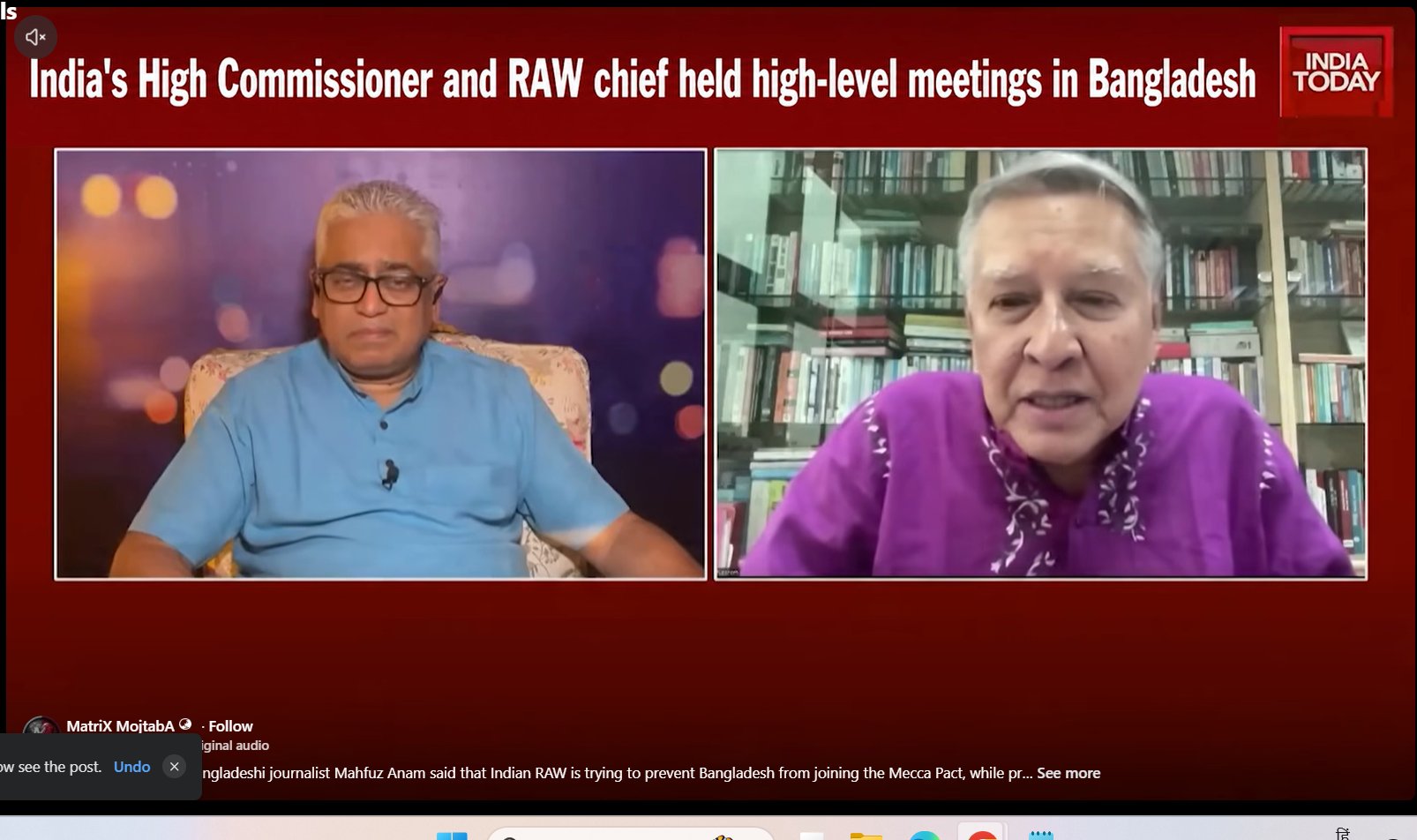
A Facebook page, ‘MatriX MojtabA’, shared an India Today news clipping on August 12 showing senior journalist Rajdeep Sardesai interviewing Bangladeshi journalist Mahfuz Anam. In the purported conversation, Anam was heard saying that RAW was trying to prevent Bangladesh from joining the Mecca Pact. He was also allegedly heard claiming that New Delhi was promoting an alternative defence pact with Bangladesh involving a Middle Eastern country and Israel.
https://www.facebook.com/reel/1804199927691664/
Fact Check
Based on the clue that the viral clip was taken from an exclusive conversation between Mahfuz Anam and India Today, the Desk conducted a customised keyword search on Google. The search led to an extended version of the same interaction uploaded on India Today’s official YouTube channel. The Desk identified the original footage by comparing the background setting and the clothes worn by both Sardesai and Anam, which appeared identical in the viral and original clips. However, an analysis of the original video established that it was an old recording from August 2024. The video showed Anam and Sardesai discussing Bangladesh’s July 2024 uprising and the developments that followed. The Desk analysed the complete 14-minute-and-three-second video and found that Anam did not mention RAW or the Mecca Pact anywhere in the interaction. The Mecca Pact was signed by Pakistan, Saudi Arabia and Turkey on August 7, 2026. This established that the statement attributed to Anam in the viral video was not part of the original conversation and had been digitally manipulated.
https://www.youtube.com/watch?v=gEoyTkOZ8xE

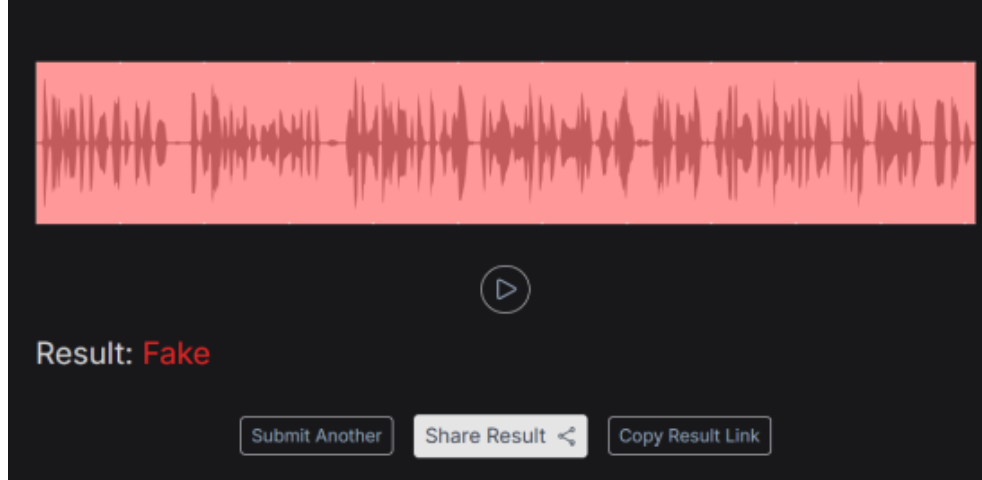
Further, after finding indications that the audio in the viral clip may have been AI-generated, the Desk extracted the audio from the video and analysed it using Resemble AI, an AI audio detection tool. The analysis indicated that the audio was AI-generated and did not contain Mahfuz Anam’s original statement.
Conclusion
The viral video showing Bangladeshi journalist Mahfuz Anam purportedly claiming that India’s RAW was trying to prevent Bangladesh from joining the Mecca Pact is digitally manipulated. The audio in the viral clip was replaced with AI-generated audio to attribute a false statement to Anam. The original India Today video, recorded in 2024, shows Anam speaking with Rajdeep Sardesai about Bangladesh’s July uprising and the developments that followed. He does not make any remarks about RAW, the Mecca Pact or an alternative defence pact involving India, a Middle Eastern country and Israel.
.webp)
Introduction
Digitalisation presents both opportunities and challenges for micro, small, and medium enterprises (MSMEs) in emerging markets. Digital tools can increase business efficiency and reach but also increase exposure to misinformation, fraud, and cyber attacks. Such cyber threats can lead to financial losses, reputational damage, loss of customer trust, and other challenges hindering MSMEs' ability and desire to participate in the digital economy.
The current information dump is a major component of misinformation. Misinformation spreads or emerges from online sources, causing controversy and confusion in various fields including politics, science, medicine, and business. One obvious adverse effect of misinformation is that MSMEs might lose trust in the digital market. Misinformation can even result in the devaluation of a product, sow mistrust among customers, and negatively impact the companies’ revenue. The reach of and speed with which misinformation can spread and ruin companies’ brands, as well as the overall difficulty businesses face in seeking recourse, may discourage MSMEs from fully embracing the digital ecosystem.
MSMEs are essential for innovation, job development, and economic growth. They contribute considerably to the GDP and account for a sizable share of enterprises. They serve as engines of economic resilience in many nations, including India. Hence, a developing economy’s prosperity and sustainability depend on the MSMEs' growth and such digital threats might hinder this process of growth.
There are widespread incidents of misinformation on social media, and these affect brand and product promotion. MSMEs also rely on online platforms for business activities, and threats such as misinformation and other digital risks can result in reputational damage and financial losses. A company's reputation being tarnished due to inaccurate information or a product or service being incorrectly represented are just some examples and these incidents can cause MSMSs to lose clients and revenue.
In the digital era, MSMEs need to be vigilant against false information in order to preserve their brand name, clientele, and financial standing. In the interconnected world of today, these organisations must develop digital literacy and resistance against misinformation in order to succeed in the long run. Information resilience is crucial for protecting and preserving their reputation in the online market.
The Impact of Misinformation on MSMEs
Misinformation can have serious financial repercussions, such as lost sales, higher expenses, legal fees, harm to the company's reputation, diminished consumer trust, bad press, and a long-lasting unfavourable impact on image. A company's products may lose value as a result of rumours, which might affect both sales and client loyalty.
Inaccurate information can also result in operational mistakes, which can interrupt regular corporate operations and cost the enterprise a lot of money. When inaccurate information on a product's safety causes demand to decline and stockpiling problems to rise, supply chain disruptions may occur. Misinformation can also lead to operational and reputational issues, which can cause psychological stress and anxiety at work. The peace of the workplace and general productivity may suffer as a result. For MSMEs, false information has serious repercussions that impact their capacity to operate profitably, retain employees, and maintain a sustainable business. Companies need to make investments in cybersecurity defence, legal costs, and restoring consumer confidence and brand image in order to lessen the effects of false information and ensure smooth operations.
When we refer to the financial implications caused by misinformation spread in the market, be it about the product or the enterprise, the cost is two-fold in all scenarios: there is loss of revenue and then the organisation has to contend with the costs of countering the impact of the misinformation. Stock Price Volatility is one financial consequence for publicly-traded MSMEs, as misinformation can cause stock price fluctuations. Potential investors might be discouraged due to false negative information.
Further, the reputational damage consequences of misinformation on MSMEs is also a serious concern as a loss of their reputation can have long-term damages for a carefully-cultivated brand image.
There are also operational disruptions caused by misinformation: for instance, false product recalls can take place and supplier mistrust or false claims about supplier reliability can disrupt procurement leading to disruptions in the operations of MSMEs.
Misinformation can negatively impact employee morale and productivity due to its physiological effects. This leads to psychological stress and workplace tensions. Staff confidence is also affected due to the misinformation about the brand. Internal operational stability is a core component of any organisation’s success.
Misinformation: Key Risk Areas for MSMEs
- Product and Service Misinformation
For MSMEs, misinformation about products and services poses a serious danger since it undermines their credibility and the confidence clients place in the enterprise and its products or services. Because this misleading material might mix in with everyday activities and newsfeeds, viewers may find it challenging to identify fraudulent content. For example, falsehoods and rumours about a company or its goods may travel quickly through social media, impacting the confidence and attitude of customers. Algorithms that favour sensational material have the potential to magnify disinformation, resulting in the broad distribution of erroneous information that can harm a company's brand.
- False Customer Reviews and Testimonials
False testimonies and evaluations pose a serious risk to MSMEs. These might be abused to damage a company's brand or lead to unfair competition. False testimonials, for instance, might mislead prospective customers about the calibre or quality of a company’s offerings, while phony reviews can cause consumers to mistrust a company's goods or services. These actions frequently form a part of larger plans by rival companies or bad individuals to weaken a company's position in the market.
- Misleading Information about Business Practices
False statements or distortions regarding a company's operations constitute misleading information about business practices. This might involve dishonest marketing, fabrications regarding the efficacy or legitimacy of goods, and inaccurate claims on a company's compliance with laws or moral principles. Such incorrect information can result in a decline in consumer confidence, harm to one's reputation, and even legal issues if consumers or rival businesses act upon it. Even before the truth is confirmed, for example, allegations of wrongdoing or criminal activity pertaining can inflict a great deal of harm, even if they are disproven later.
- Fake News Related to Industry and Market Conditions
By skewing consumer views and company actions, fake news about market and industry circumstances can have a significant effect on MSMEs. For instance, false information about market trends, regulations, or economic situations might make consumers lose faith in particular industries or force corporations to make poor strategic decisions. The rapid dissemination of misinformation on online platforms intensifies its effects on enterprises that significantly depend on digital engagement for their operations.
Factors Contributing to the Vulnerability of MSMEs
- Limited Resources for Verification
MSMEs have a small resource pool. Information verification is typically not a top priority for most. MSMEs usually lack the resources needed to verify the information and given their limited resources, they usually tend to deploy the same towards other, more seemingly-critical functions. They are more susceptible to misleading information because they lack the capacity to do thorough fact-checking or validate the authenticity of digital content. Technology tools, human capital, and financial resources are all in low supply but they are essential requirements for effective verification processes.
- Inadequate Digital Literacy
Digital literacy is required for effective day-to-day operations. Fake reviews, rumours, or fake images commonly used by malicious actors can result in increased scrutiny or backlash against the targeted business. The lack of awareness combined with limited resources usually spells out a pale redressal plan on part of the affected MSME. Due to their low digital literacy in this domain, a large number of MSMEs are more susceptible to false information and other online threats. Inadequate knowledge and abilities to use digital platforms securely and effectively can result in making bad decisions and raising one's vulnerability to fraud, deception, and online scams.
- Lack of Crisis Management Plans
MSMEs frequently function without clear-cut procedures for handling crises. They lack the strategic preparation necessary to deal with the fallout from disinformation and cyberattacks. Proactive crisis management plans usually incorporate procedures for detecting, addressing, and lessening the impact of digital harms, which are frequently absent from MSMEs.
- High Dependence on Social Media and Online Platforms
The marketing strategy for most MSMEs is heavily reliant on social media and online platforms. While the digital-first nature of operations reduces the need for a large capital to set up in the form of stores or outlets, it also gives them a higher need to stay relevant to the trends of the online community and make their products attractive to the customer base. However, MSMEs are depending more and more on social media and other online channels for marketing, customer interaction, and company operations. These platforms are really beneficial, but they also put organisations at a higher risk of false information and online fraud. Heavy reliance on these platforms coupled with the absence of proper security measures and awareness can result in serious interruptions to operations and monetary losses.
CyberPeace Policy Recommendations to Enhance Information Resilience for MSMEs
CyberPeace advocates for establishing stronger legal frameworks to protect MSMEs from misinformation. Governments should establish regulations to build trust in online business activities and mitigate fraud and misinformation risks. Mandatory training programs should be implemented to cover online safety and misinformation awareness for MSME businesses. Enhanced reporting mechanisms should be developed to address digital harm incidents promptly. Governments should establish strict penalties for deliberate inaccurate misinformation spreaders, similar to those for copyright or intellectual property violations. Community-based approaches should be encouraged to help MSMEs navigate digital challenges effectively. Donor communities and development agencies should invest in digital literacy and cybersecurity training for MSMEs, focusing on misinformation mitigation and safe online practices. Platform accountability should be increased, with social media and online platforms playing a more active role in removing content from known scam networks and responding to fraudulent activity reports. There should be investment in comprehensive digital literacy solutions for MSMEs that incorporate cyber hygiene and discernment skills to combat misinformation.
Conclusion
Misinformation poses a serious risk to MSME’s digital resilience, operational effectiveness, and financial stability. MSMEs are susceptible to false information because of limited technical resources, lack of crisis management strategies, and insufficient digital literacy. They are also more vulnerable to false information and online fraud because of their heavy reliance on social media and other online platforms. To address these challenges it is significant to strengthen their cyber hygiene and information resilience. Robust policy and regulatory frameworks are encouraged, promoting and mandating online safety training programmes, and improved reporting procedures, are required to overall enhance the information landscape.
References:
- https://www.dai.com/uploads/digital-downsides.pdf
- https://www.indiacode.nic.in/bitstream/123456789/2013/3/A2006-27.pdf
- https://pib.gov.in/PressReleaseIframePage.aspx?PRID=1946375
- https://dai-global-digital.com/digital-downsides-the-economic-impact-of-misinformation-and-other-digital-harms-on-msmes-in-kenya-india-and-cambodia.html
- https://www.dai.com/uploads/digital-downsides.pdf
