
#FactCheck - Viral Video of Shah Rukh Khan Is AI-Generated; Users Sharing Misleading Claims
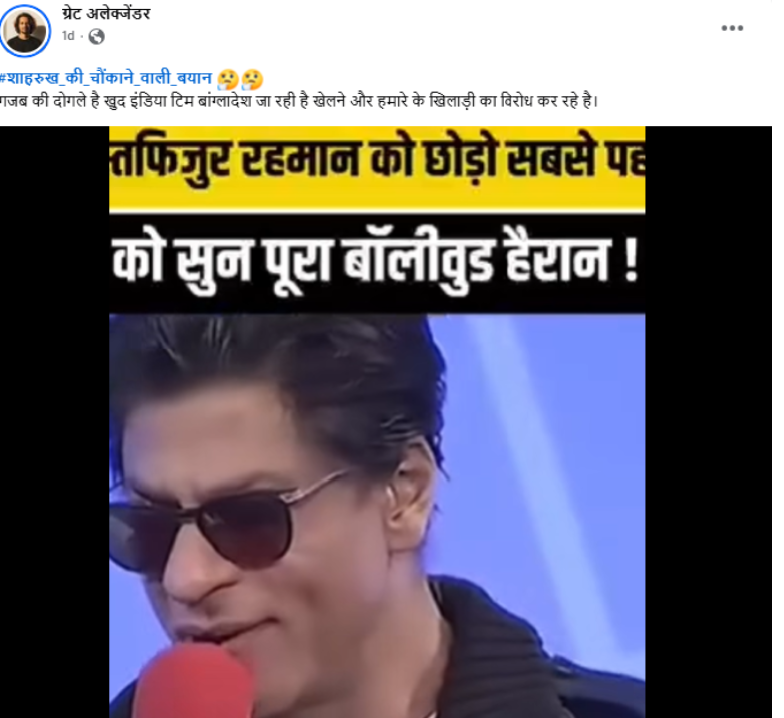
A video of Bollywood actor and Kolkata Knight Riders (KKR) owner Shah Rukh Khan is going viral on social media. The video claims that Shah Rukh Khan is reacting to opposition against Bangladeshi bowler Mustafizur Rahman playing for KKR and is allegedly calling industrialist Gautam Adani a “traitor,” while appealing to stop Hindu–Muslim politics.
Research by the CyberPeace Foundation found that the voice heard in the video is not Shah Rukh Khan’s but is AI-generated. Shah Rukh Khan has not made any official statement regarding Mustafizur Rahman’s removal from KKR. The claim made in the video concerning industrialist Gautam Adani is also completely misleading and baseless.
Claim
In the viral video, Shah Rukh Khan is allegedly heard saying: “People barking about Mustafizur Rahman playing for KKR should stop it. Adani is earning money by betraying the country by supplying electricity from India to Bangladesh. Leave Hindu–Muslim politics and raise your voice against traitors like Adani for the welfare of the country. Mustafizur Rahman will continue to play for the team.”
The post link, archive link, and screenshots can be seen below:
- Archive link: https://archive.is/XsQXp
- Facebook reel link: https://www.facebook.com/reel/1220246633365097
Research
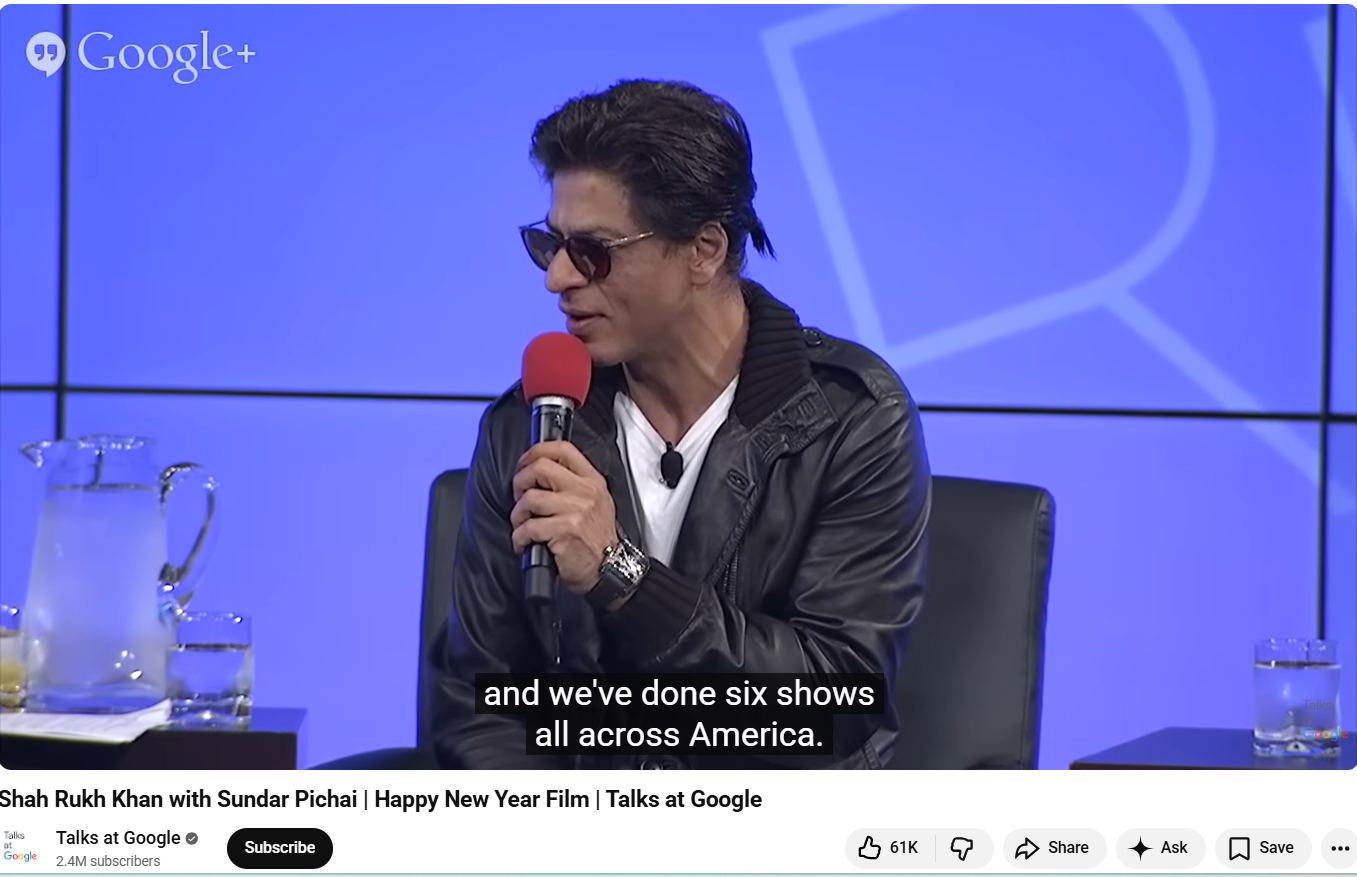
We examined the key frames of Shah Rukh Khan’s viral video using Google Lens. During this process, we found the original video on the official YouTube channel Talks at Google, which was uploaded on 2 October 2014.
In this video, Shah Rukh Khan is seen wearing the same outfit as in the viral clip. He is seen responding to questions from Google CEO Sundar Pichai. The YouTube video description mentions that Shah Rukh Khan participated in a fireside chat held at the Googleplex, where he answered Pichai’s questions and also promoted his upcoming film “Happy New Year.”
The link to the video is given : https://www.youtube.com/watch?v=H_8UBv5bZo0
Upon closely analyzing the viral video of Shah Rukh Khan, we noticed a clear mismatch between his voice and lip movements (lip sync). Such inconsistencies usually appear when the original video or its audio has been tampered with.
We then examined the audio present in the video using the AI detection tool Aurigin. According to the tool’s results, the audio in the viral video was found to be approximately 99 percent AI-generated.
Conclusion
Our research confirmed that the voice heard in the video is not Shah Rukh Khan’s but is AI-generated. Shah Rukh Khan has not made any official comment regarding Mustafizur Rahman’s removal from KKR. Additionally, the claims made in the video about industrialist Gautam Adani are completely misleading and baseless.

Related Blogs

Executive Summary
A video showing a group of people wearing Muslim caps raising provocative slogans against the Rashtriya Swayamsevak Sangh (RSS) is being widely shared on social media. Users sharing the clip claim that the incident took place recently in Uttar Pradesh. However, CyberPeace research found the claim to be false. The probe established that the video is neither recent nor related to Uttar Pradesh. In fact, the footage dates back to 2022 and is from Telangana. The slogans heard in the video were raised during a protest against Goshamahal MLA T. Raja Singh, and the clip is now being circulated with a misleading claim.
Claim
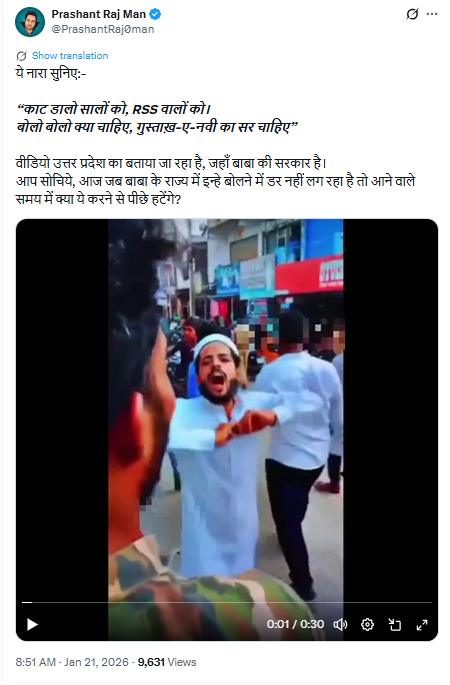
On January 21, 2026, a user on social media platform X (formerly Twitter) shared the video claiming it showed people in Uttar Pradesh chanting slogans such as, “Kaat daalo saalon ko, RSS walon ko” and “Gustakh-e-Nabi ka sar chahiye.” The post suggested that such slogans were being raised openly in Uttar Pradesh despite strict law enforcement. Links to the post and its archive are provided below.
Fact Check:
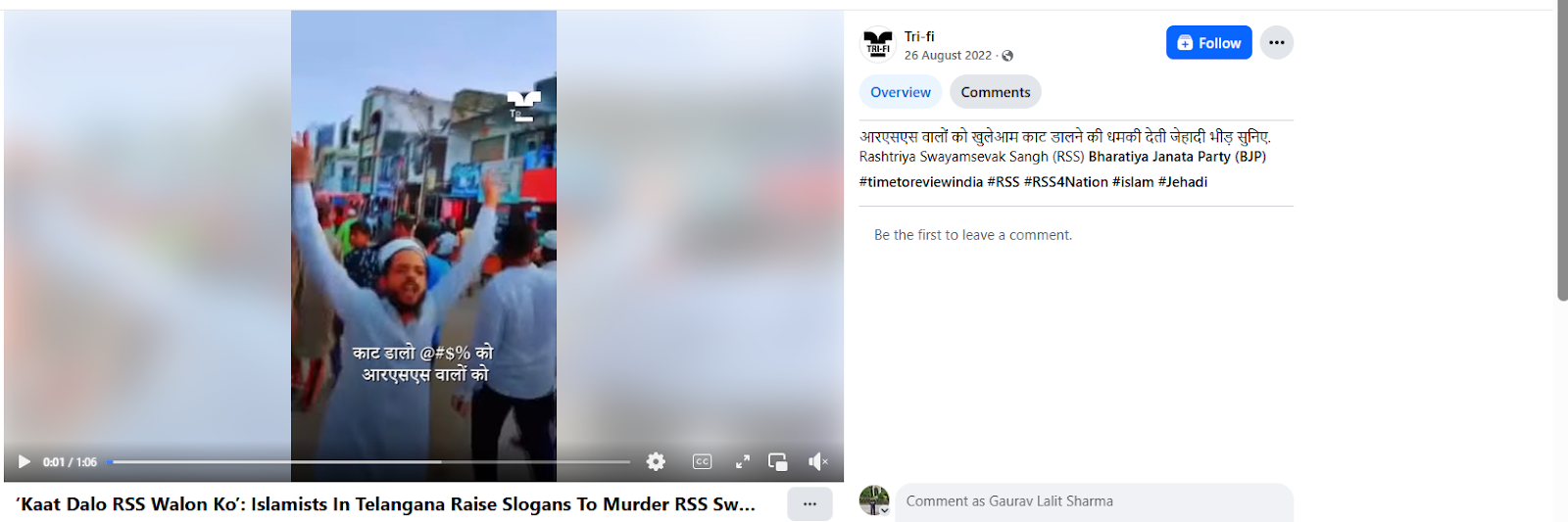
To verify the claim, CyberPeace research conducted a reverse image search using keyframes from the viral video. The same footage was found on a Facebook account where it had been uploaded on August 26, 2022, indicating that the video is not recent.
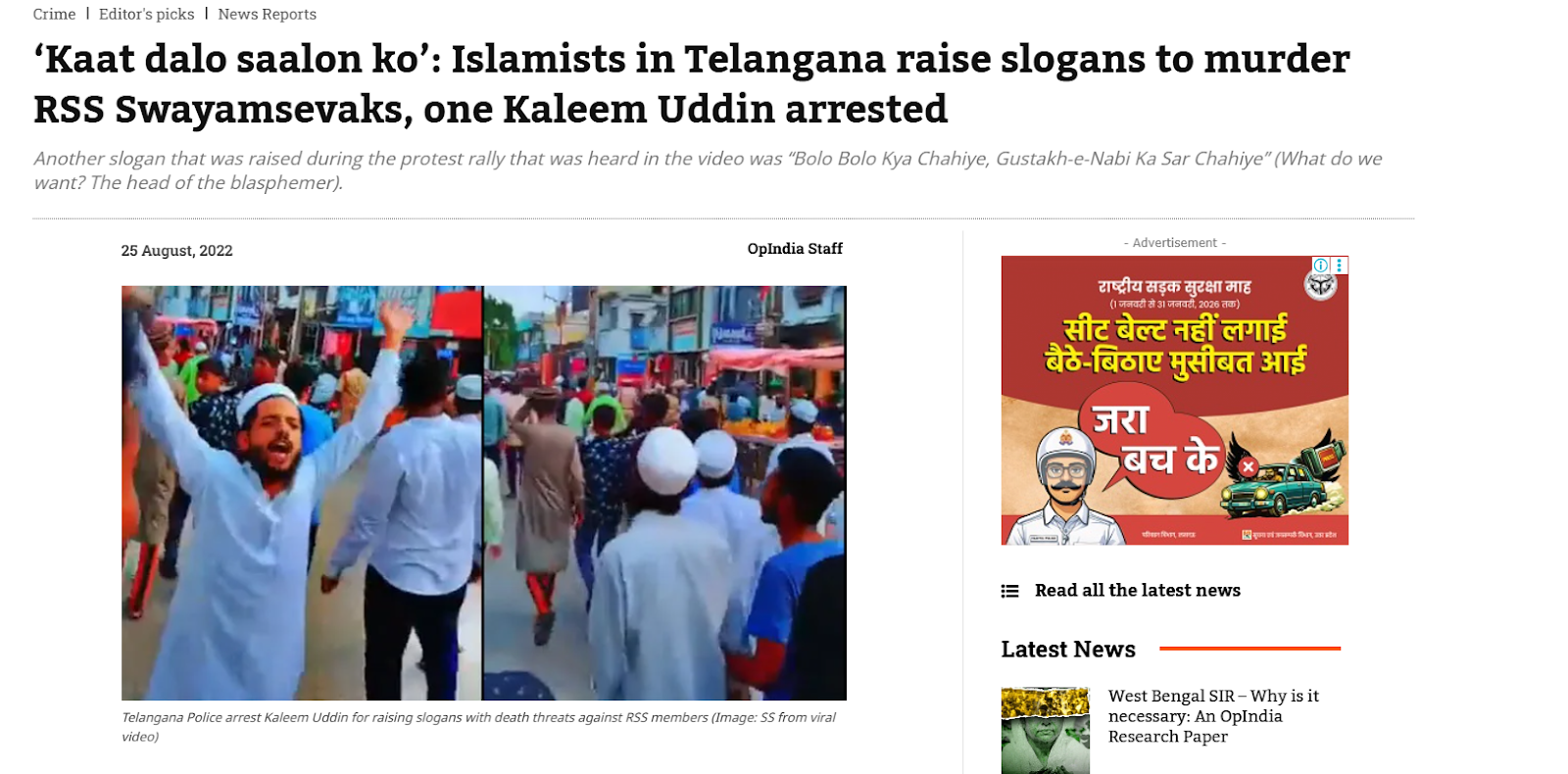
Further verification led the team to a report published by news portal OpIndia on August 25, 2022, which featured identical visuals from the viral clip. According to the report, the video showed a protest march organised against BJP MLA T. Raja Singh following his alleged controversial remarks about Prophet Muhammad. The report identified one of the individuals in the video as Kaleem Uddin, who was allegedly heard raising the slogan “Kaat daalo saalon ko,” to which the crowd responded “RSS walon ko.” The slogan was linked to incitement against RSS members.
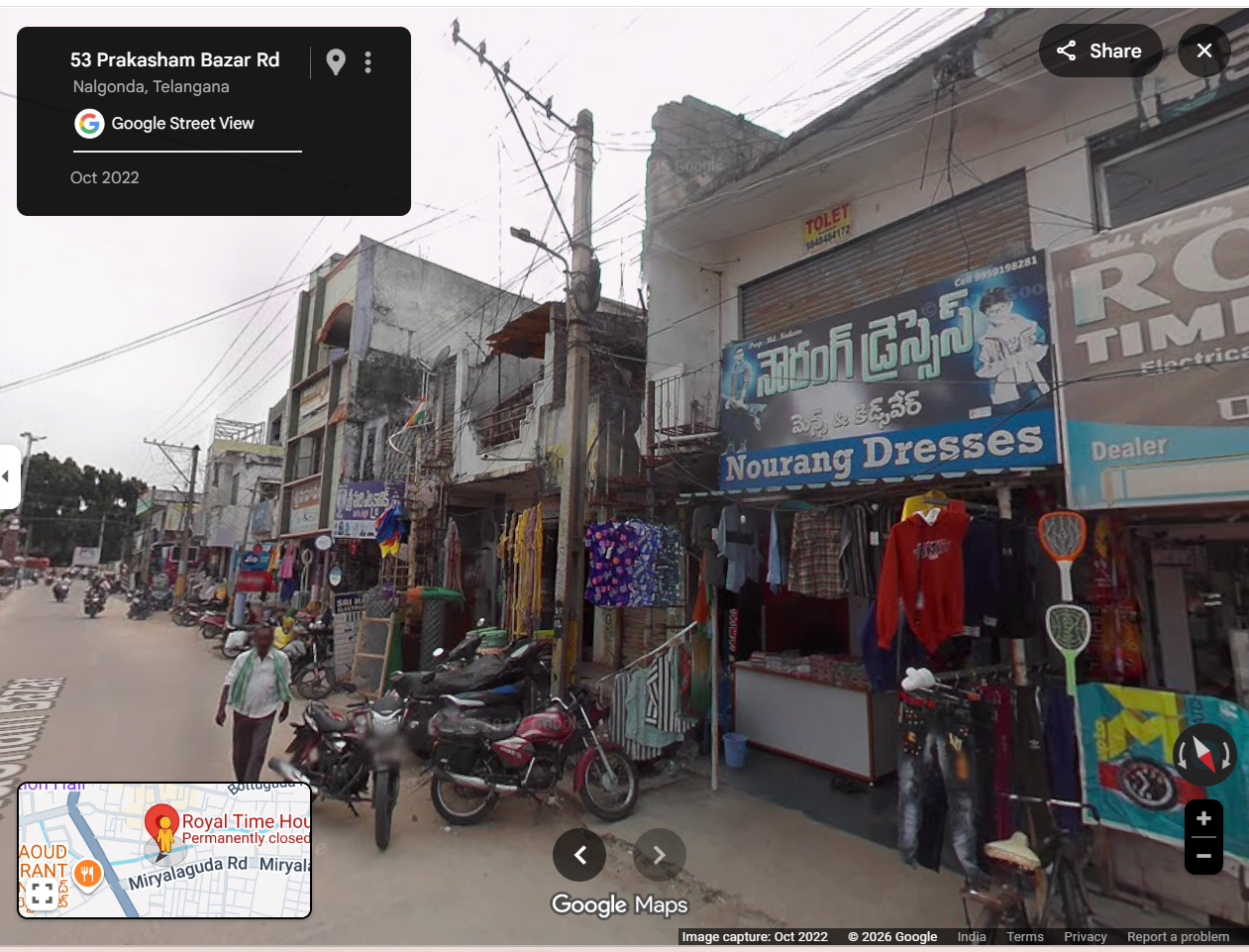
To confirm the location, the video was examined closely. A shop sign reading “Royal Time House” was visible in the footage. Using Google Street View, the same shop was located in Nalgonda, Telangana, conclusively establishing that the video was filmed there and not in Uttar Pradesh.
Conclusion
CyberPeace research confirmed that the viral video is from 2022 and was recorded in Telangana, not Uttar Pradesh. The clip is being falsely circulated with a misleading claim to give it a communal and political angle.
.webp)
Introduction
In India, the rights of children with regard to protection of their personal data are enshrined under the Digital Personal Data Protection Act, 2023 which is the newly enacted digital personal data protection law of India. The DPDP Act requires that for the processing of children's personal data, verifiable consent of parents or legal guardians is a necessary requirement. If the consent of parents or legal guardians is not obtained then it constitutes a violation under the DPDP Act. Under section 2(f) of the DPDP act, a “child” means an individual who has not completed the age of eighteen years.
Section 9 under the DPDP Act, 2023
With reference to the collection of children's data section 9 of the DPDP Act, 2023 provides that for children below 18 years of age, consent from Parents/Legal Guardians is required. The Data Fiduciary shall, before processing any personal data of a child or a person with a disability who has a lawful guardian, obtain verifiable consent from the parent or the lawful guardian. Section 9 aims to create a safer online environment for children by limiting the exploitation of their data for commercial purposes or otherwise. By virtue of this section, the parents and guardians will have more control over their children's data and privacy and they are empowered to make choices as to how they manage their children's online activities and the permissions they grant to various online services.
Section 9 sub-section (3) specifies that a Data Fiduciary shall not undertake tracking or behavioural monitoring of children or targeted advertising directed at children. However, section 9 sub-section (5) further provides room for exemption from this prohibition by empowering the Central Government which may notify exemption to specific data fiduciaries or data processors from the behavioural tracking or target advertising prohibition under the future DPDP Rules which are yet to be announced or released.
Impact on social media platforms
Social media companies are raising concerns about Section 9 of the DPDP Act and upcoming Rules for the DPDP Act. Section 9 prohibits behavioural tracking or targeted advertising directed at children on digital platforms. By prohibiting intermediaries from tracking a ‘child's internet activities’ and ‘targeted advertising’ - this law aims to preserve children's privacy. However, social media corporations contended that this limitation adversely affects the efficacy of safety measures intended to safeguard young users, highlighting the necessity of monitoring specific user signals, including from minors, to guarantee the efficacy of safety measures designed for them.
Social media companies assert that tracking teenagers' behaviour is essential for safeguarding them from predators and harmful interactions. They believe that a complete ban on behavioural tracking is counterproductive to the government's objectives of protecting children. The scope to grant exemption leaves the door open for further advocacy on this issue. Hence it necessitates coordination with the concerned ministry and relevant stakeholders to find a balanced approach that maintains both privacy and safety for young users.
Furthermore, the impact on social media platforms also extends to the user experience and the operational costs required to implement the functioning of the changes created by regulations. This also involves significant changes to their algorithms and data-handling processes. Implementing robust age verification systems to identify young users and protect their data will also be a technically challenging step for the various scales of platforms. Ensuring that children’s data is not used for targeted advertising or behavioural monitoring also requires sophisticated data management systems. The blanket ban on targeted advertising and behavioural tracking may also affect the personalisation of content for young users, which may reduce their engagement with the platform.
For globally operating platforms, aligning their practices with the DPDP Act in India while also complying with data protection laws in other countries (such as GDPR in Europe or COPPA in the US) can be complex and resource-intensive. Platforms might choose to implement uniform global policies for simplicity, which could impact their operations in regions not governed by similar laws. On the same page, competitive dynamics such as market shifts where smaller or niche platforms that cater specifically to children and comply with these regulations may gain a competitive edge. There may be a drive towards developing new, compliant ways of monetizing user interactions that do not rely on behavioural tracking.
CyberPeace Policy Recommendations
A balanced strategy should be taken into account which gives weightage to the contentions of social media companies as well as to the protection of children's personal information. Instead of a blanket ban, platforms can be obliged to follow and encourage openness in advertising practices, ensuring that children are not exposed to any misleading or manipulative marketing techniques. Self-regulation techniques can be implemented to support ethical behaviour, responsibility, and the safety of young users’ online personal information through the platform’s practices. Additionally, verifiable consent should be examined and put forward in a manner which is practical and the platforms have a say in designing the said verification. Ultimately, this should be dealt with in a manner that behavioural tracking and targeted advertising are not affecting the children's well-being, safety and data protection in any way.
Final Words
Under section 9 of the DPDP Act, the prohibition of behavioural tracking and targeted advertising in case of processing children's personal data - will compel social media platforms to overhaul their data collection and advertising practices, ensuring compliance with stricter privacy regulations. The legislative intent behind this provision is to enhance and strengthen the protection of children's digital personal data security and privacy. As children are particularly vulnerable to digital threats due to their still-evolving maturity and cognitive capacities, the protection of their privacy stands as a priority. The innocence of children is a major cause for concern when it comes to digital access because children simply do not possess the discernment and caution required to be able to navigate the Internet safely. Furthermore, a balanced approach needs to be adopted which maintains both ‘privacy’ and ‘safety’ for young users.
References
- https://www.meity.gov.in/writereaddata/files/Digital%20Personal%20Data%20Protection%20Act%202023.pdf
- https://www.firstpost.com/tech/as-govt-of-india-starts-preparing-rules-for-dpdp-act-social-media-platforms-worried-13789134.html#google_vignette
- https://www.business-standard.com/industry/news/social-media-platforms-worry-new-data-law-could-affect-child-safety-ads-124070400673_1.html

Executive Summary:
The video that allegedly showed cars running into an Indian flag while Pakistan flags flying in the air in Indian states, went viral on social media but it has been established to be misleading. The video posted is neither from Kerala nor Tamil Nadu as claimed, instead from Karachi, Pakistan. There are specific details like the shop's name, Pakistani flags, car’s number plate, geolocation analyses that locate where the video comes from. The false information underscores the importance of verifying information before sharing it.


Claims:
A video circulating on social media shows cars trampling the Indian Tricolour painted on a road, as Pakistani flags are raised in pride, with the incident allegedly taking place in Tamil Nadu or Kerala.


Fact Check:
Upon receiving the post we closely watched the video, and found several signs that indicated the video was from Pakistan but not from any place in India.
We divided the video into keyframes and found a shop name near the road.
We enhanced the image quality to see the shop name clearly.


We can see that it’s written as ‘Sanam’, also we can see Pakistan flags waving on the road. Taking a cue from this we did some keyword searches with the shop name. We found some shops with the name and one of the shop's name ‘Sanam Boutique’ located in Karachi, Pakistan, was found to be similar when analyzed using geospatial Techniques.


We also found a similar structure of the building while geolocating the place with the viral video.


Additional confirmation of the place is the car’s number plate found in the keyframes of the video.

We found a website that shows the details of the number Plate in Karachi, Pakistan.

Upon thorough investigation, it was found that the location in the viral video is from Karachi, Pakistan, but not from Kerala or Tamil Nadu as claimed by different users in Social Media. Hence, the claim made is false and misleading.
Conclusion:
The video circulating on social media, claiming to show cars trampling the Indian Tricolour on a road while Pakistani flags are waved, does not depict an incident in Kerala or Tamil Nadu as claimed. By fact-checking methodologies, it has been confirmed now that the location in the video is actually from Karachi, Pakistan. The misrepresentation shows the importance of verifying the source of any information before sharing it on social media to prevent the spread of false narratives.
- Claim: A video shows cars trampling the Indian Tricolour painted on a road, as Pakistani flags are raised in pride, taking place in Tamil Nadu or Kerala.
- Claimed on: X (Formerly known as Twitter)
- Fact Check: Fake & Misleading
