
Understanding Deepfake Threats on Organizations
Introduction
AI has revolutionized the way we look at growing technologies. AI is capable of performing complex tasks in fasten time. However, AI’s potential misuse led to increasing cyber crimes. As there is a rapid expansion of generative AI tools, it has also led to growing cyber scams such as Deepfake, voice cloning, cyberattacks targeting Critical Infrastructure and other organizations, and threats to data protection and privacy. AI is empowered by giving the realistic output of AI-created videos, images, and voices, which cyber attackers misuse to commit cyber crimes.
It is notable that the rapid advancement of technologies such as generative AI(Artificial Intelligence), deepfake, machine learning, etc. Such technologies offer convenience in performing several tasks and are capable of assisting individuals and business entities. On the other hand, since these technologies are easily accessible, cyber-criminals leverage AI tools and technologies for malicious activities or for committing various cyber frauds. By such misuse of advanced technologies such as AI, deepfake, and voice clones. Such new cyber threats have emerged.
What is Deepfake?
Deepfake is an AI-based technology. Deepfake is capable of creating realistic images or videos which in actuality are created by machine algorithms. Deepfake technology, since easily accessible, is misused by fraudsters to commit various cyber crimes or deceive and scam people through fake images or videos that look realistic. By using the Deepfake technology, cybercriminals manipulate audio and video content which looks very realistic but, in actuality, is fake. Voice cloning is also a part of deepfake. To create a voice clone of anyone's, audio can be deepfaked too, which closely resembles a real one but, in actuality, is a fake voice created through deepfake technology.
How Deepfake Can Harm Organizations or Enterprises?
- Reputation: Deepfakes have a negative impact on the reputation of the organization. It’s a reputation which is at stake. Fake representations or interactions between an employee and user, for example, misrepresenting CEO online, could damage an enterprise’s credibility, resulting in user and other financial losses. To be protective against such incidents of deepfake, organisations must thoroughly monitor online mentions and keep tabs on what is being said or posted about the brand. Deepfake-created content can also be misused to Impersonate leaders, financial officers and officials of the organisation.
- Misinformation: Deepfake can be used to spread misrepresentation or misinformation about the organisation by utilising the deepfake technology in the wrong way.
- Deepfake Fraud calls misrepresenting the organisation: There have been incidents where bad actors pretend to be from legitimate organisations and seek personal information. Such as helpline fraudsters, fake representatives from hotel booking departments, fake loan providers, etc., where bad actors use voice clones or deepfake-oriented fake video calls in order to propose themselves as belonging to legitimate organisations and, in actuality, they are deceiving people.
How can organizations combat AI-driven cybercrimes such as deepfake?
- Cybersecurity strategy: Organisations need to keep in place a wide range of cybersecurity strategies or use advanced tools to combat the evolving disinformation and misrepresentation caused by deepfake technology. Cybersecurity tools can be utilised to detect deepfakes.
- Social media monitoring: Social media monitoring can be done to detect any unusual activity. Organisations can select or use relevant tools and implement technologies to detect deepfakes and demonstrate media provenance. Real-time verification capabilities and procedures can be used. Reverse image searches, like TinEye, Google Image Search, and Bing Visual Search, can be extremely useful if the media is a composition of images.
- Employee Training: Employee education on cybersecurity will also play a significant role in strengthening the overall cybersecurity posture of the organisation.
Conclusion
There have been incidents where AI-driven tools or technology have been misused by cybercriminals or bad actors. Synthetic videos developed by AI are used by bad actors. Generative AI has gained significant popularity for many capabilities that produce synthetic media. There are concerns about synthetic media, such as its misuse of disinformation operations designed to influence the public and spread false information. In particular, synthetic media threats that organisations most often face include undermining the brand, financial gain, threat to the security or integrity of the organisation itself and Impersonation of the brand’s leaders for financial gain.
Synthetic media attempts to target organisations intending to defraud the organisation for financial gain. Example includes fake personal profiles on social networking sites and deceptive deepfake calls, etc. The organisation needs to have the proper cyber security strategy in place to combat such evolving threats. Monitoring and detection should be performed by the organisations and employee training on empowering on cyber security will also play a crucial role to effectively deal with evolving threats posed by the misuse of AI-driven technologies.
References:
- https://media.defense.gov/2023/Sep/12/2003298925/-1/-1/0/CSI-DEEPFAKE-THREATS.PDF
- https://www.securitymagazine.com/articles/98419-how-to-mitigate-the-threat-of-deepfakes-to-enterprise-organizations

Related Blogs

Introduction
The Indian healthcare sector has been transforming remarkably. This is mainly due to the development of emerging technologies such as AI and IoT. The rapid adoption of technology in healthcare delivery such as AI and IoT integration along with telemedicine, digital health solutions, and Electronic Medical Records (EMR) have enhanced the efficacy of hospitals, driving growth. The integration of AI and IoT devices in healthcare can improve patient care, health record management, and telemedicine and reshape the medical landscape as we know it. However, their implementation must be safe, with robust security and ethical safeguards in place.
The Transformative Power of AI and IoT in Revolutionising Healthcare
IoT devices for healthcare such as smartwatches, wearable patches, and ingestive sensors are equipped with sensors. These devices take physiological parameters in real-time, including heart rate, blood pressure, glucose level, etc. This can be forwarded automatically from these wearables to healthcare providers and EHR systems. Real-time patient health data enable doctors to monitor progress and intervene when needed.
The sheer volume of data generated by IoT healthcare devices opens avenues for applying AI. AI and ML algorithms can analyse patient data for patterns that further provide diagnostic clues and predict adverse events before they occur. A combination of AI and IoT opens avenues for proactive and personalised medicine tailored to specific patient profiles. This amalgamation can be a bridge between healthcare accessibility and quality. And, especially in rural and underserved areas, it can help receive timely and effective medical consultations, significantly improving healthcare outcomes. Moreover, the integration of AI-powered chatbots and virtual health assistants is enhancing patient engagement by providing instant medical advice and appointment scheduling.
CyberPeace Takeaway, the Challenges and the Way Forward
Some of the main challenges associated with integrating AI and IoT in healthcare include cybersecurity due to data privacy concerns, lack of interoperability, and skill gaps in implementation. Addressing these requires enhanced measures or specific policies, such as:
- Promoting collaborations among governments, regulators, industry, and academia to foster a healthcare innovation ecosystem such as public-private partnerships and funding opportunities to drive collaborative advancements in the sector. Additionally, engaging in capacity-building programs to upskill professionals.
- Infrastructural development, including startup support for scalable AI and IoT solutions. Engaging in creating healthcare-specific cybersecurity enhancements to protect sensitive data. According to a 2024 report by Check Point Software Technologies, the Indian healthcare sector has experienced an average of 6,935 cyberattacks per week, compared to 1,821 attacks per organisation globally in 2024.
Conclusion
The Deloitte survey highlights that on average hospitals spend 8–10% of their IT budget on cybersecurity techniques, such as hiring professionals and acquiring tools to minimise cyber-attacks to the maximum extent. Additionally, this spending is likely to increase to 12-15 % in the next two years moving towards proactive measures for cybersecurity.
The policy frameworks and initiatives are also carried out by the government. One of the Indian government's ways of driving innovation in AI and IoT in healthcare is through initiatives under the National Digital Health Mission (NDHM), the National Health Policy and the Digital India Initiative.
Though the challenges presented by data privacy and cyber security persist, the strong policies, public-private collaborations, capacity-building initiatives and the evolving startup ecosystem carry AI and IoT’s potential forward from the thoughtful merging of innovative health technologies, delivery models, and analytics. If the integration complexities are creatively tackled, these could profoundly improve patient outcomes while bending the healthcare cost curve.
References
- https://www.ndtv.com/business-news/indian-healthcare-sector-faced-6-935-cyberattacks-per-week-in-last-6-months-report-5989240
- https://www.businesstoday.in/technology/news/story/meity-nasscom-coe-collaborates-with-start-ups-to-enhance-healthcare-with-ai-iot-458739-2024-12-27
- https://www2.deloitte.com/content/dam/Deloitte/in/Documents/risk/in-ra-deloitte-dsci-hospital-report-noexp.pdf
- https://medium.com/@shibilahammad/the-transformative-potential-of-iot-and-ai-in-healthcare-78a8c7b4eca1
.webp)
Introduction
A Pew Research Center survey conducted in September 2023, found that among 1,453 age group of 13-17 year olds projected that the majority of the age group uses TikTok (63%), Snapchat (60%) and Instagram (59%) in the U.S. Further, in India the 13-19 year-olds age group makes up 31% of social media users in India, according to a report by Statista from 2021. This has been the leading cause of young users inadvertently or deliberately accessing adult content on social media platforms.
Brief Analysis of Meta’s Proposed AI Age Classifier
It can be seen as a step towards safer and moderated content for teen users, by placing age restrictions on teen social media users as sometimes they do not have enough cognitive skills to understand what content can be shared and consumed on these platforms and what can not as per their age. Moreover, there needs to be an understanding of platform policies and they need to understand that nothing can be completely erased from the internet.
Unrestricted access to social media exposes teens to potentially harmful or inappropriate online content, raising concerns about their safety and mental well-being. Meta's recent measures aim to address this, however striking a balance between engagement, protection, and privacy is also an essential part.
The AI-based Age Classifier proposed by Meta classifies users based on their age and places them in the ‘Teen Account’ category which has built-in limits on who can contact them, the content they see and more ways to connect and explore their interests. According to Meta, teens under 16 years of age will need parental permission to change these settings.
Meta's Proposed Solution: AI-Powered Age Classifier
This tool uses Artificial Intelligence (AI) to analyze users’ online behaviours and other profile information to estimate their age. It analyses different factors such as who follows the user, what kind of content they interact with, and even comments like birthday posts from friends. If the classifier detects that a user is likely under 18 years old, it will automatically switch them to a “Teen Account.” These accounts have more restricted privacy settings, such as limiting who can message the user and filtering the type of content they can see.
The adult classifier is anticipated to be deployed by next year and will start scanning for such users who may have lied about their age. All users found to be under 18 years old will be placed in the category of teen accounts, but 16-17 year olds will be able to adjust these settings if they want more flexibility, while younger teens will need parental permission. The effort is part of a broader strategy to protect teens from potentially harmful content on social media. This is especially important in today’s time as the invasion of privacy for anyone, particularly, can be penalised due to legal instruments like GDPR, DPDP Act, COPPA and many more.
Policy Implications and Compliances
Meta's AI Age Classifier addresses the growing concerns over teen safety on social media by categorizing users based on age, restricting minors' access to adult content, and enforcing parental controls. However, reliance on behavioural tracking might potentially impact the online privacy of teen users. Hence the approach of Meta needs to be aligned with applicable jurisdictional laws. In India, the recently enacted DPDP Act, of 2023 prohibits behavioural tracking and targeted advertising to children. Accuracy and privacy are the two main concerns that Meta should anticipate when they roll out the classifier.
Meta emphasises transparency to build user trust, and customizable parental controls empower families to manage teens' online experiences. This initiative reflects Meta's commitment to creating a safer, regulated digital space for young users worldwide, it must also align its policies properly with the regional policy and law standards. Meta’s proposed AI Age Classifier aims to protect teens from adult content, reassure parents by allowing them to curate acceptable content, and enhance platform integrity by ensuring a safer environment for teen users on Instagram.
Conclusion
Meta’s AI Age Classifier while promising to enhance teen safety and putting certain restrictions and parental controls on accounts categorised as ‘teen accounts’, must also properly align with global regulations like GDPR, and the DPDP Act with reference to India. This tool offers reassurance to parents and aims to foster a safer social media environment for teens. To support accurate age estimation and transparency, policy should focus on refining AI methods to minimise errors and ensure clear disclosures about data handling. Collaborative international standards are essential as privacy laws evolve. Meta’s initiative is intended to prioritise youth protection and build public trust in AI-driven moderation across social platforms, while it must also balance the online privacy of users while utilising these advanced tech measures on the platforms.
References
- https://familycenter.meta.com/in/our-products/instagram/
- https://www.indiatoday.in/technology/news/story/instagram-will-now-take-help-of-ai-to-check-if-kids-are-lying-about-their-age-on-app-2628464-2024-11-05
- https://www.bloomberg.com/news/articles/2024-11-04/instagram-plans-to-use-ai-to-catch-teens-lying-about-age
- https://tech.facebook.com/artificial-intelligence/2022/6/adult-classifier/
- https://indianexpress.com/article/technology/artificial-intelligence/too-young-to-use-instagram-metas-ai-classifier-could-help-catch-teens-lying-about-their-age-9658555/
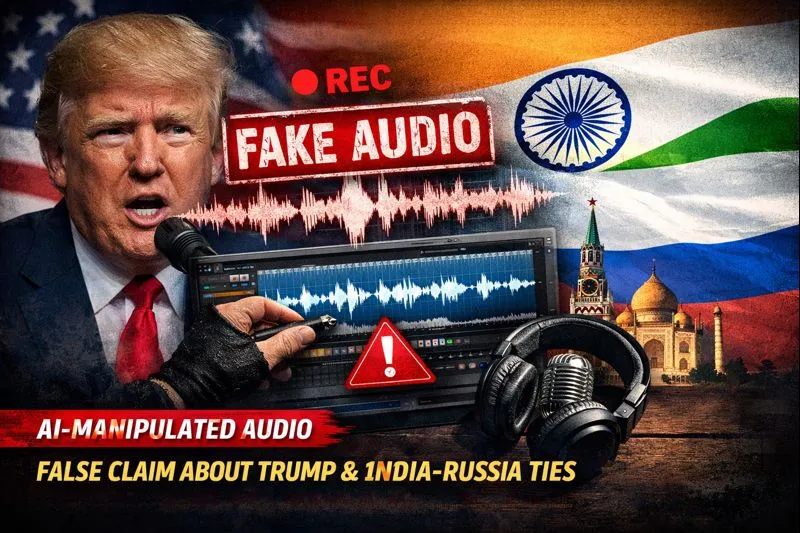
A video circulating widely on social media claims to show former US President Donald Trump issuing a threat to India over its relationship with Russia. In the clip, Trump is allegedly heard warning New Delhi that if it does not cut bilateral ties with Moscow, the United States would “treat India the same way Pakistan did during the May war.”
The reference to the “May war” appears to point to the India-Pakistan military escalation in May 2025, which followed the Pahalgam terror attack and India’s retaliatory strikes under Operation Sindoor targeting terror infrastructure.
However, research done by the Cyber Peace Foundation has found that the video is misleading and digitally manipulated.
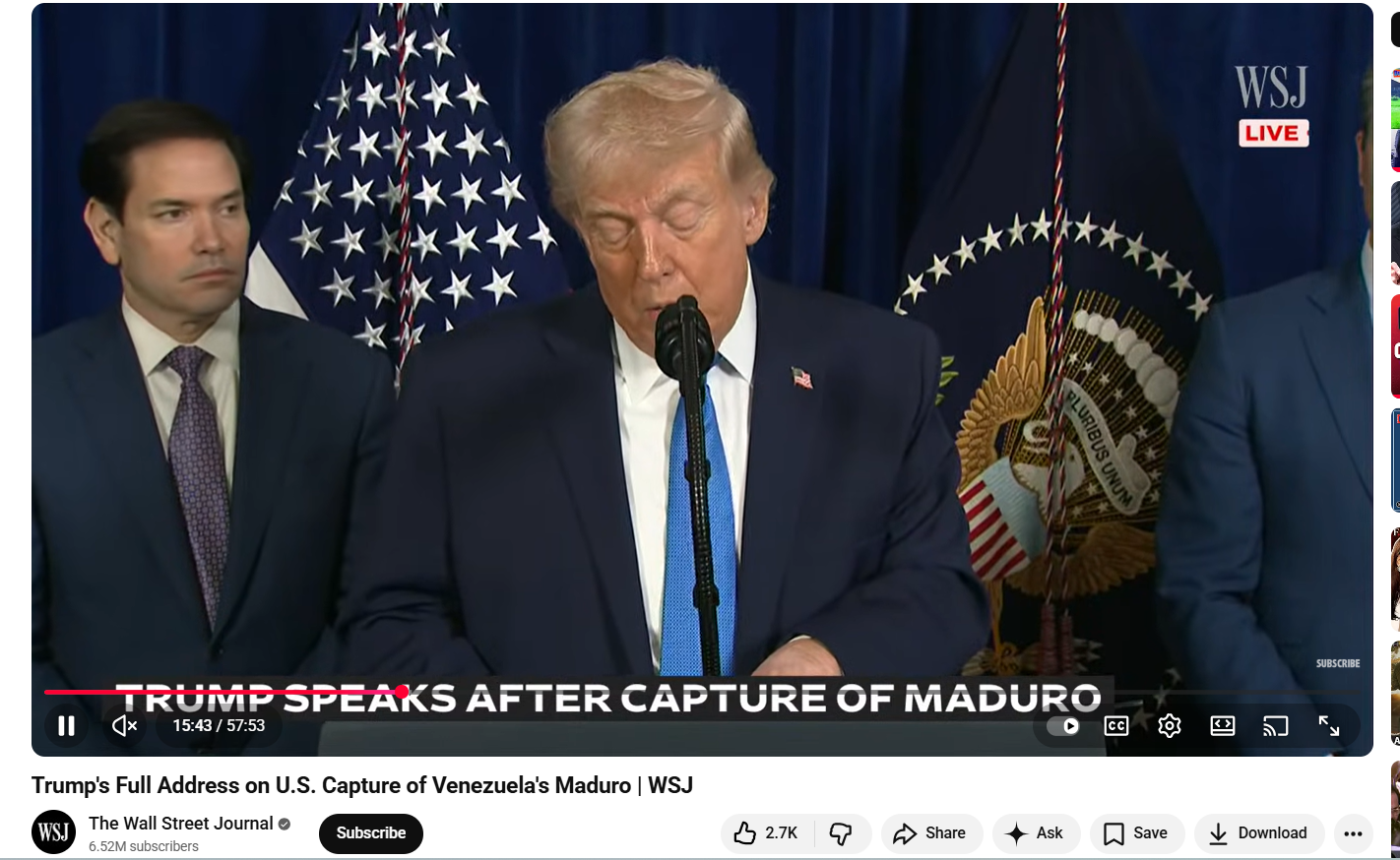
The visuals used in the viral clip are genuine and were taken from a press briefing addressed by Donald Trump on January 3, 2026. However, the audio track accompanying the video has been fabricated and falsely superimposed to
misrepresent his remarks. In the original address, Trump was speaking about a US-led military operation in Caracas that reportedly resulted in the capture of Venezuelan President Nicolás Maduro and his wife. He made no reference to India, Russia, or any geopolitical warning involving New Delhi.
Claim:
On January 10, an X (formerly Twitter) user, Niki Chiri (@cutehunmee), shared a video claiming it showed Donald Trump threatening India over its ties with Russia.
In the clip, Trump is purportedly heard stating that unless India severed its relationship with Moscow, the United States would respond in a manner similar to Pakistan’s actions during the May conflict.
The post quickly gained traction, with several users amplifying the claim. Iink,archive link and screenshot
Research:
To verify the authenticity of the video, the Cyber Peace Foundation conducted a reverse image and video analysis. A Google Lens search led investigators to a longer version of the same footage uploaded on the official YouTube channel of The Wall Street Journal, a prominent US-based news outlet.
A comparison confirmed that both videos shared identical visuals, background elements, and camera angles, establishing that the viral clip was sourced from the same press address.
A review of the full speech, however, showed that Trump did not issue any warning to India, nor did he mention Russia or the May conflict. His remarks were strictly focused on developments in Venezuela.
This confirmed that the viral video had been digitally altered. Here is the link to the original video, along with a screenshot:
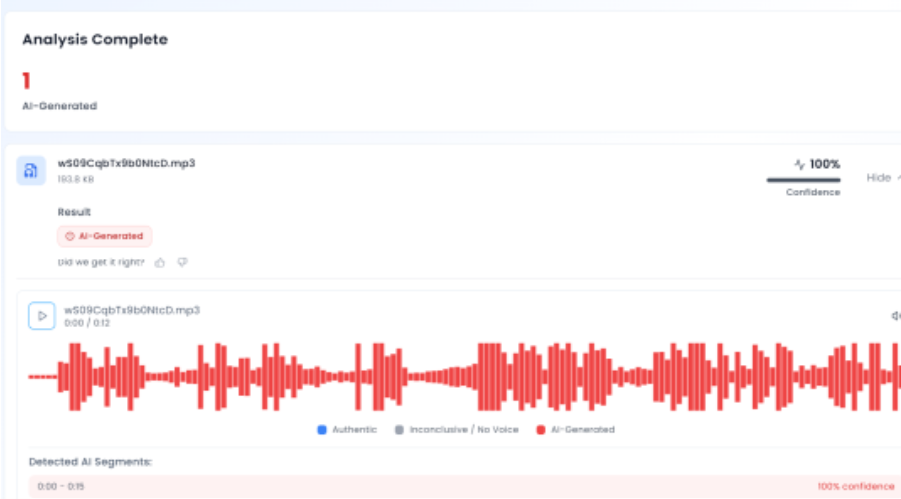
In the next phase of the research, the audio track from the viral clip was extracted and analysed using the AI-based voice detection tool Aurigin. The results indicated a high likelihood that the voice in the video was artificially generated, further confirming that the audio did not originate from Trump’s original speech. A screenshot of the result is provided below.
Conclusion
The claim that a video shows Donald Trump threatening India over its ties with Russia is false. The Cyber Peace Foundation found that while the visuals were taken from a real press address, the audio was fabricated and overlaid to falsely attribute threatening statements to Trump. The manipulated video was circulated online to mislead viewers and spread disinformation.
