
The Risks Posed by AI-Powered Mental Health Chatbots
Introduction
The use of digital information and communication technologies for healthcare access has been on the rise in recent times. Mental health care is increasingly being provided through online platforms by remote practitioners, and even by AI-powered chatbots, which use natural language processing (NLP) and machine learning (ML) processes to simulate conversations between the platform and a user. Thus, AI chatbots can provide mental health support from the comfort of the home, at any time of the day, via a mobile phone. While this has great potential to enhance the mental health care ecosystem, such chatbots can present technical and ethical challenges as well.
Background
According to the WHO’s World Mental Health Report of 2022, every 1 in 8 people globally is estimated to be suffering from some form of mental health disorder. The need for mental health services worldwide is high but the supply of a care ecosystem is inadequate both in terms of availability and quality. In India, it is estimated that there are only 0.75 psychiatrists per 100,000 patients and only 30% of the mental health patients get help. Considering the slow thawing of social stigma regarding mental health, especially among younger demographics and support services being confined to urban Indian centres, the demand for a telehealth market is only projected to grow. This paves the way for, among other tools, AI-powered chatbots to fill the gap in providing quick, relatively inexpensive, and easy access to mental health counseling services.
Challenges
Users who seek mental health support are already vulnerable, and AI-induced oversight can exacerbate distress due to some of the following reasons:
- Inaccuracy: Apart from AI’s tendency to hallucinate data, chatbots may simply provide incorrect or harmful advice since they may be trained on data that is not representative of the specific physiological and psychological propensities of various demographics.
- Non-Contextual Learning: The efficacy of mental health counseling often relies on rapport-building between the service provider and client, relying on circumstantial and contextual factors. Machine learning models may struggle with understanding interpersonal or social cues, making their responses over-generalised.
- Reinforcement of Unhelpful Behaviors: In some cases, AI chatbots, if poorly designed, have the potential to reinforce unhealthy thought patterns. This is especially true for complex conditions such as OCD, treatment for which requires highly specific therapeutic interventions.
- False Reassurance: Relying solely on chatbots for counseling may create a partial sense of safety, thereby discouraging users from approaching professional mental health support services. This could reinforce unhelpful behaviours and exacerbate the condition.
- Sensitive Data Vulnerabilities: Health data is sensitive personal information. Chatbot service providers will need to clarify how health data is stored, processed, shared, and used. Without strong data protection and transparency standards, users are exposed to further risks to their well-being.
Way Forward
- Addressing Therapeutic Misconception: A lack of understanding of the purpose and capabilities of such chatbots, in terms of care expectations and treatments they can offer, can jeopardize user health. Platforms providing such services should be mandated to lay disclaimers about the limitations of the therapeutic relationship between the platform and its users in a manner that is easy to understand.
- Improved Algorithm Design: Training data for these models must undertake regular updates and audits to enhance their accuracy, incorporate contextual socio-cultural factors for profile analysis, and use feedback loops from customers and mental health professionals.
- Human Oversight: Models of therapy where AI chatbots are used to supplement treatment instead of replacing human intervention can be explored. Such platforms must also provide escalation mechanisms in cases where human-intervention is sought or required.
Conclusion
It is important to recognize that so far, there is no substitute for professional mental health services. Chatbots can help users gain awareness of their mental health condition and play an educational role in this regard, nudging them in the right direction, and provide assistance to both the practitioner and the client/patient. However, relying on this option to fill gaps in mental health services is not enough. Addressing this growing —and arguably already critical— global health crisis requires dedicated public funding to ensure comprehensive mental health support for all.
Sources
- https://www.who.int/news/item/17-06-2022-who-highlights-urgent-need-to-transform-mental-health-and-mental-health-care
- https://health.economictimes.indiatimes.com/news/industry/mental-healthcare-in-india-building-a-strong-ecosystem-for-a-sound-mind/105395767#:~:text=Indian%20mental%20health%20market%20is,access%20to%20better%20quality%20services.
- https://www.frontiersin.org/journals/digital-health/articles/10.3389/fdgth.2023.1278186/full

Related Blogs

Introduction
The unprecedented cyber espionage attempt on the Indian Air Force has shocked the military fraternity in the age of the internet where innovation is vital to national security. The attackers have shown a high degree of expertise in their techniques, using a variant of the infamous Go Stealer and current military acquisition pronouncements as a cover to obtain sensitive information belonging to the Indian Air Force. In this recent cyber espionage revelation, the Indian Air Force faces a sophisticated attack leveraging the infamous Go Stealer malware. The timing, coinciding with the Su-30 MKI fighter jets' procurement announcement, raises serious questions about possible national security espionage actions.
A sophisticated attack using the Go Stealer malware exploits defense procurement details, notably the approval of 12 Su-30 MKI fighter jets. Attackers employ a cunningly named ZIP file, "SU-30_Aircraft_Procurement," distributed through an anonymous platform, Oshi, taking advantage of heightened tension surrounding defense procurement.
Advanced Go Stealer Variant:
The malware, coded in Go language, introduces enhancements, including expanded browser targeting and a unique data exfiltration method using Slack, showcasing a higher level of sophistication.
Strategic Targeting of Indian Air Force Professionals:
The attack strategically focuses on extracting login credentials and cookies from specific browsers, revealing the threat actor's intent to gather precise and sensitive information.
Timing Raises Espionage Concerns:
The cyber attack coincides with the Indian Government's Su-30 MKI fighter jets procurement announcement, raising suspicions of targeted attacks or espionage activities.
The Deceitful ZIP ArchiveSU-30 Aircraft Acquisition
The cyberattack materialised as a sequence of painstakingly planned actions. Using the cleverly disguised ZIP file "SU-30_Aircraft_Procurement," the perpetrators took benefit of the authorisation of 12 Su-30 MKI fighter jets by the Indian Defense Ministry in September 2023. Distributed via the anonymous file storage network Oshi, the fraudulent file most certainly made its way around via spam emails or other forms of correspondence.
The Spread of Infection and Go Stealer Payload:
The infiltration procedure progressed through a ZIP file to an ISO file, then to a.lnk file, which finally resulted in the Go Stealer payload being released. This Go Stealer version, written in the programming language Go, adds sophisticated capabilities, such as a wider range of browsing focussed on and a cutting-edge technique for collecting information using the popular chat app Slack.
Superior Characteristics of the Go Stealer Version
Different from its GitHub equivalent, this Go Stealer version exhibits a higher degree of complexity. It creates a log file in the machine owned by the victim when it is executed and makes use of GoLang utilities like GoReSym for in-depth investigation. The malware focuses on cookies and usernames and passwords from web browsers, with a particular emphasis on Edge, Brave, and Google Chrome.
This kind is unique in that it is more sophisticated. Its deployment's cyber enemies have honed its strengths, increasing its potency and detection resistance. Using GoLang tools like GoReSym for comprehensive evaluation demonstrates the threat actors' careful planning and calculated technique.
Go Stealer: Evolution of Threat
The Go Stealer first appeared as a free software project on GitHub and quickly became well-known for its capacity to stealthily obtain private data from consumers who aren't paying attention. Its effectiveness and stealthy design rapidly attracted the attention of cyber attackers looking for a sophisticated tool for clandestine data exfiltration. It was written in the Go programming language.
Several cutting-edge characteristics distinguish the Go Stealer from other conventional data thieves. From the beginning, it showed a strong emphasis on browser focusing on, seeking to obtain passwords and login information from particular websites including Edge, Brave, and Google Chrome.The malware's initial iteration was nurtured on the GitHub database, which has the Go Stealer initial edition. Threat actors have improved and altered the code to serve their evil goals, even if the basic structure is freely accessible.
The Go Stealer version that has been discovered as the cause of the current internet spying by the Indian Air Force is not limited to its GitHub roots. It adds features that make it more dangerous, like a wider range of browsers that may be targeted and a brand-new way to exfiltrate data via Slack, a popular messaging app.
Secret Communications and Information Expulsion
This variation is distinguished by its deliberate usage of the Slack API for secret chats. Slack was chosen because it is widely used in company networks and allows harmful activity to blend in with normal business traffic. The purpose of the function "main_Vulpx" is specifically to upload compromised information to the attacker's Slack route, allowing for covert data theft and communication.
The Time and Strategic Objective
There are worries about targeted assaults or espionage activities due to the precise moment of the cyberattack, which coincides with the Indian government's declaration of its acquisition of Su-30 MKI fighter fighters. The deliberate emphasis on gathering cookies and login passwords from web browsers highlights the threat actor's goal of obtaining accurate and private data from Indian Air Force personnel.
Using Caution: Preventing Possible Cyber Espionage
- Alertness Against Misleading Techniques: Current events highlight the necessity of being on the lookout for files that appear harmless but actually have dangerous intent. The Su-30 Acquisition ZIP file is a stark illustration of how these kinds of data might be included in larger-scale cyberespionage campaigns.
- Potentially Wider Impact: Cybercriminals frequently plan coordinated operations to target not just individuals but potentially many users and government officials. Compromised files increase the likelihood of a serious cyber-attack by opening the door for larger attack vectors.
- Important Position in National Security: Recognize the crucial role people play in the backdrop of national security in the age of digitalisation. Organised assaults carry the risk of jeopardising vital systems and compromising private data.
- Establish Strict Download Guidelines: Implement a strict rule requiring file downloads to only come from reputable and confirmed providers. Be sceptical, particularly when you come across unusual files, and make sure the sender is legitimate before downloading any attachments.
- Literacy among Government Employees: Acknowledge that government employees are prime targets as they have possession of private data. Enable people by providing them with extensive cybersecurity training and awareness that will increase their cognition and fortitude.
Conclusion
Indian Air Force cyber surveillance attack highlights how sophisticated online dangers have become in the digital era. Threat actors' deliberate and focused approach is demonstrated by the deceptive usage of a ZIP archive that is camouflaged and paired with a sophisticated instance of the Go Stealer virus. An additional level of complication is introduced by integrating Slack for covert communication. Increased awareness, strict installation guidelines, and thorough cybersecurity education for government employees are necessary to reduce these threats. In the digital age, protecting national security necessitates ongoing adaptation as well as safeguards toward ever-more potent and cunning cyber threats.
References
- https://www.overtoperator.com/p/indianairforcemalwaretargetpotential
- https://cyberunfolded.in/blog/indian-air-force-targeted-in-sophisticated-cyber-attack-with-su-30-procurement-zip-file#go-stealer-a-closer-look-at-its-malicious-history
- https://thecyberexpress.com/cyberattack-on-the-indian-air-force/https://therecord.media/indian-air-force-infostealing-malware

Executive Summary
A video of a man dancing is going viral on social media. The man is being claimed to be Jitendra Mishra, the newly appointed CEO of the Ram Mandir Trust and a retired Air Marshal of the Indian Air Force. The claim states that the video shows Jitendra Mishra dancing and drinking alcohol while celebrating his appointment as the CEO of the Ram Mandir Trust. CyberPeace’s Research Wing found that the person seen in the viral video is not Jitendra Mishra, the CEO of the Ram Mandir Trust. The identity of the man seen in the video is different, and the video has been available on social media since November 2025.
Claim:
A user on social media platform X (formerly Twitter) shared the viral video with the caption: “Jitendra Mishra was seen dancing and drinking alcohol while celebrating his appointment. Earlier, those who counted donations used to steal; now the CEO is celebrating with a party. They have turned the temple into a company, brother, and even installed a dance floor.”

Fact Check
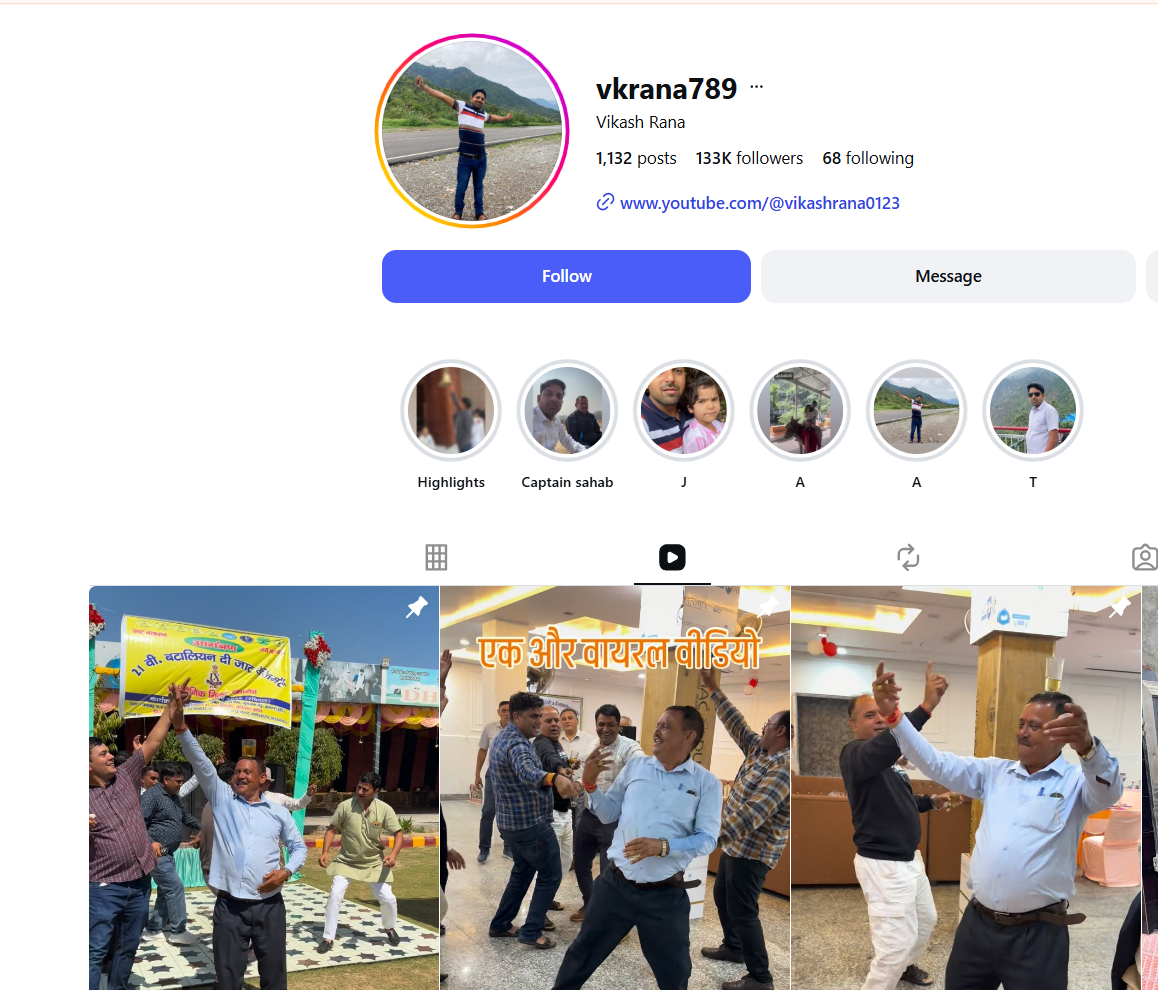
To verify the claim, we conducted a reverse image search of the keyframe from the viral video. During the search, we found the same video posted on an Instagram account named Vikas Rana on November 3, 2025.
https://www.instagram.com/reels/DQmLsEYD8nA/

Upon examining Vikas Rana’s Instagram account, we found two videos featuring the person seen dancing. We also found a link to his YouTube channel in Vikas Rana’s Instagram bio.
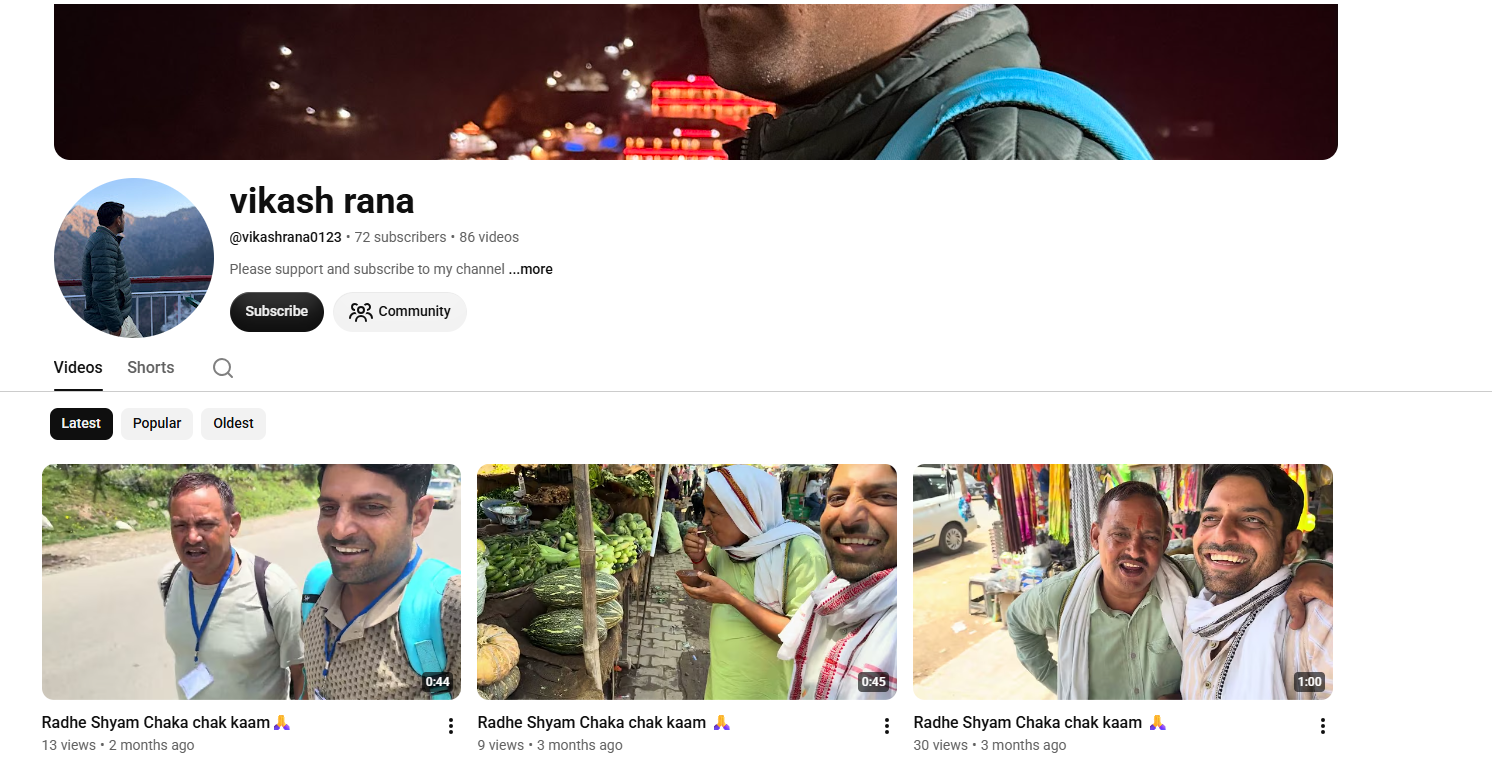
As part of our research, we further examined Vikas Rana’s YouTube channel. In several videos available on the channel, the person seen in the viral video can be seen. In all the videos, Vikas Rana refers to the person in the viral video as “Captain Sahab.”
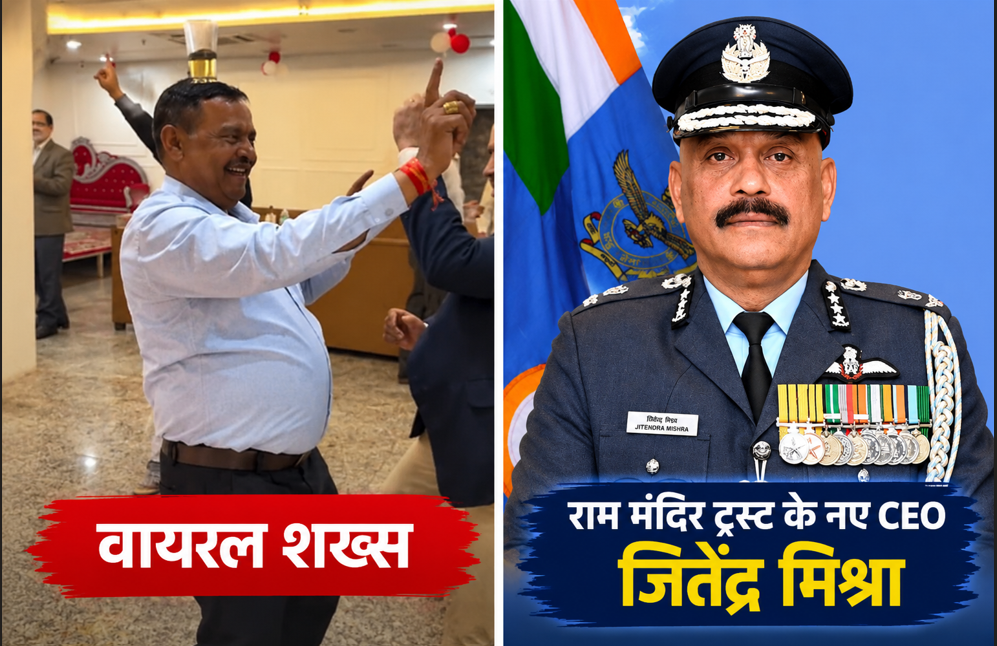
As part of our research, we compared the faces of the person seen in the viral video with those of the newly appointed CEO of the Ram Mandir Trust, Jitendra Mishra. The comparison revealed several differences between Jitendra Mishra’s face and that of the person seen in the viral video.
Conclusion
Our research found that the viral video is not of Jitendra Mishra, the newly appointed CEO of the Ram Mandir Trust. The video was found on Vikas Rana’s Instagram account, where two videos featuring the same person were posted. Further, several videos on Vikas Rana’s YouTube channel feature the same individual, whom Rana refers to as “Captain Sahab.” A facial comparison also revealed clear differences between the person in the viral video and Jitendra Mishra. Therefore, the claim that the viral video shows Jitendra Mishra celebrating his appointment as the Ram Mandir Trust CEO is false.

Introduction
In April 2026, a class action suit in a federal court in California rejuvenated one of the most basic assertions in digital communication: that private messages are private. The suit claims that Meta Platforms, its subsidiary WhatsApp, and third-party contractors such as Accenture could have accessed user messages even though it had long promised end-to-end encryption.
This case is not merely about a single company or a single platform. It poses more profound questions regarding the definition, communication and regulation of privacy in an age when digital infrastructure is becoming more and more incomprehensible or unprovable to regular users.
What the Lawsuit Actually Says
The suit was filed by plaintiffs Brian Y. Shirazi and Nida Samson, who alleged that WhatsApp, Meta and contractors had intercepted and shared private messages with third parties without their consent. The complaint states that the federal investigators were notified by the whistleblowers that employees of Meta and external contractors had access to the content of WhatsApp messages that were expected to be encrypted and inaccessible.
This directly puts into question the main privacy promise of WhatsApp. The platform has been promoting itself as an end-to-end encrypted service in which not even WhatsApp can read your messages. The case asserts that this assertion was deceptive in its application and that no one ever gave any consent prior to their messages being intercepted, stored, or read.
The plaintiffs are proposing to represent a nationwide class of users of WhatsApp who sent or received messages between April 5, 2016, and the current time and subclasses in California and Pennsylvania. The claims involve breach of contract, California laws on privacy and data violations, false advertising and the Pennsylvania Wiretapping and Electronic Surveillance Act.
It should be mentioned that they are allegations. Similar assertions have been refuted by Metacomet in the past, with the company asserting that its encryption frameworks ensure that the company cannot access the messages. The case is in progress, and no facts have been found.
The Grey Area No One Talks About
In order to see the significance of this lawsuit outside the court, it is useful to consider the way modern messaging platforms actually work. In principle, end-to-end encryption means that only the sender and receiver can decipher a message. Even the service provider should not be able to access the content.
However, there is a grey space that is seldom publicly discussed: content moderation. User reports, metadata analysis or restricted message review processes are common methods used by platforms to identify harmful content, like fraud, child exploitation, or spam. The complaint indicates that such moderation procedures might have opened avenues to the content of messages to human reviewers or automated systems more than users were made to think.
This is not the first time that privacy and safety are at odds. Many jurisdictions have also advocated access to encrypted communications through legal means in the name of national security or criminal investigations. What this suit does is put that tension into even more stark relief by asking whether platforms are really open with users about these trade-offs.
The Consent Problem
The emphasis on consent is one of the most significant implications of this case. The plaintiffs claim that the users were never warned that their messages would be accessed by the employees or third parties and were never provided with any meaningful option on the same.
This is where the case turns into a data governance issue, rather than a legal one. Most data protection models consider the legality of data processing to be based on whether the users know how their data is being processed or not. When the accusations are found to be true, then the matter is not technical. It would be a contractual and ethical failure, a disjuncture between what platforms promise and what they do.
The implications are huge to the billions of users who use WhatsApp to communicate, both personally and professionally, and even politically.
What This Means Going Forward
An effective attack on the encryption assertions of WhatsApp might have actual implications for the rest of the digital ecosystem. Users might start doubting that any platform can be really considered to guarantee privacy. The regulators can advocate more stringent disclosure policies and compulsory independent audits of encryption systems. Social networks might have to re-architect their moderation frameworks to make sure that safety features do not silently compromise privacy guarantees that they claim.
Meanwhile, there is a real policy dilemma in this case that cannot be disregarded. Complete privacy may preclude the capacity to identify abuse or hateful material. The manner in which that balance is achieved and, more to the point, the manner in which it is made transparent to users is an issue that has yet to be addressed by policymakers, civil society and the tech industry.
Other technical experts have also questioned the plausibility of the claims in the lawsuit at scale, noting that it would be an extraordinary undertaking to systematically bypass end-to-end encryption. This further supports the argument of independent verification mechanisms. The problem is that users should not be forced to decide what they should believe in more: corporate guarantees or legal charges. There must be rules that can be enforced which are above the two.
Conclusion: Beyond One Lawsuit
The WhatsApp class action is eventually concerning a structural issue within the digital economy. Users are expected to have faith in systems that they cannot observe, on the assertions that they cannot test themselves.
This case is a warning, regardless of whether the allegations are proved or not. Privacy cannot be based on marketing language. It needs legally binding norms, actual transparency in the treatment of data, and external control that will provide users with something more to hang on than a tagline.
References
- https://www.bitdefender.com/en-us/blog/hotforsecurity/lawsuit-claims-meta-can-access-whatsapp-messages-despite-end-to-end-encryption-2
- https://blog.cryptographyengineering.com/2026/02/02/whatsapp-encryption-a-lawsuit-and-a-lot-of-noise/
- https://www.bloomberg.com/news/articles/2026-01-25/lawsuit-claims-meta-can-see-whatsapp-chats-in-breach-of-privacy
- https://www.classaction.org/blog/despite-privacy-promises-meta-third-parties-read-and-store-whatsapp-messages-class-action-lawsuit-alleges
