
From Clicks to Consequences: How the Dharmendra Death Hoax Exposes the Dangers of Misinformation
Introduction
The misinformation crisis has evolved from being merely an abstract risk to a clear-cut and measurable danger to individuals, families, institutions and the whole information ecosystem. The recent death hoax with the famous actor Dharmendra is a perfect illustration of how the monster of falsehoods rises, conquers the world and does damage before the mechanisms of correction have a chance to operate. The first week of November 2025 saw the first wave of reports from different social media accounts and even some online news outlets that claimed Dharmendra had died at the age of 89. The news travelled like wildfire, causing confusion, grief and emotional suffering in large circles of fans, one could say the whole world. But then, the family came to the scene with the loudest, clearest, and most conclusive denial of them all. This case is not a one-time event. It is part of a cycle of misinformation that goes through the stages from one unverified claim to the next due to the emotional value, the virality of platforms, and the accelerating online engagement.
How One Wrong Post Can Create Worry and Fear
This kind of false news spreads fast on social media because people share emotional posts without checking the source, and automated accounts often repeat the same claim which makes it look true. Such hoaxes create fear, sadness and stress for fans, and they place sudden pressure on the family who must deal with public worry at a time when they need calm and privacy. The message shared by Hema Malini who is the wife of the actor shows how hurtful and careless misinformation can be, and it reminds everyone that even one false post can create real emotional damage for many people.

Why This Hoax Spread So Quickly
- Sensationalism Drives Engagement: Rumours regarding the passing of a public figure, particularly someone who is universally loved, cause an immediate outburst of feelings. Such news is practically taken for granted by the online public, who are very likely to share it, most of the time without checking its authenticity, which, in turn, leads to viral spread.
- Very Fast Weaving-in on social media: Social media networks are very much made for swift sharing. Long before the official sources were able to either confirm or dismiss the matter, posts, reels, and messages ripped through the networks.
- Digital Users Not Verifying Source: A large part of the audience depends on screenshots, forwards, and unverified posts for keeping up with the news. This opens a very nice environment for the spreading of hoaxes.
- Weak Verification Protocols: Although there have been measures to inform the public about misinformation, most news companies still give priority to the speed of reporting rather than its correctness, though not all the time, especially for the more entertaining and attractive topics like the health or death of famous people.
- Algorithmic Amplification Risks: The engagement is mainly driven by algorithms that bring to the surface the posts that evoke strong emotions. In a way, it is very unfair because the false or sensational claims are getting in front at the same time as the corrective updates, hence, the public is getting misled. In the absence of algorithmic safeguards, misinformation is on the rise and becoming stronger.
Best Practices For Users:
- Make sure to verify before sharing, especially if the topic is about health or death.
- Get updates by following official accounts rather than through sharing of viral forwards.
- Be aware of the emotional manipulation tactics used in misleading information.
Conclusion
The rumour surrounding Dharmendra's death is yet another example that misinformation, whether promptly corrected or not, can still inflict distress, cause loss of trust and damage to reputation. It also emphasises the need for stronger information governance, responsible digital journalism, and platform intervention mechanisms as a matter of urgency. This incident, from clicks to consequences, points to a basic truth: misinformation in the digital age is quicker to spread than facts, and the responsibility of putting a stop to it falls on all the stakeholders’ platforms, media, and users.
References
- https://timesofindia.indiatimes.com/entertainment/hindi/bollywood/news/esha-deol-and-hema-malini-dismiss-dharmendras-fake-death-news-relieved-fans-pray-for-actors-speedy-recovery-aap-jld-se-jld-apne-ghar-aye/articleshow/125242843.cms
- https://www.altnews.in/media-misreport-bollywood-actor-dharmendra-hasnt-passed-away-yet/
- https://economictimes.indiatimes.com/news/india/dharmendra-death-news-bollywoods-veeru-and-he-man-passes-away-at-89/articleshow/125238900.cms

Related Blogs
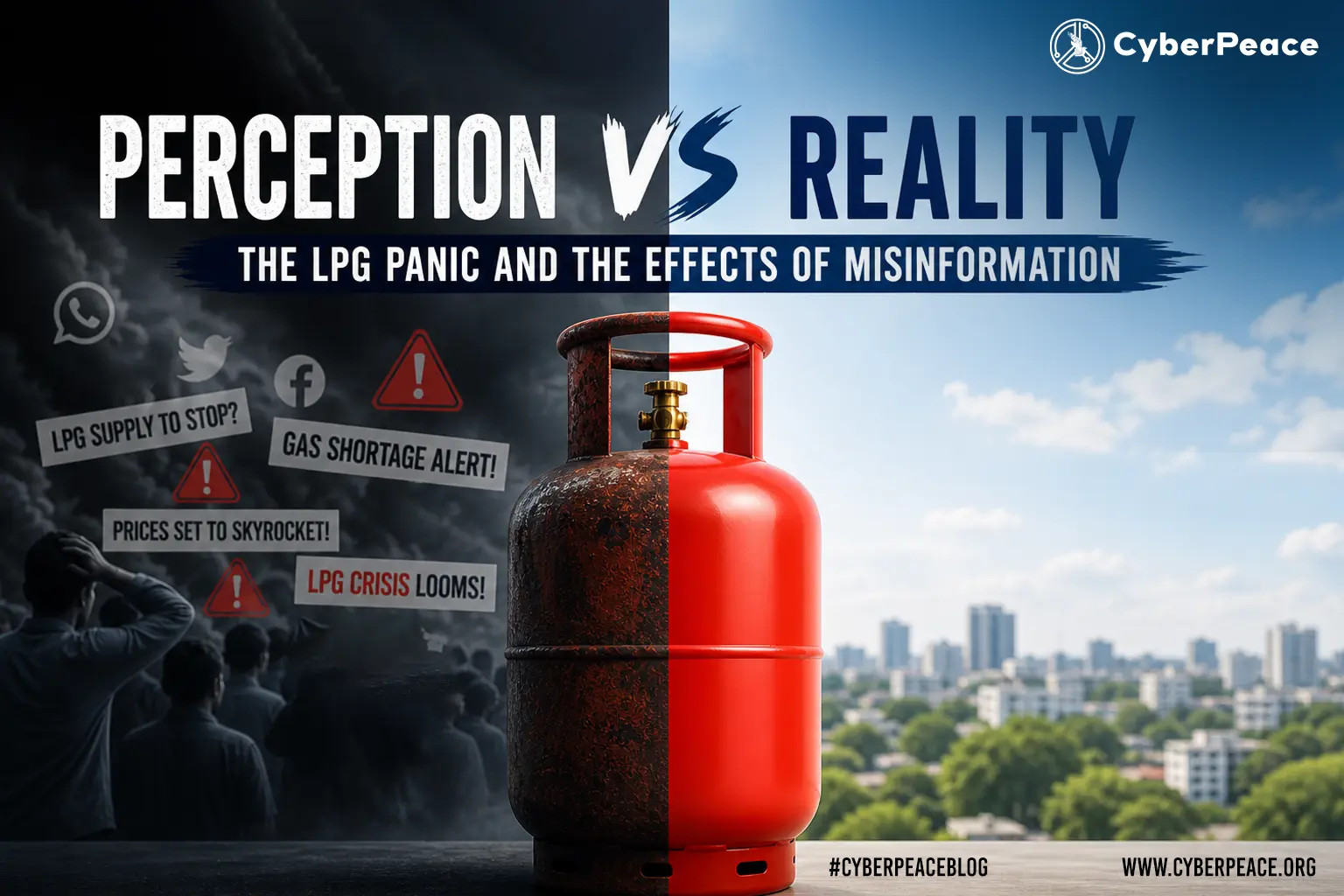
In recent months, conversations around the possible shortage of liquefied petroleum gas (LPG), a basic cooking fuel in Indian households, have quietly resurfaced across the country. From whispers in local markets to viral messages circulating on social media, concerns about LPG availability began to take hold in the public imagination. Though the immediacy of the situation has since faded, its echoes remain, reminding us how quickly uncertainty can spread. Like a ripple across still water, a single rumour can travel far, gathering force as it moves and blurring the line between perception and reality.
Against this backdrop, in April 2026, reports began circulating about a potential LPG shortage. The Union Government moved quickly to counter what it identified as misinformation, emphasising that supply remained stable and urging citizens not to engage in panic buying. A noticeable disconnect emerged between official communication and public perception. Across different regions, signs of anxiety-driven behaviour became evident. Instances of panic buying and hoarding increased, law enforcement agencies conducted raids to address such actions, and opportunistic thefts were reported, often exploiting widespread concern. These incidents highlight how misinformation, even when addressed promptly, can continue to shape public behaviour.
It is worth noting that rising prices also played a role in shaping public response, as increases in LPG rates contributed to a sense of urgency among consumers. Therefore, the surge in panic buying cannot be attributed solely to misinformation, but rather to a combination of economic pressures and perceived scarcity.
Misinformation Ecosystem - From Rumours to Behaviour
The spread of misinformation is occurring at an unprecedented pace and is, in large part, driven by the viral nature of social media. Digital platforms not only enable the rapid dissemination of information but also allow it to be amplified in ways that would not be possible through traditional media outlets. Often, the drive for virality outweighs any concern for accuracy, meaning that many individuals who spread misinformation are motivated more by the pursuit of attention than by any ideological agenda. Recent arrests of individuals involved in spreading misinformation about LPG and petrol shortages, much of which went viral, suggest that misinformation today is frequently driven by the desire for visibility rather than ideological motives. The information being circulated has largely followed a similar pattern, focusing on fears of an LPG shortage, expectations of price increases, and concerns about supply disruptions. Even though this information has not been verified, it has triggered behavioural responses among individuals. In several areas, including parts of Uttar Pradesh and Goa, the spread of misinformation through social media has led to panic buying, despite official assurances that there would be sufficient LPG supply to meet demand.
The impact of panic buying, and its associated misinformation, has already been seen in multiple sectors; these increased demands have placed pressure on the distribution network, leading to disruptions in access, as well as being out of stock of certain products. In many cases, commercial users of products (especially restaurants) have experienced significant disruption, threatening their continued operations, and industry representatives have alerted others about the inconsistent supply of commercial cylinders; likewise, consumers (households) are beginning to switch to alternative products (e.g., induction cooking) as a reflection of the anticipatory mindset to address the uncertainty created through perceptions of Product Scarcity.
State Response: Managing Misinformation or Behaviour?

The government has taken a variety of approaches, from advisories and enforcement actions to communicating with citizens indirectly. For example, State Governments have been directed to combat misinformation, monitor supply chains and take action against hoarding and black market activity. There has been a significant increase in the level of large- scale enforcement activity, with over 3,700 raids carried out to crack down on hoarding and black marketing related to LPG, in addition to confiscating cylinders and issuing penalties to those who break the law. In addition, the authorities have also focused on maintaining regular communication with the public in order to reassure them about the supply of LPG and fuel stability.
Geopolitical Context: Why Rumours Are Believable
Understanding today’s panic requires an understanding of the global environment: i.e., due to the ongoing conflict in West Asia, the energy markets are unstable, and energy supply is uncertain not only in West Asia but across a large part of the world. Even if domestic supply remains stable, public perception is affected by global instability. A clear example of this can be seen in neighbouring countries to India; Pakistan has seen significant increases in the cost of fuel, implemented measures such as reducing the number of days individuals work each week, and has created public support mechanisms; Bangladesh has imposed restrictions on the use of energy, has shortened the number of hours individuals can operate businesses each day, and has restricted the total amount of energy used; Sri Lanka has begun to ration fuel, and to increase the price of petrol; and Nepal has reduced the numbers of days individuals may work each week, and has adjusted supply.
All of these examples are not isolated instances, but are markers of a common regional environment. As we live in a global community that is connected in many ways, these developments will quickly affect public expectations everywhere. Therefore, for consumers in India, seeing evidence of rationing of fuel and shortages of fuel in neighbouring countries increases their belief that these types of problems could occur in their country.
Critical Perspective: Between Panic and Precaution
The LPG incident has brought about questions surrounding the nature of misinformation in terms of its definition & regulation. One of the main concerns is whether or not "misinformation" is being cast too widely. To be sure, false claims need to be addressed; however, not everything that is responded to publicly is based on untrue facts, as many times public responses are based on perceived risk via global and/or local incidents that occur. Perhaps the greatest challenge is the difficulty in differentiating precaution and panic. People’s memories of the COVID-19 pandemic are fresh in their minds and will serve to influence their behaviours moving onward, in that many people are stockpiling or preparing for uncertainty not out of irrational fear, but as an anticipatory response to their prior experiences.
Conclusion
The Indian LPG "crisis" is not so much a problem with actual supply chain breakdown as it is a result of how information and behaviour are connected through perception. This cohabitating environment of panic buying, law enforcement, and government assurance demonstrates an evident disconnect and gap between how governments present a narrative and how the public responds. While there is some role of misinformation within this discourse, the misinformation itself extends beyond any or all false claims about LPG supply and operates within a greater ecosystem of global uncertainty and personal experience. As such, and because of this, perception becomes an incredibly strong force in itself that produces true economic consequences.
Reference
- https://www.pib.gov.in/PressReleasePage.aspx?PRID=2248640&utm_source®=3&lang=2
- https://www.pmindia.gov.in/en/news_updates/pm-addresses-the-lok-sabha-on-the-ongoing-conflict-in-west-asia/
- https://www.ndtv.com/delhi-news/iran-war-middle-east-conflict-why-the-lpg-crisis-is-forcing-migrants-to-quietly-leave-delhi-11313629
- https://timesofindia.indiatimes.com/city/bareilly/thieves-steal-108-lpg-cylinders-from-godown-in-up/articleshow/130035518.cms
- https://indianexpress.com/article/india/arrested-rumours-lpg-petrol-shortage-police-chasing-views-10614193/
- https://www.hindustantimes.com/cities/lucknow-news/social-media-rumours-fuel-panic-buying-in-some-up-districts-situation-normal-in-lucknow-101774465353107.html
- https://timesofindia.indiatimes.com/city/goa/fear-of-shortage-price-rise-fuels-panic-buying-across-goa/articleshow/129810144.cms
- https://www.news18.com/cities/new-delhi-news/online-rumours-offline-rush-panic-buying-sweeps-petrol-pumps-across-cities-whats-the-truth-ws-ln-9995684.html
- https://m.economictimes.com/news/india/3700-raids-conducted-across-country-to-wipe-out-lpg-black-marketing-says-centre/articleshow/130025232.cms
- https://www.reuters.com/business/energy/induction-stoves-fly-off-shelves-india-gas-shortage-fears-spark-panic-buying-2026-03-12/
- https://www.ndtv.com/india-news/restaurant-body-warns-of-closures-over-commercial-lpg-supply-concerns-writes-to-minister-11194418
- https://www.freepressjournal.in/mumbai/fpj-dialogue-we-are-getting-only-1-cylinder-instead-of-10-says-ahar-president-vijay-shetty-on-mumbai-lpg-crisis
- https://www.hindustantimes.com/world-news/fuel-cuts-wfh-and-more-how-indias-neighbours-are-dealing-with-global-energy-crisis-triggered-by-us-iran-war-101775397199941.html
- https://www.abc.net.au/news/2026-03-30/four-step-fuel-supply-plan-national-cabinet-fuel-crisis/106512706
- https://tribune.net.ph/2026/04/07/philippines-scrambles-as-regional-oil-crisis-hits

Executive Summary
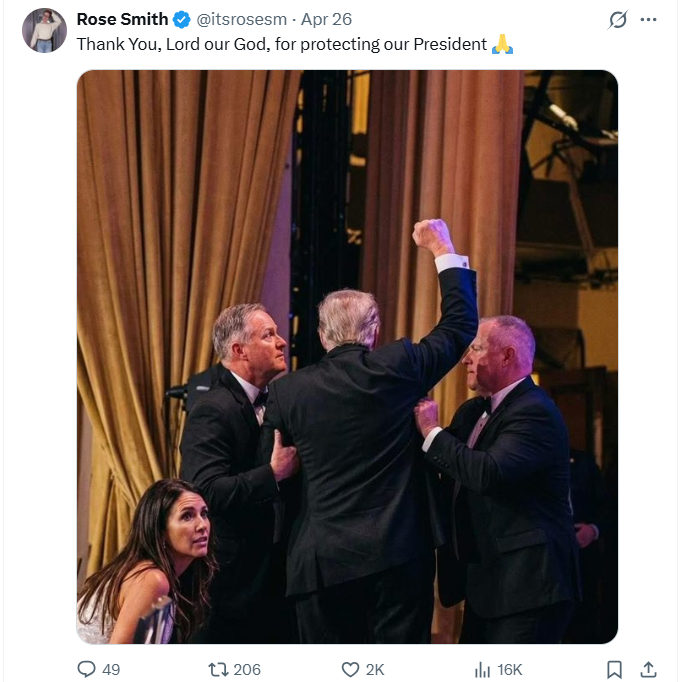
A photo of Donald Trump is going viral on social media, showing him raising his fist. Users claim the image was taken during a press event in Washington, when security personnel were escorting him out amid reports of gunfire. Research by CyberPeace Research Wing found that the viral image is AI-generated and is being shared with misleading claims.
Claim
On April 26, 2026, an X user shared the image with the caption: “Thank You, Lord our God, for protecting our President.” The post suggests that Trump made the gesture during a chaotic evacuation at a Washington event.
Fact Check
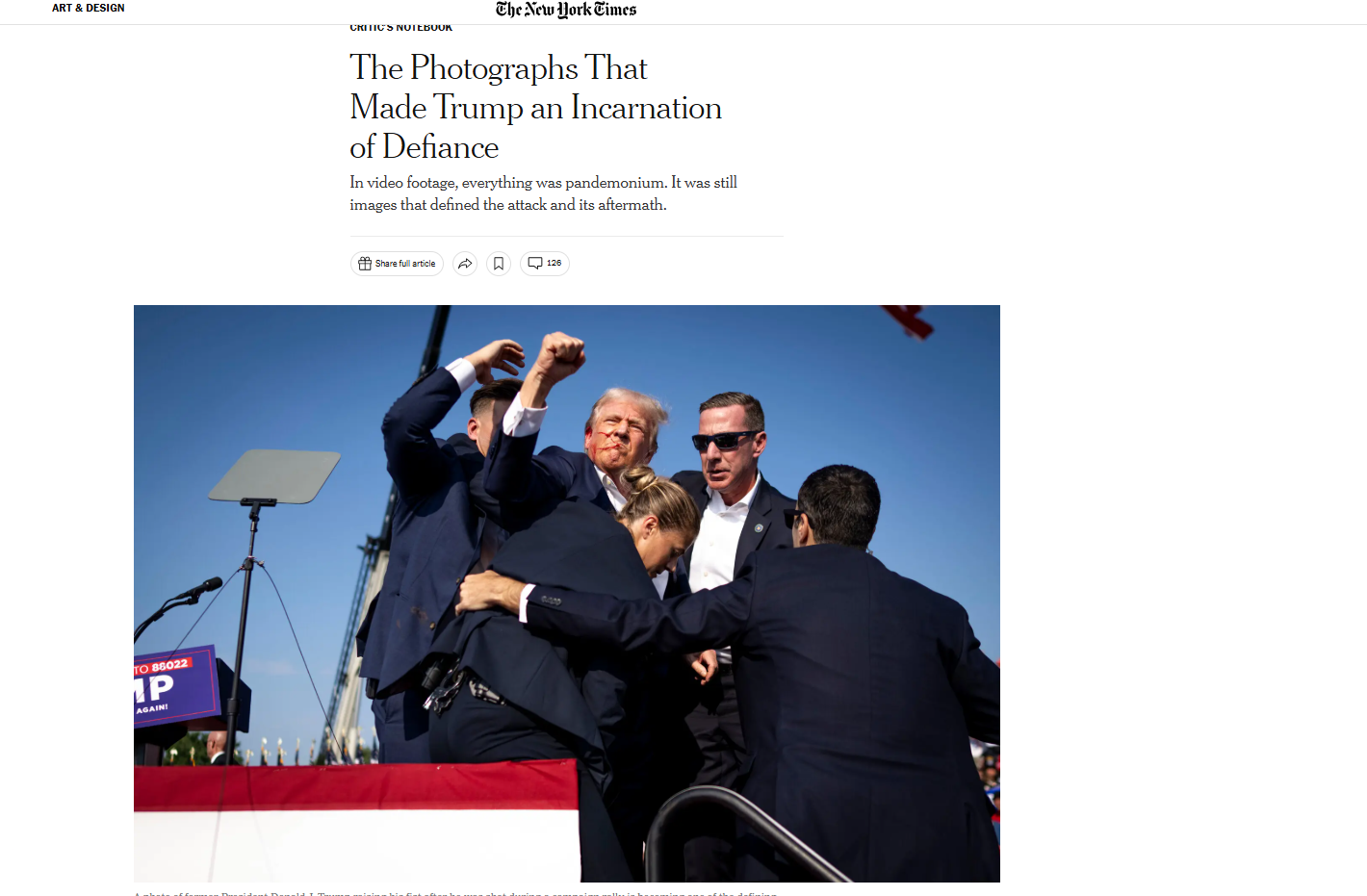
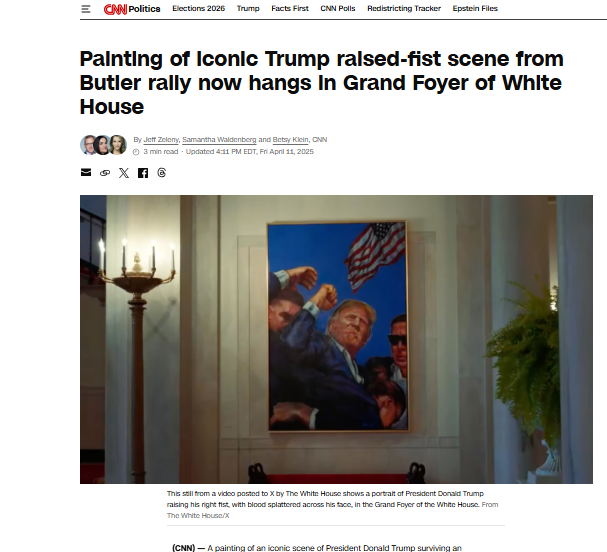
Reports confirm that Trump and senior officials were hurried away from the White House Correspondents’ Association dinner on April 25 after gunshots were reportedly heard from a floor above the ballroom. However, no authentic visuals show Trump raising his fist during the evacuation.
- https://www.nytimes.com/2024/07/14/arts/design/trump-photo-raised-fist.html
- https://edition.cnn.com/2025/04/11/politics/trump-obama-portrait-white-house
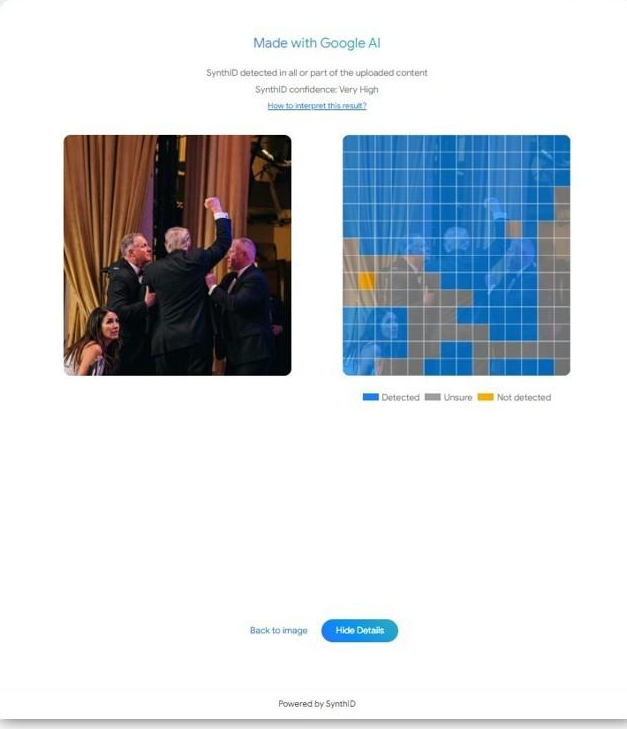
Further analysis of the viral image indicates signs of digital manipulation. Google’s SynthID detection tool flagged the file as containing SynthID—an invisible watermark embedded in content generated using Google’s AI tools.
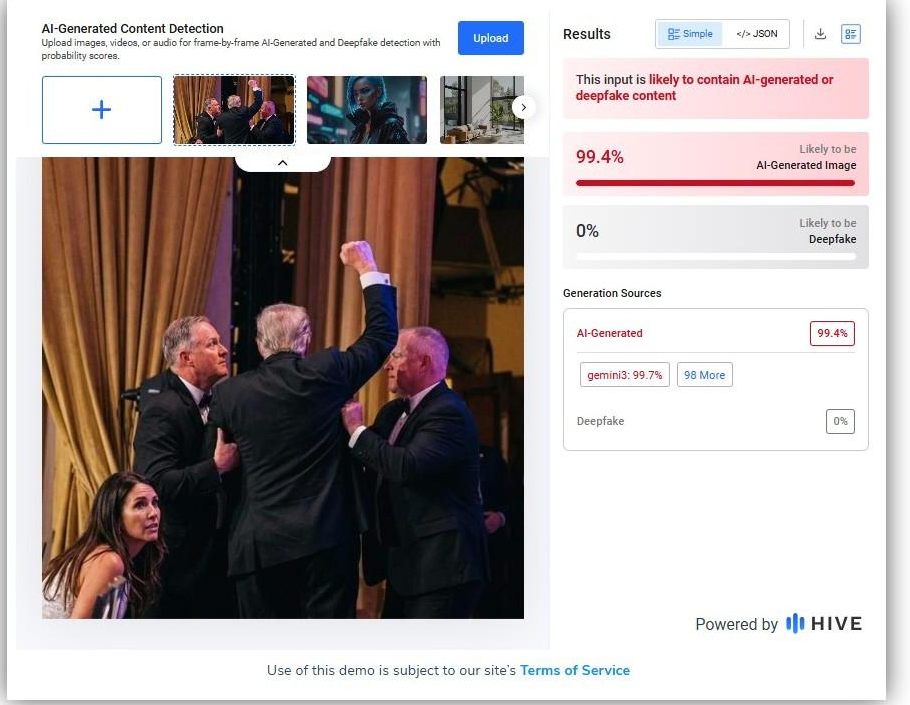
Additionally, AI detection platform Hive Moderation assessed that the image is likely AI-generated or a deepfake.
Conclusion
The research confirms that the viral image of Donald Trump raising his fist during a Washington incident is not real. It was created using AI and is being circulated with a misleading narrative.

Introduction
In a world perpetually in motion, the currents of the information superhighway surge ceaselessly, molding perceptions, shaping realities, and often blurring the lines that tether truth to its moorings. At the heart of this relentless churn lies a conundrum that has become all too familiar, in which veracity is obscured by the shadow-play of misinformation. Emblematic of this dilemma is the narrative of Virat Kohli, a name that has become synonymous not only with cricketing brilliance but with the complexities of a modern era where digital echo chambers amplify half-truths and outright fabrications with alarming efficacy.
It is within this intricate fabric of the digital realm that the saga of Virat Kohli—a titan of cricket whose arsenal of strokes and strategic acumen have captivated audiences worldwide—takes on a dimension that transcends the sport. The speculative murmurs have been converted into roaring waves of misinformation, crafting a narrative that, while devoid of truth, assumes a disconcerting life. This digital osmosis, the transmutation from a quiet inkling to a deafening chorus of credibility, exemplifies the troublesome dynamic that has come to define our interactions with news media in the 21st century.
Fact check: Viral Misinformation
A viral post about Virat Kohli's mother suffering from liver issues has gone viral on social media. The claim came after Kohli withdrew from the India-England test series citing 'personal reasons'. Vikas Kohli, brother of Virat Kohli, clarified on Instagram that the viral news about their mother is false. He clarified that their mother is doing well and the viral claim is false. Vikas Kohli's Instagram page dismissed the viral claim, stating that he noticed the fake news and requested the media not to spread such news without proper information.
Fake Health Crisis
As this virulent strain of rumour regarding the health of Saroj Kohli, Virat Kohli’s mother, began to swell into the digital domain, it brought to the forefront a critical examination of the checks and balances within our networks of communication. Saroj, whose resilience and nurturing presence had been an anchor in the athlete's storied journey, undeservedly became the nucleus of a fictitious tale of despair, giving us pause to reflect on the ethical boundaries of storytelling in the world of clicks and views.
Vikas Kohli—the elder brother of Virat Kohli—took to social media, the very platform from which the falsehood originated, to stand as the bulwark against the spread of this groundless narrative.
The Consequences
The consequences of such falsehoods and their rapid dissemination are manifold, affecting individuals and communities in profound ways. The motivations behind the proliferation of deceitful stories are as labyrinthine as the networks they traverse - from manipulation and economic incentives to the pursuit of sheer sensationalism or cynical entertainment, each strand intertwines to form an intricate web wherein truth struggles to assert itself.
Conclusion
In the ceaseless expanses of the digital cosmos, where one can easily drift into the void of falsities, let the narrative of Virat Kohli stand as a sentinel, a reminder of our duty to navigate these waters with vigilance and to preserve the sanctity of truth. Amidst the vast ocean of content that laps in our consciousness, it is precisely this unwavering dedication to facts that will act as our compass, enabling us to discern the credible beacons from the deceptive mirages and ultimately ensuring that our discourse remains moored in the bedrock of reality.
References
- https://www.thequint.com/news/webqoof/virat-kohli-mother-sick-liver-disease-fact-check
- https://indianexpress.com/article/sports/cricket/ind-vs-eng-virat-kohlis-brother-dismisses-fake-news-circulating-about-their-mother-9136144/
- https://www.outlookindia.com/amp/story/sports/ind-vs-eng-virat-kohlis-brother-slams-fake-news-on-their-mothers-health
