
#FactCheck: Old EVM Protest Video Misleadingly Shared as Demonstration Against Chief Election Commissioner Gyanesh Kumar
Executive Summary
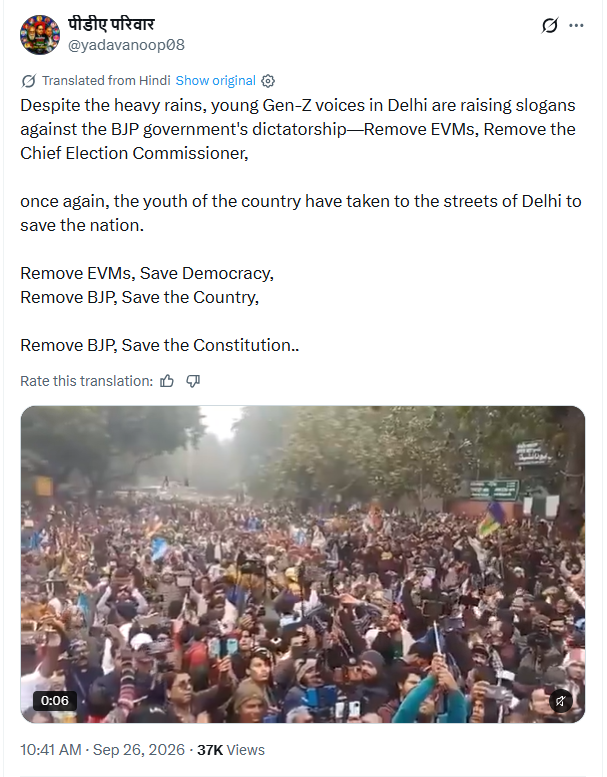
A video is being shared on social media with the claim that it shows a protest against Chief Election Commissioner Gyanesh Kumar in Delhi. A large number of people can be seen protesting in the video. CyberPeace Research found that the video is not related to any recent protest against Chief Election Commissioner Gyanesh Kumar. Our Research revealed that the video is from a protest against Electronic Voting Machines (EVMs) held at Jantar Mantar in Delhi on January 31, 2024.
Claim:
The video was shared on X with a caption claiming that, “Despite heavy rain, Gen-Z, the youth of the country, have once again taken to the streets of Delhi to protest against the dictatorship of the BJP government, raising slogans of ‘Remove EVMs and Remove the Chief Election Commissioner.’ Remove EVMs, save democracy; remove BJP, save the country; remove BJP, save the Constitution.”
https://x.com/yadavanoop08/status/2103713972256166204
Fact Check
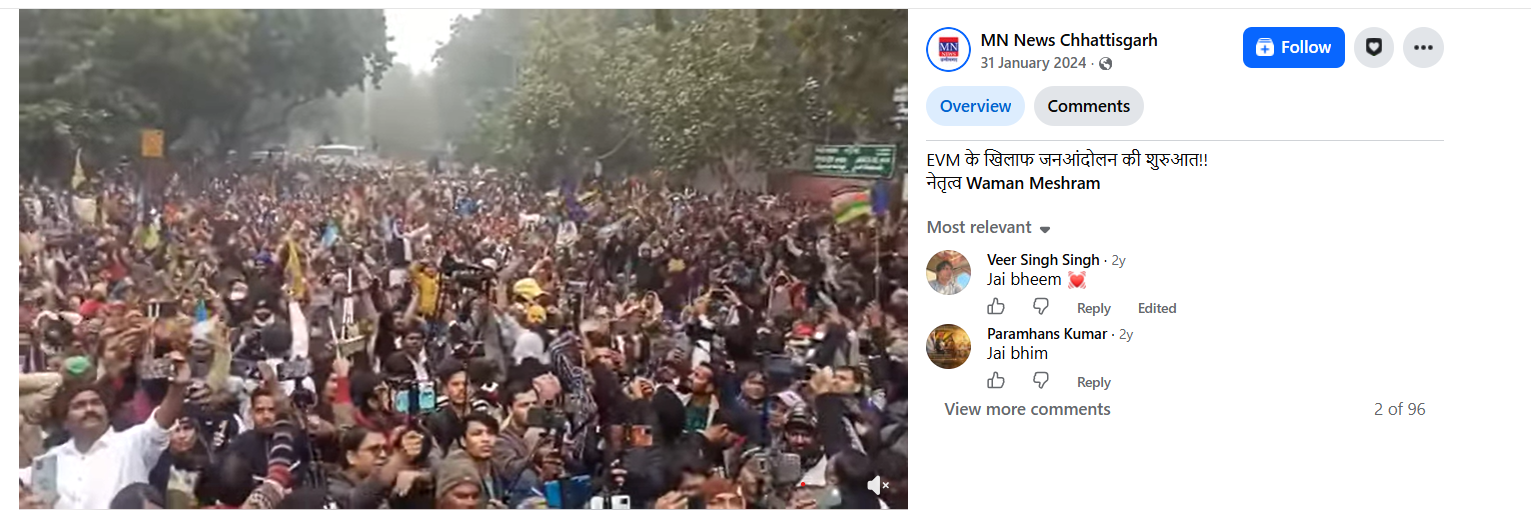
To verify the viral video being shared with the claim that it shows a protest against Chief Election Commissioner Gyanesh Kumar in Delhi, we conducted a reverse image search using keyframes from the video. We found the same video uploaded on a Facebook account on January 31, 2024. The caption accompanying the video described it as a protest against Electronic Voting Machines (EVMs).
https://www.facebook.com/watch/?v=3672972219640920
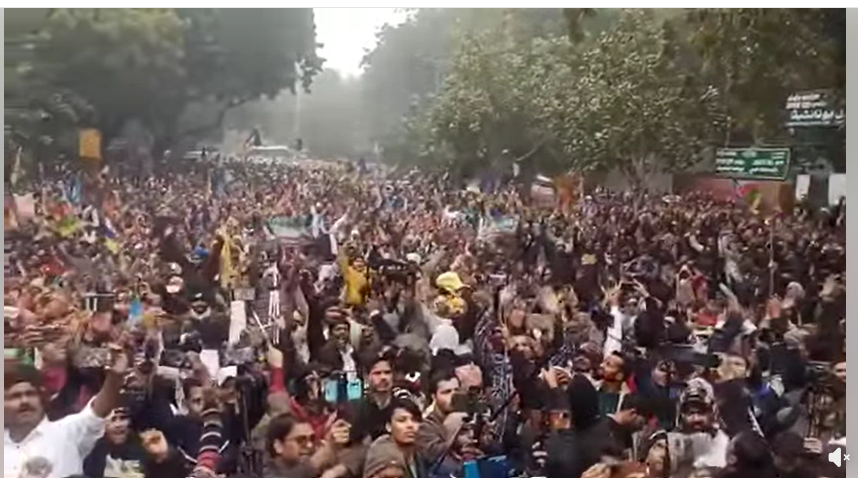
During the same search, we also found the video uploaded on another Facebook account on January 31, 2024. The post described the video as showing a protest held at Jantar Mantar in Delhi.
https://www.facebook.com/watch/?v=397803899424353
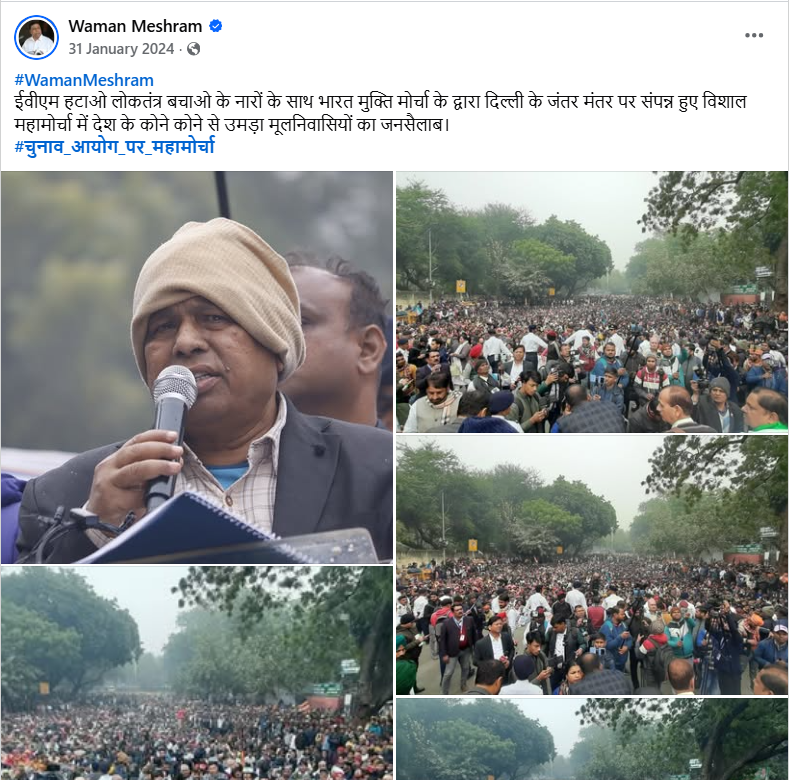
We then checked Vaman Meshram’s Facebook account and found several photographs related to the protest held at Jantar Mantar on January 31, 2024. The visuals in these photographs match the scenes seen in the viral video.
https://www.facebook.com/photo/?fbid=954806319346006&set=pcb.954806489345989
Conclusion
The evidence gathered during our Research clearly establishes that the video being shared with the claim that it shows a protest against Chief Election Commissioner Gyanesh Kumar in Delhi is actually from a protest against Electronic Voting Machines (EVMs) held in 2024.

Related Blogs
.webp)
Introduction
In India, the rights of children with regard to protection of their personal data are enshrined under the Digital Personal Data Protection Act, 2023 which is the newly enacted digital personal data protection law of India. The DPDP Act requires that for the processing of children's personal data, verifiable consent of parents or legal guardians is a necessary requirement. If the consent of parents or legal guardians is not obtained then it constitutes a violation under the DPDP Act. Under section 2(f) of the DPDP act, a “child” means an individual who has not completed the age of eighteen years.
Section 9 under the DPDP Act, 2023
With reference to the collection of children's data section 9 of the DPDP Act, 2023 provides that for children below 18 years of age, consent from Parents/Legal Guardians is required. The Data Fiduciary shall, before processing any personal data of a child or a person with a disability who has a lawful guardian, obtain verifiable consent from the parent or the lawful guardian. Section 9 aims to create a safer online environment for children by limiting the exploitation of their data for commercial purposes or otherwise. By virtue of this section, the parents and guardians will have more control over their children's data and privacy and they are empowered to make choices as to how they manage their children's online activities and the permissions they grant to various online services.
Section 9 sub-section (3) specifies that a Data Fiduciary shall not undertake tracking or behavioural monitoring of children or targeted advertising directed at children. However, section 9 sub-section (5) further provides room for exemption from this prohibition by empowering the Central Government which may notify exemption to specific data fiduciaries or data processors from the behavioural tracking or target advertising prohibition under the future DPDP Rules which are yet to be announced or released.
Impact on social media platforms
Social media companies are raising concerns about Section 9 of the DPDP Act and upcoming Rules for the DPDP Act. Section 9 prohibits behavioural tracking or targeted advertising directed at children on digital platforms. By prohibiting intermediaries from tracking a ‘child's internet activities’ and ‘targeted advertising’ - this law aims to preserve children's privacy. However, social media corporations contended that this limitation adversely affects the efficacy of safety measures intended to safeguard young users, highlighting the necessity of monitoring specific user signals, including from minors, to guarantee the efficacy of safety measures designed for them.
Social media companies assert that tracking teenagers' behaviour is essential for safeguarding them from predators and harmful interactions. They believe that a complete ban on behavioural tracking is counterproductive to the government's objectives of protecting children. The scope to grant exemption leaves the door open for further advocacy on this issue. Hence it necessitates coordination with the concerned ministry and relevant stakeholders to find a balanced approach that maintains both privacy and safety for young users.
Furthermore, the impact on social media platforms also extends to the user experience and the operational costs required to implement the functioning of the changes created by regulations. This also involves significant changes to their algorithms and data-handling processes. Implementing robust age verification systems to identify young users and protect their data will also be a technically challenging step for the various scales of platforms. Ensuring that children’s data is not used for targeted advertising or behavioural monitoring also requires sophisticated data management systems. The blanket ban on targeted advertising and behavioural tracking may also affect the personalisation of content for young users, which may reduce their engagement with the platform.
For globally operating platforms, aligning their practices with the DPDP Act in India while also complying with data protection laws in other countries (such as GDPR in Europe or COPPA in the US) can be complex and resource-intensive. Platforms might choose to implement uniform global policies for simplicity, which could impact their operations in regions not governed by similar laws. On the same page, competitive dynamics such as market shifts where smaller or niche platforms that cater specifically to children and comply with these regulations may gain a competitive edge. There may be a drive towards developing new, compliant ways of monetizing user interactions that do not rely on behavioural tracking.
CyberPeace Policy Recommendations
A balanced strategy should be taken into account which gives weightage to the contentions of social media companies as well as to the protection of children's personal information. Instead of a blanket ban, platforms can be obliged to follow and encourage openness in advertising practices, ensuring that children are not exposed to any misleading or manipulative marketing techniques. Self-regulation techniques can be implemented to support ethical behaviour, responsibility, and the safety of young users’ online personal information through the platform’s practices. Additionally, verifiable consent should be examined and put forward in a manner which is practical and the platforms have a say in designing the said verification. Ultimately, this should be dealt with in a manner that behavioural tracking and targeted advertising are not affecting the children's well-being, safety and data protection in any way.
Final Words
Under section 9 of the DPDP Act, the prohibition of behavioural tracking and targeted advertising in case of processing children's personal data - will compel social media platforms to overhaul their data collection and advertising practices, ensuring compliance with stricter privacy regulations. The legislative intent behind this provision is to enhance and strengthen the protection of children's digital personal data security and privacy. As children are particularly vulnerable to digital threats due to their still-evolving maturity and cognitive capacities, the protection of their privacy stands as a priority. The innocence of children is a major cause for concern when it comes to digital access because children simply do not possess the discernment and caution required to be able to navigate the Internet safely. Furthermore, a balanced approach needs to be adopted which maintains both ‘privacy’ and ‘safety’ for young users.
References
- https://www.meity.gov.in/writereaddata/files/Digital%20Personal%20Data%20Protection%20Act%202023.pdf
- https://www.firstpost.com/tech/as-govt-of-india-starts-preparing-rules-for-dpdp-act-social-media-platforms-worried-13789134.html#google_vignette
- https://www.business-standard.com/industry/news/social-media-platforms-worry-new-data-law-could-affect-child-safety-ads-124070400673_1.html

Executive Summary
Amid the ongoing tensions in West Asia between the United States–Israel alliance and Iran since February 28, 2026, a video is rapidly going viral on social media. The clip shows buildings engulfed in flames and thick plumes of smoke following an attack. Several users are sharing it with the claim that it depicts Iran’s recent strike on Tel Aviv, Israel. However, an research by the CyberPeace found the claim to be misleading. The viral video is actually from August 2025, when Israel carried out airstrikes in Sanaa, the capital of Yemen. It has no connection to the current conflict.
Claim:
An Instagram user ‘iran_.news24’ posted the video on March 27, 2026, with the caption: “Iran has turned Israel’s largest city Tel Aviv into hell—fears that 200,000 people have died in the war so far.”
Fact Check
To verify the viral claim, keyframes of the video were extracted and searched using Google Lens. The same video was found posted on August 24, 2025, by a Facebook user ‘Mhmdmhywbalshrby5’. The accompanying text, when translated, stated that it showed Israeli bombardment of Sanaa, Yemen.

Similarly, another Instagram user ‘ae5ce’ had also shared the same video on August 24, 2025, identifying it as footage from Sanaa.

Media reports further support this finding. According to a report published by Egypt Today on August 24, 2025, Israel carried out multiple airstrikes in Sanaa targeting key locations, including an oil station, a power facility, and the presidential palace. Casualties were also reported. The strikes were said to be in response to attacks by Houthi forces.

Additionally, the New York Post shared another video of the same incident from a different angle on its X (formerly Twitter) handle on August 25, 2025.

Conclusion
The video being circulated with the claim of Iran attacking Tel Aviv is actually old footage from Israeli airstrikes in Yemen in August 2025. It is unrelated to the ongoing conflict.

Artificial intelligence is growing at a rapid pace, with startups promising breakthroughs in industries and attracting billions in investment. Among these was Builder.ai, a London-based company founded in 2016 by an Indian entrepreneur. Once valued at over $1.5 billion, it was known for its game-changing platform that could let anyone build custom apps quickly and affordably with the help of AI.
Yet in 2025, Builder.ai collapsed dramatically, filing for bankruptcy across multiple countries and laying off nearly 80% of its workforce. What was once a celebrated unicorn has become a cautionary tale, exposing not only the risks of hype-driven growth in AI but also inflicting reputational damage on Indian founders in the global startup ecosystem.
The Rise: Big Promises, Big Investors
Builder.ai branded itself as a no-code/low-code app development platform, where its AI assistant “Natasha” would guide customers in creating apps without technical expertise. The pitch was simple and attractive: app development was made “as easy as ordering pizza.” The story resonated with major investors. Backed by SoftBank, Microsoft, and Qatar’s sovereign wealth fund, Builder.ai raised more than $450 million. It scaled rapidly, positioning itself as one of Europe’s most promising AI startups.
The Cracks Appear
Behind the glamour, the first cracks appeared as early as 2019, when The Wall Street Journal reported that Builder.ai’s platform depended far more on human engineers than on the AI automation it advertised. In reality, the much-hyped AI assistant “Natasha” was often just “a guy instead”, i.e., skilled developers in India manually writing code behind the scenes on whose backs the company expanded aggressively.
The real blow came from Builder.ai’s finances. The company was accused of inflating revenue figures by 300%, with alleged use of round-tripping tactics involving fake invoices that inflated financials. While it publicly projected revenues of $220 million in 2024, its actual figure was closer to $55 million. When this reality surfaced, investor confidence was lost quickly, and the company’s liabilities ballooned to nearly $100 million, with less than $ 10 million in assets remaining.
Collapse and Legal Scrutiny
By 2025, the company’s foundations had crumbled. The founder stepped down as CEO but retained the unusual title of “Chief Wizard.” Massive debts to AWS, Microsoft, and other partners mounted into the hundreds of millions. Assets were seized, and the company filed for bankruptcy in the U.S., UK, India, and the UAE.
For clients, the collapse meant abandoned projects. For employees, around 1,000 of them, it meant sudden unemployment. And for investors, it was a devastating loss. The Securities and Exchange Commission and U.S. Attorney’s Office in New York have since launched investigations into potential fraud and investor misrepresentation.
Reputational Damage: Impact on Indian Founders
Perhaps the most enduring consequence of Builder.ai’s downfall is the hit to the credibility of Indian founders on the global stage.
For years, Indian entrepreneurs have earned trust in global tech circles, with leaders heading companies from Google to Microsoft. Indian-led startups abroad were viewed as reliable, innovative, and growth-driven. Builder.ai’s collapse disrupts this narrative.
The allegations of inflated revenue, AI exaggeration, and questionable governance risk reinforcing skepticism among global investors regarding Indian organisational ethics. For other Indian founders seeking international capital, the road has now become tougher: stricter due diligence, harsher scrutiny of claims, and slower trust-building.
This reputational damage arrives at a critical time when India is positioning itself as a global hub for AI and leads the world in AI skill penetration. Rather than highlighting the strength of India’s entrepreneurial and talent ecosystem, the fall of Builder.ai has drawn attention to the risks of overpromising and underdelivering.
Conclusion
The fall of Builder.ai is more than the bankruptcy of one AI unicorn. It is a warning to companies against chasing hyper growth fueled by the riding of the AI wave. While the company’s downfall exposed flaws in governance and accountability, its deeper impact lies in how it dented trust. To drive AI and technology innovation, startups must move beyond flashy valuations and commit to authentic innovation, transparency, and financial integrity.
References
- https://www.moodys.com/web/en/us/insights/lending/moodys-early-warning-in-action-builder-ai.html#:~:text=Despite%20marketing%20itself%20as%20an,fake%20invoices%20that%20inflated%20financials.
- https://today-innovation.webflow.io/unveiling-the-power-of-natasha-an-ai-assistant-of-builder-ai-to-revolutionize-app-generation
- https://finance.yahoo.com/news/builder-ais-shocking-450m-fall-170009323.html
- https://www.pib.gov.in/PressReleasePage.aspx?PRID=2108810
- https://www.cnbctv18.com/technology/how-a-london-based-startups-artificial-ai-gambit-backfired-ws-l-19613692.htm#
