
#FactCheck-False Claim Links PM Modi to 320 Visits to Epstein Island
Executive Summary
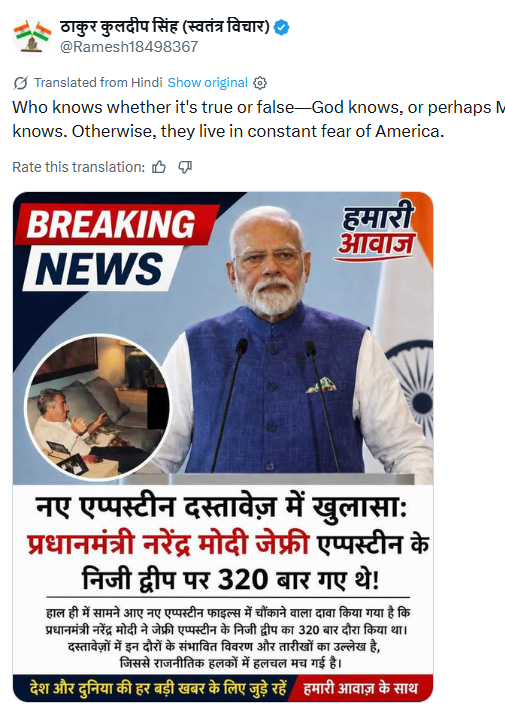
A viral social media post claims that the recently released Epstein files reveal that Prime Minister Narendra Modi visited Epstein Island more than 320 times. CyberPeace Research Wing research found that the claim is false. There is no evidence in the Epstein files suggesting that Prime Minister Modi visited Epstein Island over 320 times.
Claim:
An X user shared a viral graphic claiming that Prime Minister Narendra Modi had visited Epstein Island more than 320 times. https://x.com/Ramesh18498367/status/206501995913534715 , https://ghostarchive.org/archive/2V12W
Fact Check:
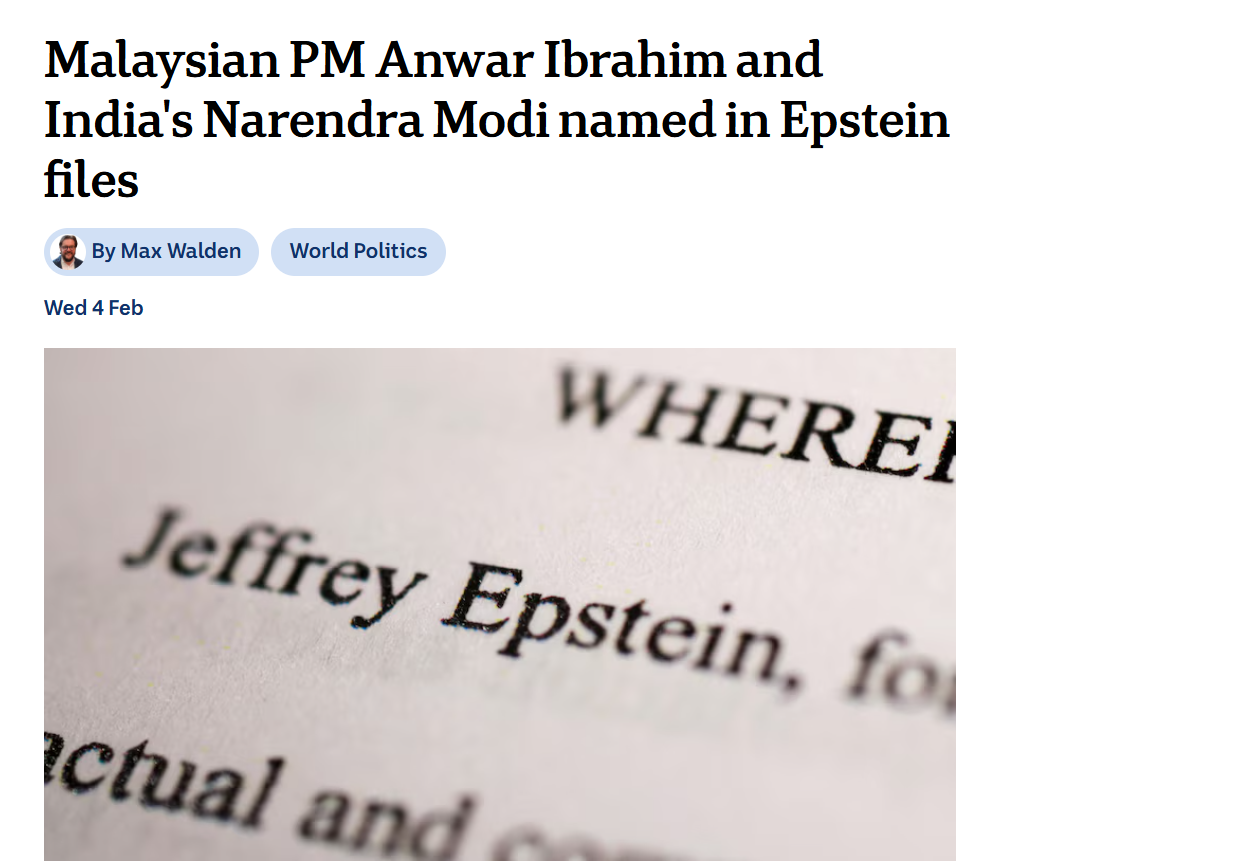
We first examined credible international media reports related to the Epstein files, particularly those mentioning Prime Minister Narendra Modi. During this process, we found a report published by the Australian Broadcasting Corporation (ABC) in February 2026. The report mentioned that the names of the Prime Ministers of India and Malaysia appeared in certain documents linked to the Epstein files. However, it clarified that references to Prime Minister Modi were limited to emails discussing his 2017 visit to Israel. The emails reportedly contained comments made by Jeffrey Epstein regarding the Prime Minister’s Israel visit. https://www.abc.net.au/news/2026-02-04/leaders-of-malaysia-india-named-in-epstein-files/106298458
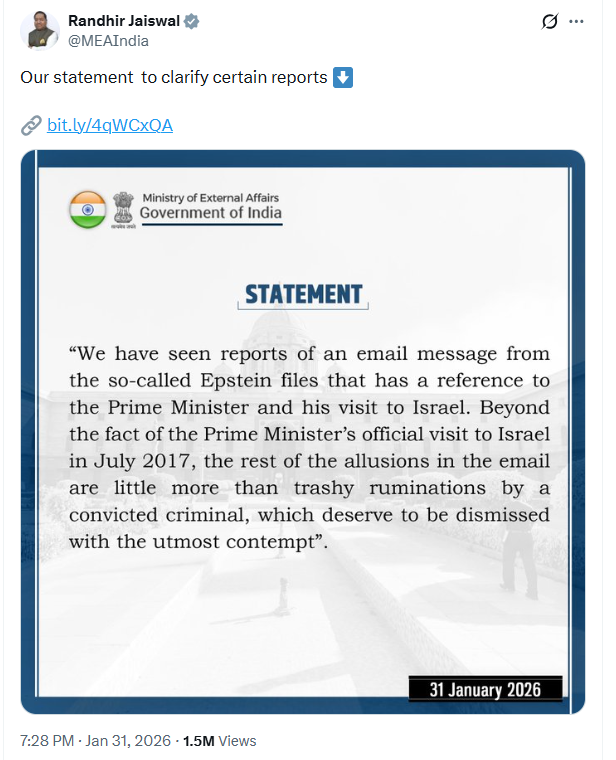
We also reviewed reports published by several other international media organizations. None of them contained any information supporting the viral claim that Prime Minister Modi visited Epstein Island more than 320 times. The Government of India also issued a clarification regarding references to Prime Minister Modi in the Epstein files. The clarification stated that, apart from references to his 2017 Israel visit, the files contain no other mention of the Prime Minister. The government further described subsequent claims and speculation on the matter as baseless.
https://x.com/MEAIndia/status/2017598414733840649?s=20
Conclusion:
The viral claim that the Epstein files reveal Prime Minister Narendra Modi visited Epstein Island more than 320 times is false. Available records, international media reports, and the Indian government's clarification do not support the claim.

Related Blogs
Executive Summary
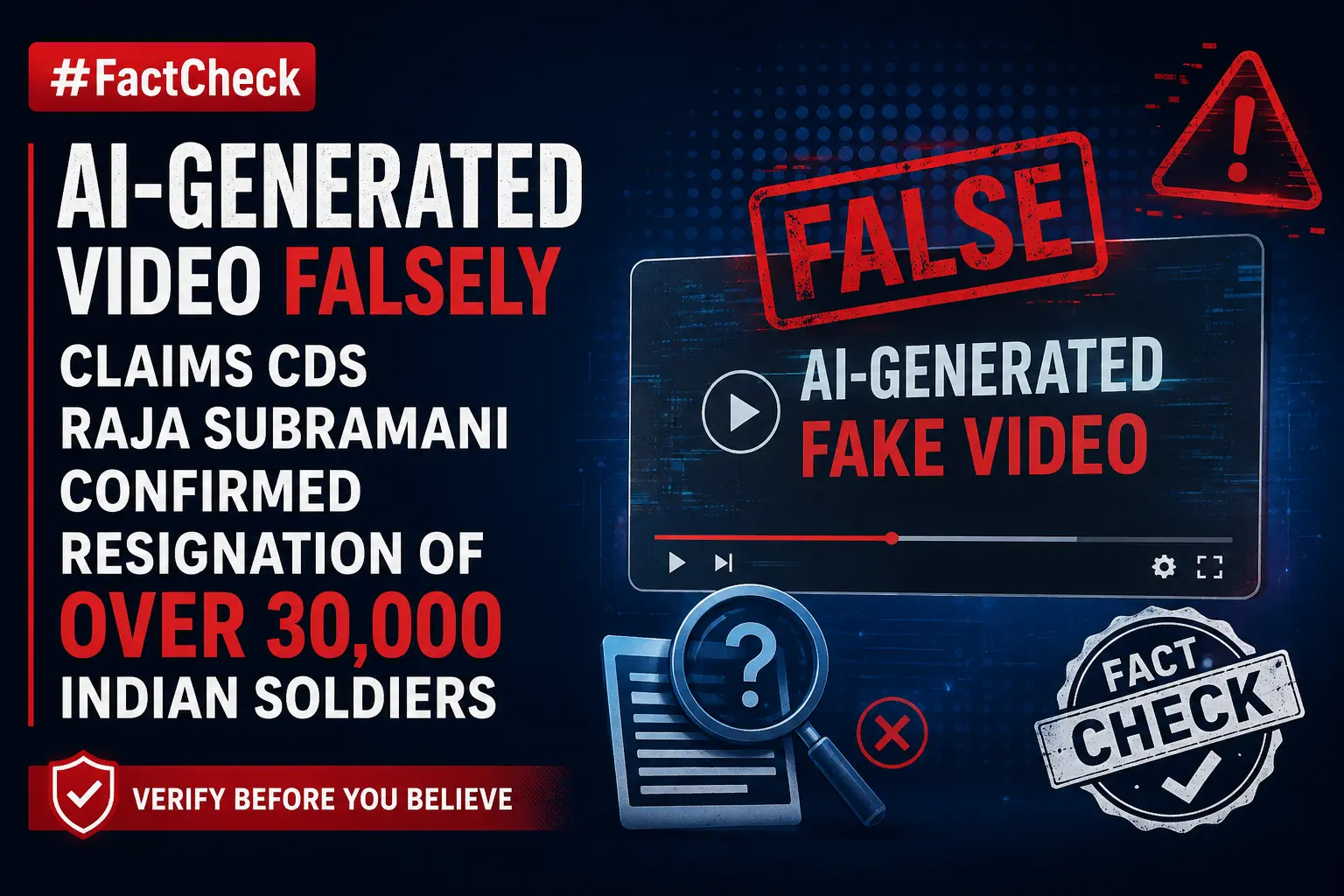
A video is being widely shared on social media, allegedly showing Chief of Defence Staff (CDS) Raja Subramani referring to the resignation of more than 30,000 Indian soldiers. The video is being circulated with the claim that CDS Raja Subramani confirmed that over 30,000 personnel resigned in protest following the demonstration held at Jantar Mantar. CyberPeace Research Wing’s research found that the viral claim is false. The research revealed that the video featuring CDS Raja Subramani has been digitally manipulated and created using Artificial Intelligence (AI). The original video does not contain any statement related to soldiers’ resignations or the Jantar Mantar protest.
Claim
A Facebook user shared the video with a claim stating: “After the protests at Jantar Mantar, India’s Chief of Defence Staff Raja Subramani has issued an emergency alert, saying that more than 30,000 soldiers have resigned in protest because their children were brutally beaten at Jantar Mantar.”
The post link, archive link and screenshot are provided below:

Fact Check
To verify the authenticity of the viral video, we extracted a key frame and conducted a reverse image search using Google Lens. During the search, we found the same video uploaded by the Eastern Command of the Indian Army (@easterncomd) on its official X account on July 21, 2026. The original video shows CDS Raja Subramani extending his best wishes to all participating teams of the 135th Indian Oil Durand Cup Football Tournament. There is no mention of any soldier resignations or the Jantar Mantar protest in the original footage.
https://x.com/easterncomd/status/2079485496988967225
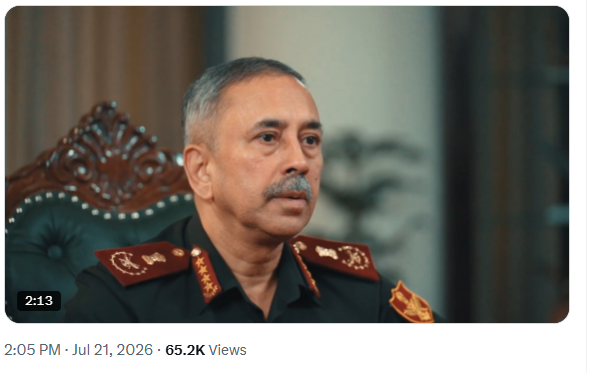
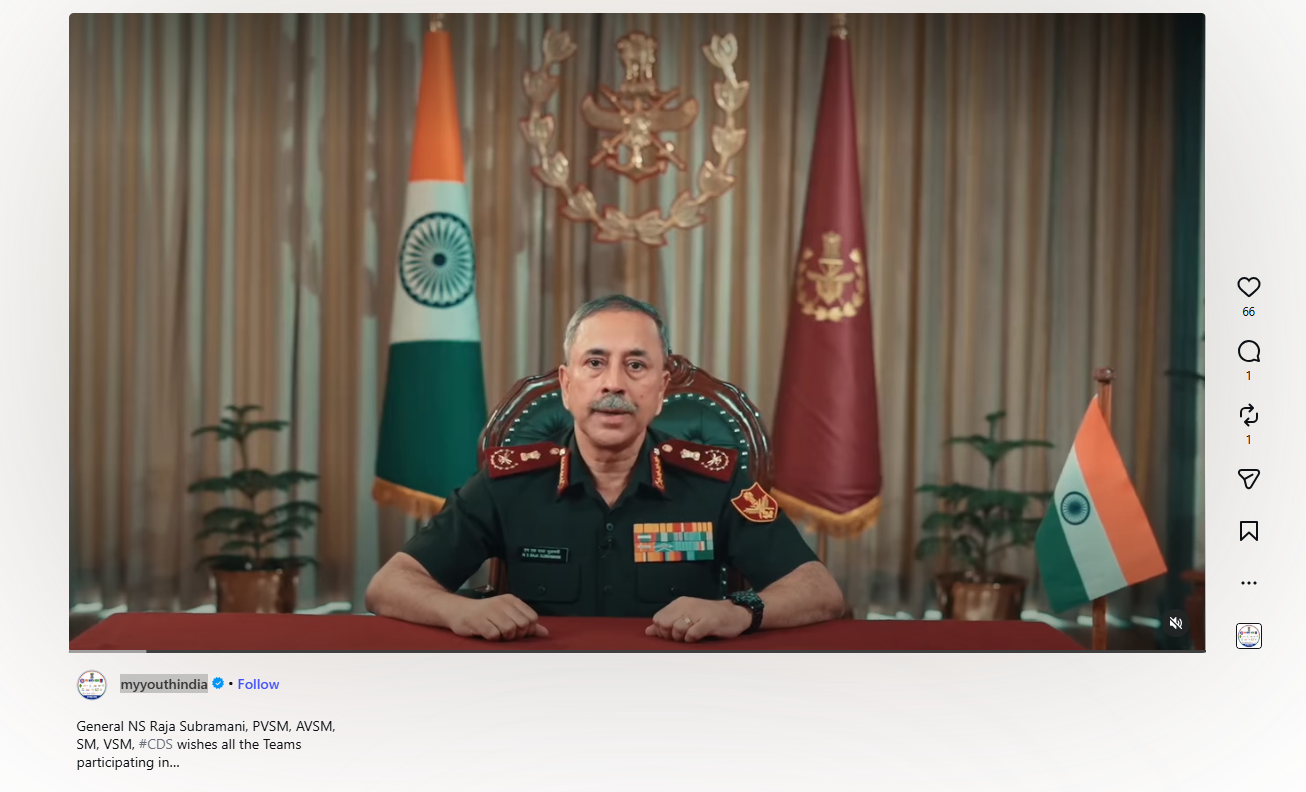
Further research led us to the same video posted by the Instagram account myyouthindia, where CDS Raja Subramani can again be seen wishing teams participating in the 135th Indian Oil Durand Cup Football Tournament.
https://www.instagram.com/reels/DbEGRGBsKv8/
Conclusion
The research established that the viral video of CDS Raja Subramani has been manipulated using AI-generated content. The original video is related to the 135th Indian Oil Durand Cup Football Tournament and does not contain any statement about the resignation of 30,000 Indian soldiers or the Jantar Mantar protest. The digitally altered video is being shared with a false claim.

Introduction
The increase in consumer demands has resulted in a sharp increase in digital financing in India. As a result, the reputation of the digital lending sector has been impacted, as bad actors increasingly deploy illicit lending platforms such as fraudulent loans and trading apps. As millions of Indians download fast loan applications to help them meet their financial ends, the fraudulent apps result in cyber crimes including financial fraud. Consumers need to be vigilant of dubious trading or loan applications as bad actors frequently use illegitimate apps to trick victims by advertising limited-period offers and applying pressure.
Recently the Indian Cyber Crime Coordination Centre (I4C) led handel CyberDost has issued a cybercrime alert against the ‘CashExpand-U’ finance assistant app, which has been now removed from the Google Play Store. The app was found to be associated with hostile foreign entities, and the app had made it easier to raise small loans. However, such loan apps are seldom credible and may compromise financial information.
Raising cases of Fraudulent Loan Apps
The finance minister had stated that the government is constantly engaged with the Reserve Bank of India and other regulators and stakeholders to control fraudulent loan apps. In FY23, there were 1,062 complaints against such apps, the Finance Minister shared during a Lok Sabha session. Google removed almost 134 fake apps from the Play Store in a single week in September 2023 after multiple complaints were registered against such apps. The Reserve Bank of India (RBI) had also issued regulatory guidelines on digital lending in April 2023 to bring transparency in the digital loan space.
CyberPeace Policy Wing Advisory for Users
- Be cautious of App Permissions
Fake lending apps collect data by fraudulently taking numerous app permissions from consumers and misusing them later. The users must effectively manage their app permissions to avoid denying any extra permissions such as access to contacts, location, and photos. This is because fraudulent digital lenders access users' personal data to extort additional money even after loan repayment.
- Practice Due Diligence
Consumers must exercise care & caution before applying for a loan from digital lending platforms. Before applying for a loan or downloading any such apps, consumers must conduct due diligence by verifying the app's name, rating, reviews, physical address, and contact information. Always double-verify the paperwork before signing any agreement or contract. Always apply for loans from RBI-approved and compliant banking and financial services providers.
- Download from Official Sources
To avoid downloading counterfeit apps, only download lending apps from official stores like Google Play Store or Apple App Store, and avoid downloading apps from web links sent via SMS, email, or social media, even if shared by your known persons.
- Be sceptical of too-good-to-be-true offerings
Be cautious of deals that seem too good to be true, like hassle-free easy loans as they can be fraudulent. If an offer seems too good to be true, it might be a red flag. Hence always conduct your own research to verify the lender and avoid making hasty decisions.
- Reporting Mechanism
In case of facing a scam by such fraudulent apps, victims can file a complaint with the ‘National Cyber Crime Reporting Portal’ or Cyber Crime Helpline ‘1930’, or they can also contact us at CyberPeace Helpline +919570000066 and helpline@cyberpeace.net to get assistance in reporting their cases.
Final Words
Illegitimate loan/trading apps have been raising concerns by defrauding innocent consumers who seek financial assistance. The Center has recently warned against the CashExpand-U app, which has been now removed from the Google Play Store. Users are advised to exercise due care and caution while downloading loan apps and applying for loans to prevent any potential scams. keep up to date with news from concerned authorities about common scams and fraudulent practices in the lending space and stay safe in the online world.
References:
- https://www.livemint.com/news/beware-govt-issues-cybercrime-alert-against-loan-app-cashexpand-u-finance-assistant-11720338996430.html
- https://timesofindia.indiatimes.com/technology/tech-news/government-has-issued-an-important-warning-for-this-loan-app/articleshow/111541577.cms
Executive Summary
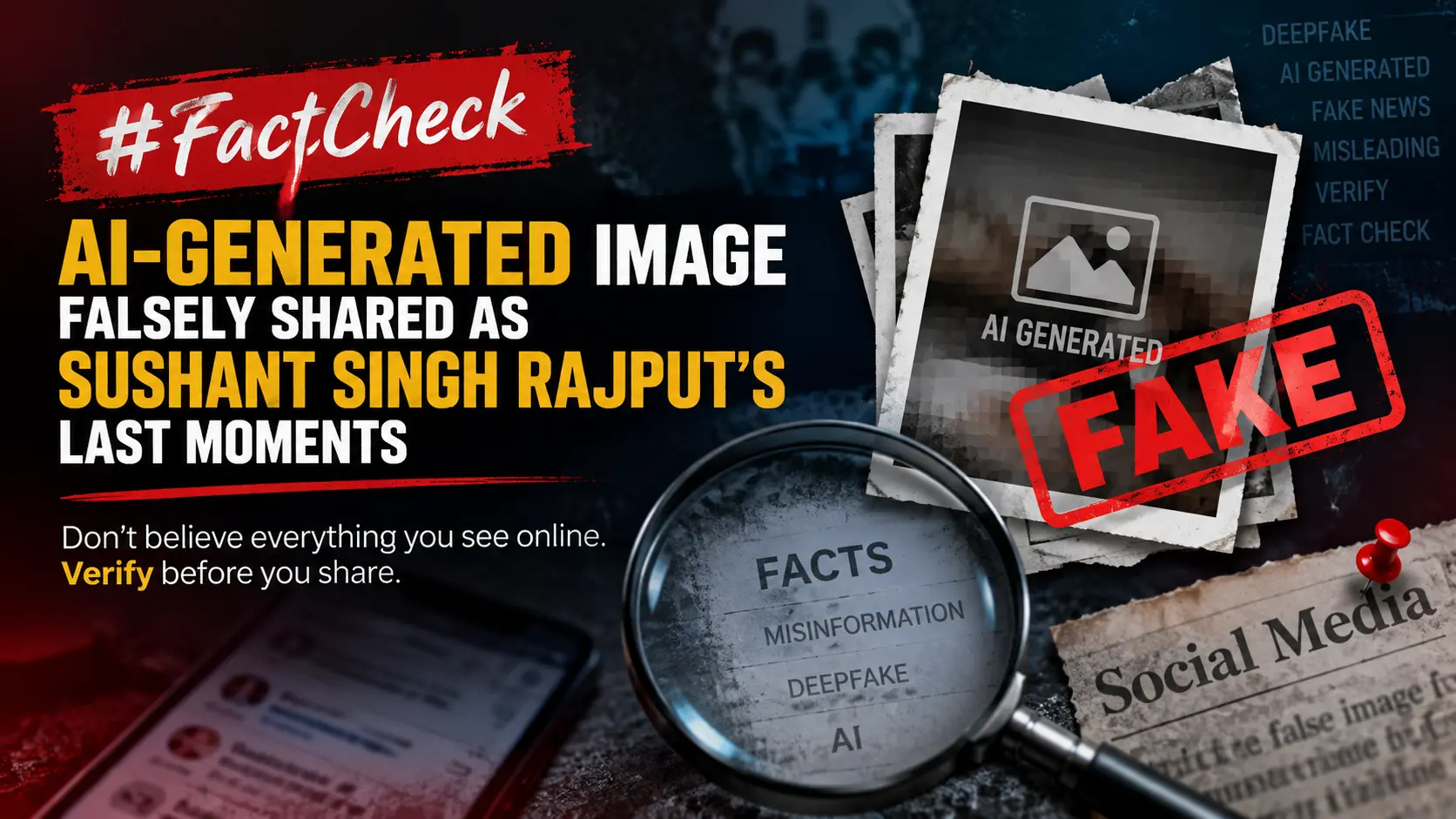
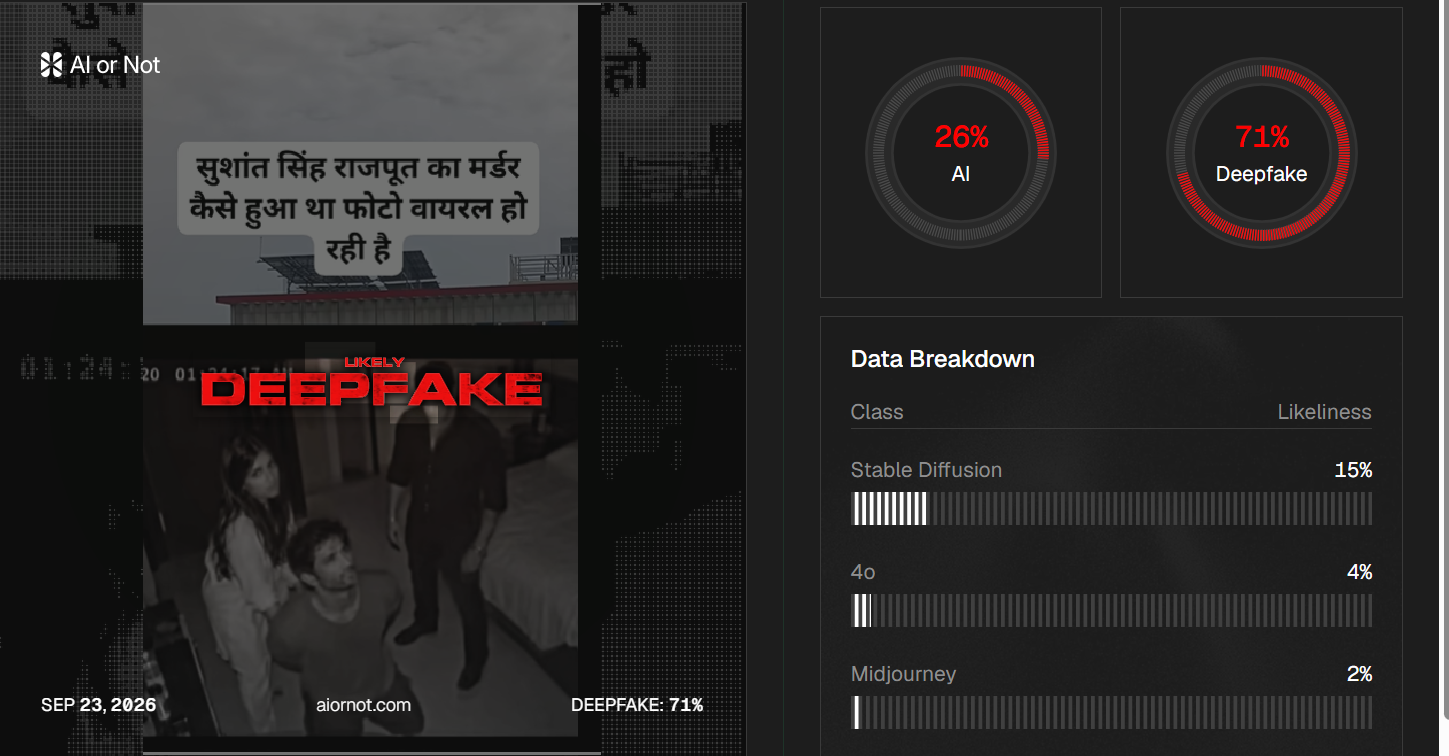
A picture of late actor Sushant Singh Rajput is being shared on social media. In the picture, a woman can be seen holding him, while another person is standing beside him. The social media post claims that the picture is from the last days of Sushant Singh Rajput’s life.CyberPeace Research found the viral claim to be false. Our research found that the viral picture is not authentic, but was created using Artificial Intelligence (AI). The AI-generated image is being shared on social media with a misleading claim.
Claim:
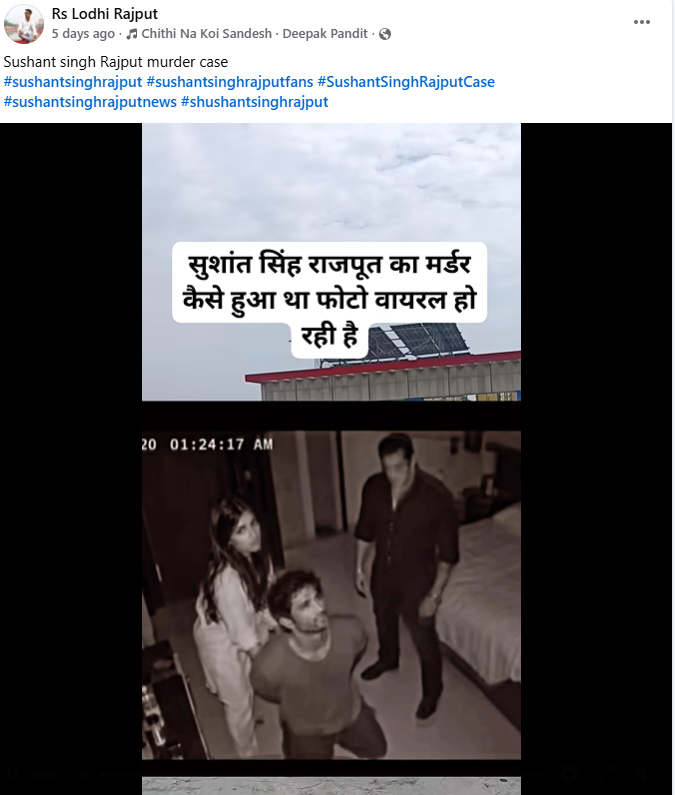
On September 18, 2026, a Facebook user shared the viral picture with the caption, “How was Sushant Singh murdered? The photo is going viral.” The post link, archived link and screenshot are provided below.
https://www.facebook.com/reel/1591592259073828
Fact Check
To verify the authenticity of the viral image, we conducted a Google search using relevant keywords. However, we did not find any credible media report related to the viral image. In the next step of our research, we examined the viral image closely and noticed several inconsistencies that raised suspicion that it had been AI-generated. We then scanned the image using AI or Not. According to the results, the viral image was identified as AI-generated.
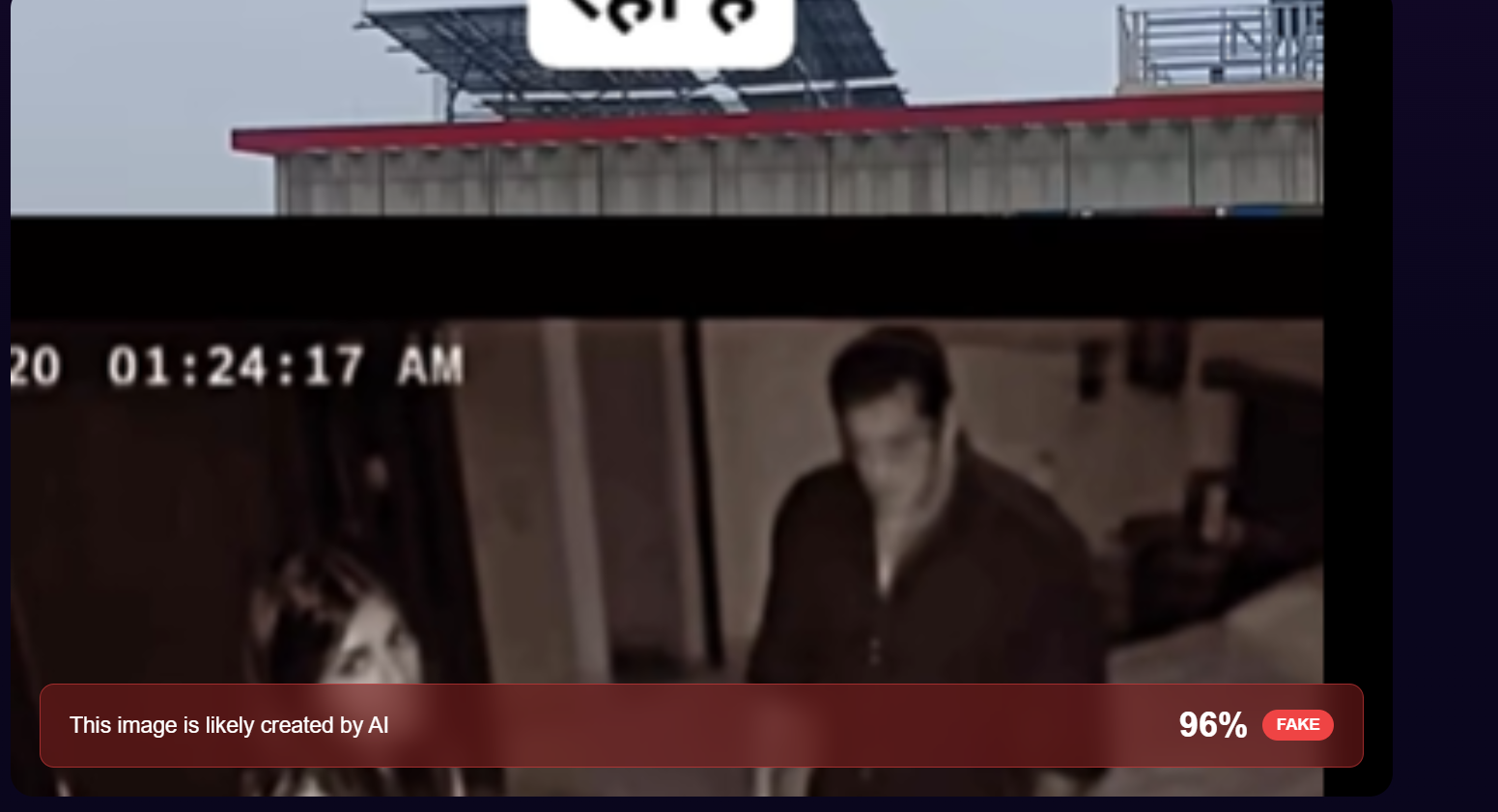
We also scanned the viral image using another AI detection tool, DeepAI. According to the results, the image was found to have a 96 percent likelihood of being AI-generated.
Conclusion
Our research found that the viral image is not authentic, but was created using Artificial Intelligence (AI). The AI-generated image is being shared on social media with a misleading claim.
