
#FactCheck: AI-Generated Image Falsely Linked to Protest Against CEC Gyanesh Kumar in London
Executive Summary
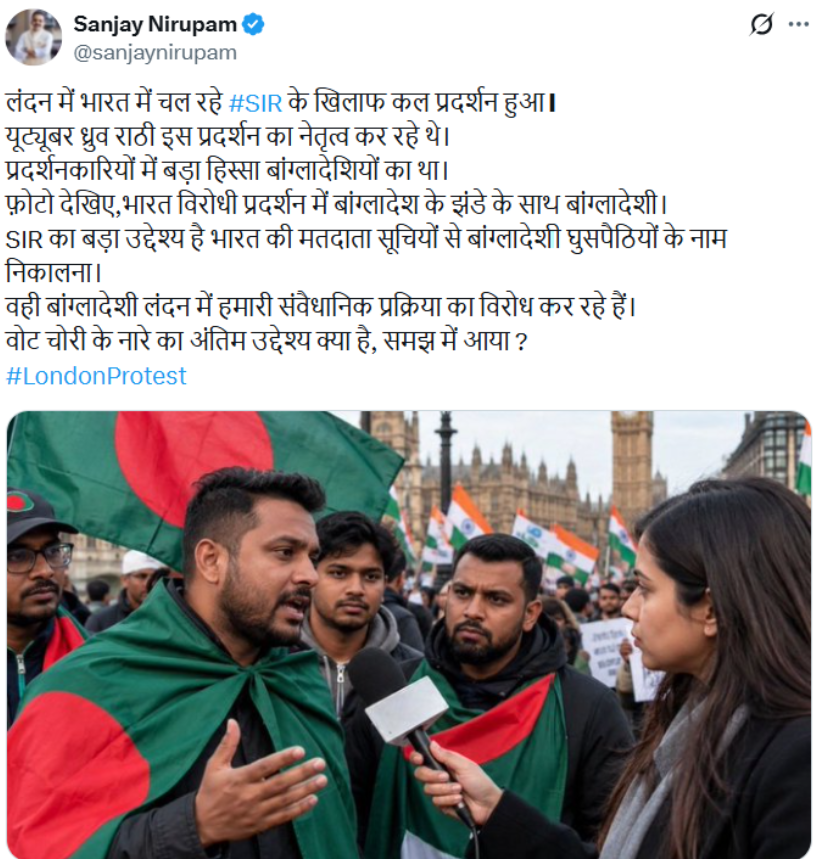
A photo of a Bangladeshi national holding the Bangladesh flag during a protest against Chief Election Commissioner Gyanesh Kumar in London is going viral on social media. The image is being shared with the claim that it was taken during the protest. CyberPeace Research found the viral claim to be false. The image is not authentic and is AI-generated.
Claim:
A photo of a Bangladeshi national holding the Bangladesh flag during a protest against Chief Election Commissioner Gyanesh Kumar in London.
Fact Check
To verify the authenticity of the viral image claiming to show a Bangladeshi man holding the Bangladesh flag during a protest against Chief Election Commissioner Gyanesh Kumar in London, we conducted a reverse image search using Google Lens. However, we could not find the image in any credible media reports.
Upon closely examining the image, we noticed several inconsistencies. For instance, the text on the posters held by people in the image is not clearly legible, and the reporter's microphone does not bear the logo of any media organisation. Such inconsistencies are commonly observed in AI-generated images.
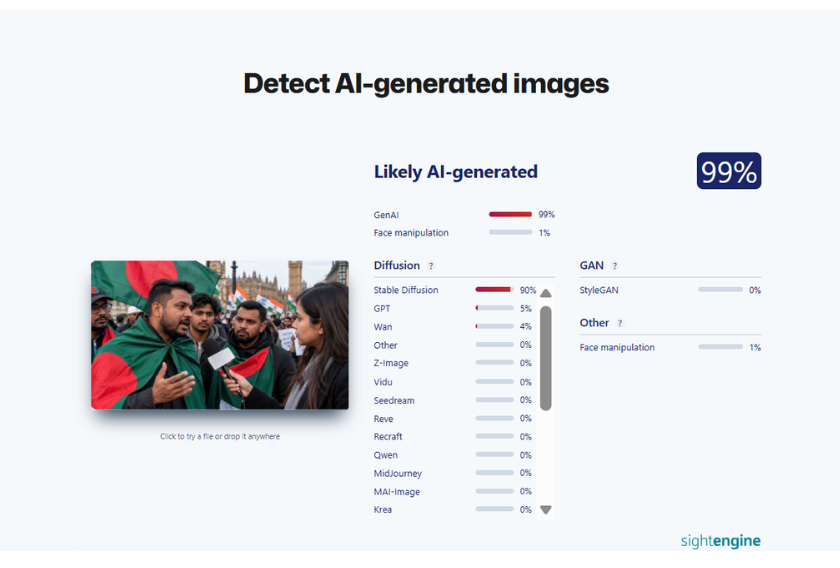
To further examine the image, we analysed it using the AI detection tool Sightengine. The tool indicated a 99.2 per cent probability that the image was AI-generated.
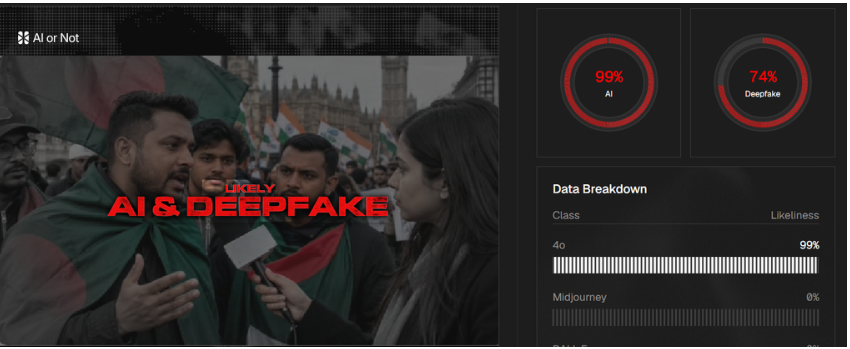
Another AI detection platform, AI or Not, also identified the image as highly likely to be AI-generated.
Conclusion
The evidence gathered during CyberPeace Research confirms that the image circulating with the claim that it shows a Bangladeshi national holding the Bangladesh flag during a protest against Chief Election Commissioner Gyanesh Kumar in London is AI-generated.

Related Blogs

Executive Summary:
A viral social media video falsely claims that Meta AI reads all WhatsApp group and individual chats by default, and that enabling “Advanced Chat Privacy” can stop this. On performing reverse image search we found a blog post of WhatsApp which was posted in the month of April 2025 which claims that all personal and group chats remain protected with end to end (E2E) encryption, accessible only to the sender and recipient. Meta AI can interact only with messages explicitly sent to it or tagged with @MetaAI. The “Advanced Chat Privacy” feature is designed to prevent external sharing of chats, not to restrict Meta AI access. Therefore, the viral claim is misleading and factually incorrect, aimed at creating unnecessary fear among users.
Claim:
A viral social media video [archived link] alleges that Meta AI is actively accessing private conversations on WhatsApp, including both group and individual chats, due to the current default settings. The video further claims that users can safeguard their privacy by enabling the “Advanced Chat Privacy” feature, which purportedly prevents such access.

Fact Check:
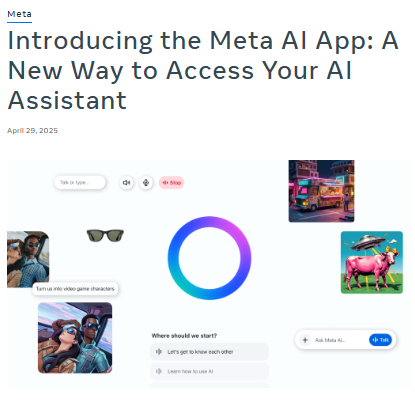
Upon doing reverse image search from the keyframe of the viral video, we found a WhatsApp blog post from April 2025 that explains new privacy features to help users control their chats and data. It states that Meta AI can only see messages directly sent to it or tagged with @Meta AI. All personal and group chats are secured with end-to-end encryption, so only the sender and receiver can read them. The "Advanced Chat Privacy" setting helps stop chats from being shared outside WhatsApp, like blocking exports or auto-downloads, but it doesn’t affect Meta AI since it’s already blocked from reading chats. This shows the viral claim is false and meant to confuse people.

Conclusion:
The claim that Meta AI is reading WhatsApp Group Chats and that enabling the "Advance Chat Privacy" setting can prevent this is false and misleading. WhatsApp has officially confirmed that Meta AI only accesses messages explicitly shared with it, and all chats remain protected by end-to-end encryption, ensuring privacy. The "Advanced Chat Privacy" setting does not relate to Meta AI access, as it is already restricted by default.
- Claim: Viral social media video claims that WhatsApp Group Chats are being read by Meta AI due to current settings, and enabling the "Advance Chat Privacy" setting can prevent this.
- Claimed On: Social Media
- Fact Check: False and Misleading

Introduction
Children today are growing up amidst technology, and the internet has become an important part of their lives. The internet provides a wealth of recreational and educational options and learning environments to children, but it also presents extensively unseen difficulties, particularly in the context of deepfakes and misinformation. AI is capable of performing complex tasks in a fast time. However, misuse of AI technologies led to increasing cyber crimes. The growing nature of cyber threats can have a negative impact on children wellbeing and safety while using the Internet.
India's Digital Environment
India has one of the world's fastest-growing internet user bases, and young netizens here are getting online every passing day. The internet has now become an inseparable part of their everyday lives, be it social media or online courses. But the speed at which the digital world is evolving has raised many privacy and safety concerns increasing the chance of exposure to potentially dangerous content.
Misinformation: The raising Concern
Today, the internet is filled with various types of misinformation, and youngsters are especially vulnerable to its adverse effects. With the diversity in the language and culture in India, the spread of misinformation can have a vast negative impact on society. In particular, misinformation in education has the power to divulge young brains and create hindrances in their cognitive development.
To address this issue, it is important that parents, academia, government, industry and civil society start working together to promote digital literacy initiatives that educate children to critically analyse online material which can ease navigation in the digital realm.
DeepFakes: The Deceptive Mirage:
Deepfakes, or digitally altered videos and/or images made with the use of artificial intelligence, pose a huge internet threat. The possible ramifications of deepfake technology are concerning in India, since there is a high level of dependence on the media. Deepfakes can have far-reaching repercussions, from altering political narratives to disseminating misleading information.
Addressing the deepfake problem demands a multifaceted strategy. Media literacy programs should be integrated into the educational curriculum to assist youngsters in distinguishing between legitimate and distorted content. Furthermore, strict laws as well as technology developments are required to detect and limit the negative impact of deepfakes.
Safeguarding Children in Cyberspace
● Parental Guidance and Open Communication: Open communication and parental guidance are essential for protecting children's internet safety. It's a necessity to have open discussions about the possible consequences and appropriate internet use. Understanding the platforms and material children are consuming online, parents should actively participate in their children's online activities.
● Educational Initiatives: Comprehensive programs for digital literacy must be implemented in educational settings. Critical thinking abilities, internet etiquette, and knowledge of the risks associated with deepfakes and misinformation should all be included in these programs. Fostering a secure online environment requires giving young netizens the tools they need to question and examine digital content.
● Policies and Rules: Admitting the threats or risks posed by misuse of advanced technologies such as AI and deepfake, the Indian government is on its way to coming up with dedicated legislation to tackle the issues arising from misuse of deepfake technology by the bad actors. The government has recently come up with an advisory to social media intermediaries to identify misinformation and deepfakes and to make sure of the compliance of Information Technology (IT) Rules 2021. It is the legal obligation of online platforms to prevent the spread of misinformation and exercise due diligence or reasonable efforts are made to identify misinformation and deepfakes. Legal frameworks need to be equipped to handle the challenges posed by AI. Accountability in AI is a complex issue that requires comprehensive legal reforms. In light of various cases reported about the misuse of deepfakes and spreading such deepfake content on social media, It is advocated that there is a need to adopt and enforce strong laws to address the challenges posed by misinformation and deepfakes. Working with technological companies to implement advanced content detection tools and ensuring that law enforcement takes swift action against those who misuse technology will act as a deterrent among cyber crooks.
● Digital parenting: It is important for parents to keep up with the latest trends and digital technologies. Digital parenting includes understanding privacy settings, monitoring online activity, and using parental control tools to create a safe online environment for children.
Conclusion
As India continues to move forward digitally, protecting children in cyberspace has become a shared responsibility. By promoting digital literacy, encouraging open communication and enforcing strong laws, we can create a safer online environment for younger generations. Knowledge, understanding, and active efforts to combat misinformation and deeply entrenched myths are the keys to unlocking the safety net in the online age. Social media Intermediaries or platforms must ensure compliance under IT Rules 2021, IT Act, 2000 and the newly enacted Digital Personal Data Protection Act, 2023. It is the shared responsibility of the government, parents & teachers, users and organisations to establish safe online space for children.
References:

Introduction
The advancement of technology has brought about remarkable changes in the aviation industry, including the introduction of inflight internet access systems. While these systems provide passengers with connectivity during their flights, they also introduce potential vulnerabilities that can compromise the security of aircraft systems.
Inflight Internet Access Systems
Inflight internet access systems have become integral to the modern air travel experience, allowing passengers to stay connected even at 30,000 feet. However, these systems can also be attractive targets for hackers, raising concerns about the safety and security of aircraft operations.
The Vulnerabilities of Inflight Internet Access Systems:
Securing Networked Avionics
Avionics, the electronic systems that support aircraft operation, play a crucial role in flight safety and navigation. While networked avionics are designed with robust security measures, they are not invulnerable to cyber threats. Therefore, it is essential to implement comprehensive security measures to protect these critical systems.
- Ensuring Robust Architecture: Networked avionics should be designed with a strong focus on security. Implementing secure network architectures, such as segmentation and isolation, can minimise the risk of unauthorised access and limit the potential impact of a breach.
- Rigorous Security Testing: Avionics systems should undergo rigorous security testing to identify vulnerabilities and weaknesses. Regular assessments, penetration testing, and vulnerability scanning are essential to proactively address any security flaws.
- Collaborative Industry Efforts: Collaboration between manufacturers, airlines, regulatory bodies, and security researchers is crucial in strengthening the security of networked avionics. Sharing information, best practices, and lessons learned can help identify and address emerging threats effectively.
- Continuous Monitoring and Updtes: Networked avionics should be continuously monitored for any potential security breaches. Prompt updates and patches should be applied to address newly discovered vulnerabilities and protect against known attack vectors.
Best practices to be adopted for the security of Aircraft Systems
- Holistic Security Approach: Recognizing the interconnectedness of inflight internet access systems and networked avionics is essential. A holistic security approach should be adopted to address vulnerabilities in both systems and protect the overall aircraft infrastructure.
- Comprehensive Security Measures: The security of inflight internet access systems should be on par with any other internet-connected device. Strong authentication, encryption, intrusion detection, and prevention systems should be implemented to mitigate risks and ensure the integrity of data transmissions.
- Responsible Practices and Industry Collaboration: Encouraging responsible practices and fostering collaboration between security researchers and industry stakeholders can accelerate the identification and remediation of vulnerabilities. Open communication channels and a cooperative mindset are vital in addressing emerging threats effectively.
- Robust Access Controls: Strong access controls, such as multi-factor authentication and role-based access, should be implemented to limit unauthorised access to avionics systems. Only authorised personnel should have the necessary privileges to interact with these critical systems.
Conclusion
Inflight internet access systems bring convenience and connectivity to air travel but also introduce potential risks to the security of aircraft systems. It is crucial to understand and address the vulnerabilities associated with these systems to protect networked avionics and ensure passenger safety. By implementing robust security measures, conducting regular assessments, fostering collaboration, and adopting a comprehensive approach to aircraft cybersecurity, the aviation industry can mitigate the risks and navigate the sky with enhanced safety and confidence. Inflight internet access systems and networked avionics are vital components of modern aircraft, providing connectivity and supporting critical flight operations. Balancing connectivity and cybersecurity is crucial to ensure the safety and integrity of aircraft systems.
