
#FactCheck - AI-Generated Image Falsely Linked to US Court Appearance of Venezuelan First Lady
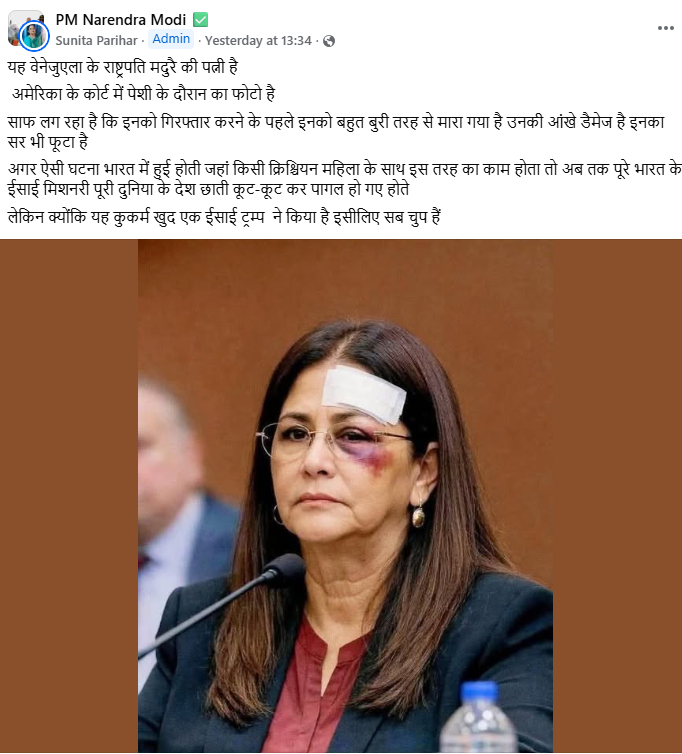
A photo showing Cilia Flores, wife of Venezuelan President Nicolás Maduro, with visible injuries on her face is being widely shared on social media. Users claim the image was taken during her court appearance in the United States on January 5, alleging that she was beaten before being produced before a judge. Cyber Peace Foundation’s research found that the viral image was created using AI tools and is not real.
Claim:
A Facebook user shared the image claiming it shows Venezuelan President Maduro’s wife during her US court appearance, alleging physical assault prior to her arrest. The post also makes political and religious allegations in connection with the incident.Link, archive link and screenshot
Fact Check:
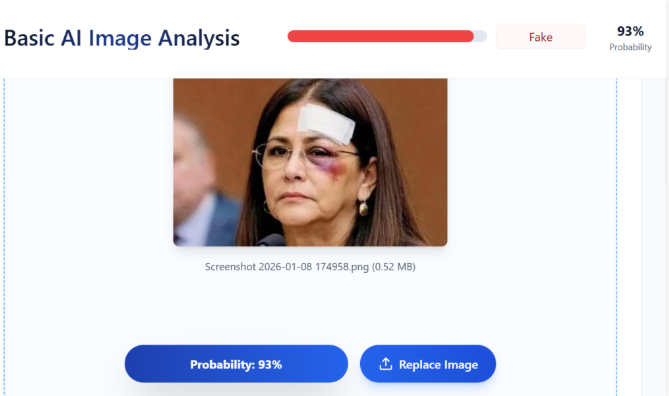
The viral image appeared suspicious due to unnatural facial details and injury patterns. Given the increasing use of artificial intelligence to generate fake visuals, Vishvas News analysed the image using AI image detection tools.TruthScan assessed the image as 93% likely to be AI-generated.
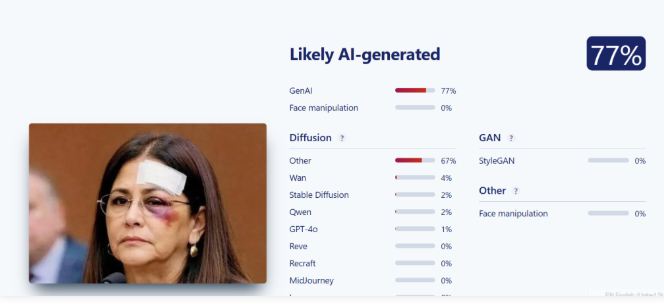
Sightengine flagged the image as 77% likely to be AI-generated.
The results indicate that the image is not authentic and has been created using AI tools.
What Official Reports Say
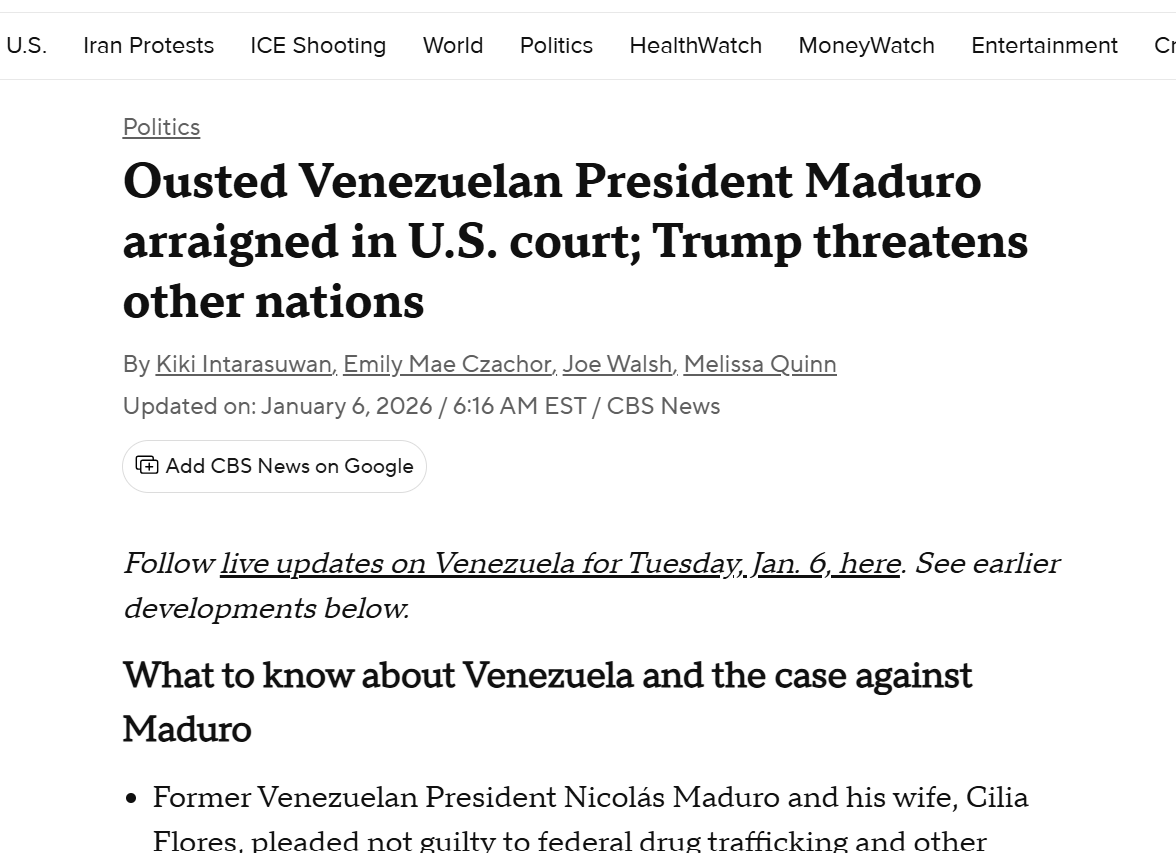
According to a CBS News report published on January 6, Nicolás Maduro and his wife Cilia Flores were produced before a federal court in Lower Manhattan, where they pleaded not guilty to drug trafficking and other charges. They are currently lodged at the Metropolitan Detention Center in Brooklyn The report states that the couple was detained during a US military operation. Following this, Venezuela’s Vice President Delcy Rodríguez was sworn in as the acting president. While Cilia Flores did appear before a Manhattan court, there is no authentic image showing her with injuries during the court proceedings. Link and Screenshot
https://www.cbsnews.com/live-updates/venezuela-trump-maduro-charges/
Conclusion:
The image being circulated as a photo of Cilia Flores during her US court appearance is AI-generated and fake. The claim that it shows injuries inflicted on her before being produced in court is false and misleading. The viral image has no connection with real court visuals.

Related Blogs

Introduction
Since February 2020 the government has been taking keen steps to safeguard the Indian markets and the consumer, this could be seen in the forms of policies and exemptions for the market players and the consumers, however, due to the COVID-19 pandemic, the markets places became vulnerable to loss and various forms of new crimes and frauds. The Government recently tabled the Jan Vishwas bill which is an aftermath of the Vivad se Vishwas Bill, 2020 which was tabled in February 2020 for creating a safe and dynamic market, this bill is a clear example of how AtmaNirbhar Bharat plays a crucial role in nations development.
What is Jan Vishwas Bill, 2022
The Jan Vishwas (Amendment of Provisions) Bill, 2022 is a 108-page bill introduced in the Lok Sabha by the Union Minister of Commerce and Industry, Piyush Goyal. The statement of objects and reasons of the Bill states, “To amend certain enactments for decriminalizing and rationalizing minor offenses to further enhance trust-based governance for ease of living and doing business.” The bill aims to promote ease of doing business in India by decriminalizing minor offences and amending 183 provisions in 42 Acts administered by 19 ministries. The bill proposes to replace minor offences with monetary penalties and rationalize existing monetary penalties based on the gravity of the offences. The Acts to be amended by the bill include-
- Drugs and Cosmetics Act, 1940
- Public Debt Act, 1944
- Pharmacy Act, 1948
- Cinematograph Act, 1952
- Copyright Act, 1957
- Patents Act, 1970
- Environment (Protection) Act, 1986
- Motor Vehicles Act, 1988
- Trade Marks Act, 1999l Railways Act, 1989
- Information Technology Act, 2000
- Prevention of Money-laundering Act, 2002
- Food Safety and Standards Act, 2006
- Legal Metrology Act, 2009
- Factoring Regulation Act, 2011
The bill aims to decriminalize a large number of minor offences and replace them with monetary penalties. This step by the government is a clear indication of how important the market regulations are, in recent times Google was imposed with a penalty of 1300 crores and 900 crores for violating competitive market practices, these penalties, and criminalised actions will ensure proper compliance to laws of the land thus creating a blanket of safeguards for the Indian consumer and netizen.
What will the Ease of Business be?
The Government has been critical in pinpointing various parameters and factors to improve the ease of business in the country, this bill comes at the right time when we can see numerous start-ups and entrepreneurs emerging in our country. The parameters are as follows-
- Starting a Business of all
- Dealing with Construction Permits
- Getting Electricity
- Registering Property
- Getting Credit
- Protecting
- Minority Investors
- Paying Taxes
- Trading across Borders
- Enforcing Contracts and Resolving Insolvency
These parameters have been created with a sight on the future of the markets and how external factors like the Russia-Ukraine war can influence the markets. According to Minister Piyush Goyal, the fear of imprisonment for minor offences is a major factor hindering the growth of the business ecosystem and individual confidence in India. The Jan Vishwas Bill, 2022 aims to address this issue by replacing minor offences with monetary penalties. The bill also proposes an increase of 10% in the minimum amount of fine and penalty levied after every three years, once the bill becomes a law.
Conclusion
The bill will create a level playing field for the market players and the consumers with the backing of strong legislation and precedents thus maintaining transparency and accountability in the system. The amended provisions will allow various already existing legislation to come in tune with the current times and emerging technologies. The nation is at a critical juncture to fabricate policies and laws to address the issues and threats of the future and hence such a bill will be the strengthening pillar of the Indian markets and cyber-ecosystem. The Jan Vishwas Bill, 2022 has been referred to a 31-member joint parliamentary committee for scrutiny. The committee includes members from the Lok Sabha and the Rajya Sabha and will submit its report to parliament by the second part of the Budget session in 2023, The members from the Lok Sabha include PP Chaudhary, Sanjay Jaiswal, Queen Ojha, Rajendra Agrawal, Gaurav Gogoi, A Raja, Rajendra Agarwal, Poonam Pramod Mahajan, and Sougata Ray.

Amid reports of widespread protests in Iran over the past two weeks, a video showing protesters setting cars on fire is being widely shared on social media with claims that it depicts recent unrest in the country.
However, research by Cyber Peace Foundation has found the viral claim to be false. Our resarch shows that the video is not from Iran, but from violent protests that took place near the Turkish Consulate in Thessaloniki, Greece, on November 1, 2025.
Claim:
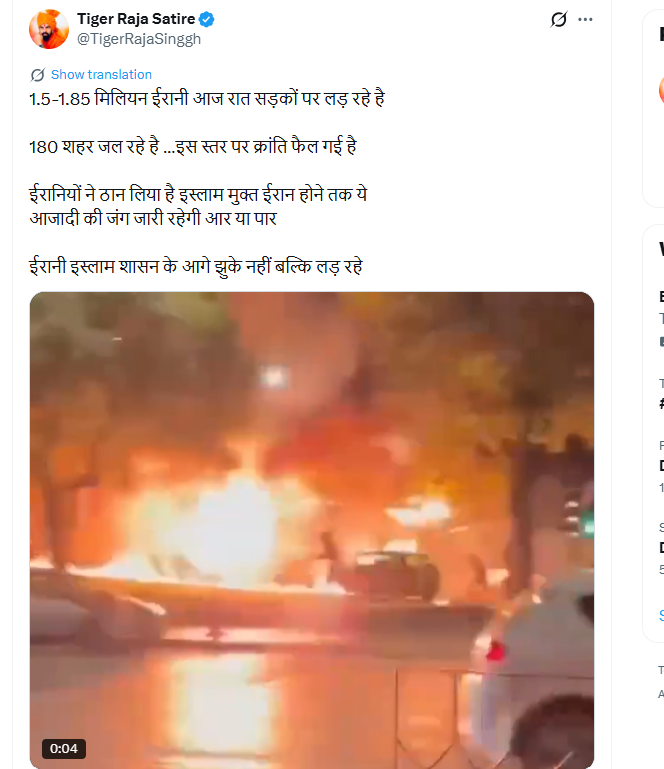
On January 11, 2026, users on social media platform X (formerly Twitter) shared the viral video claiming it showed massive anti-regime protests in Iran. One such post alleged:
“1.5–1.85 million Iranians are fighting on the streets tonight. 180 cities are burning… The revolution has spread. Iranians have decided to continue this fight for freedom until Iran becomes free from Islamic rule.”
The post’s link and archived version can be seen below: (Link and archive link)
Fact Check:
To verify the claim, we extracted keyframes from the viral video and conducted a Google Reverse Image Search. During this process, we found the same video uploaded on Instagram on November 2, 2025, well before the recent protests in Iran. (Link): https://www.instagram.com/reel/DQjRtCOjOPM/
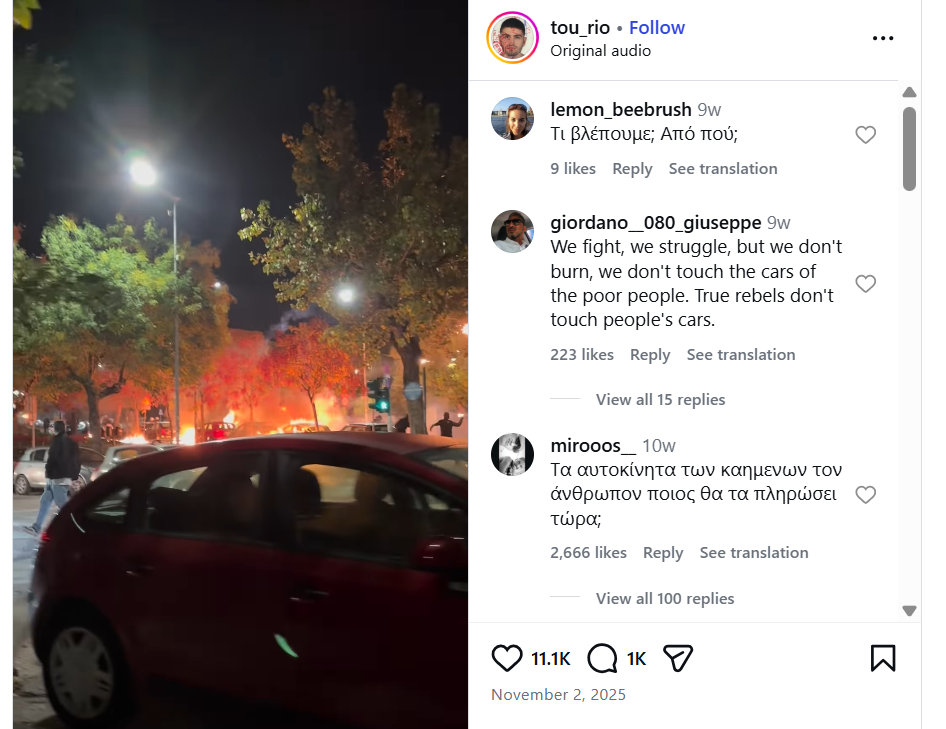
Further analysis revealed that the video was uploaded from a Greek Instagram account, indicating that the visuals are unrelated to Iran.
It is important to note that while protests in Iran have been ongoing for the past two weeks, the viral video has been circulating on the internet since early November 2025, establishing a clear timeline mismatch.
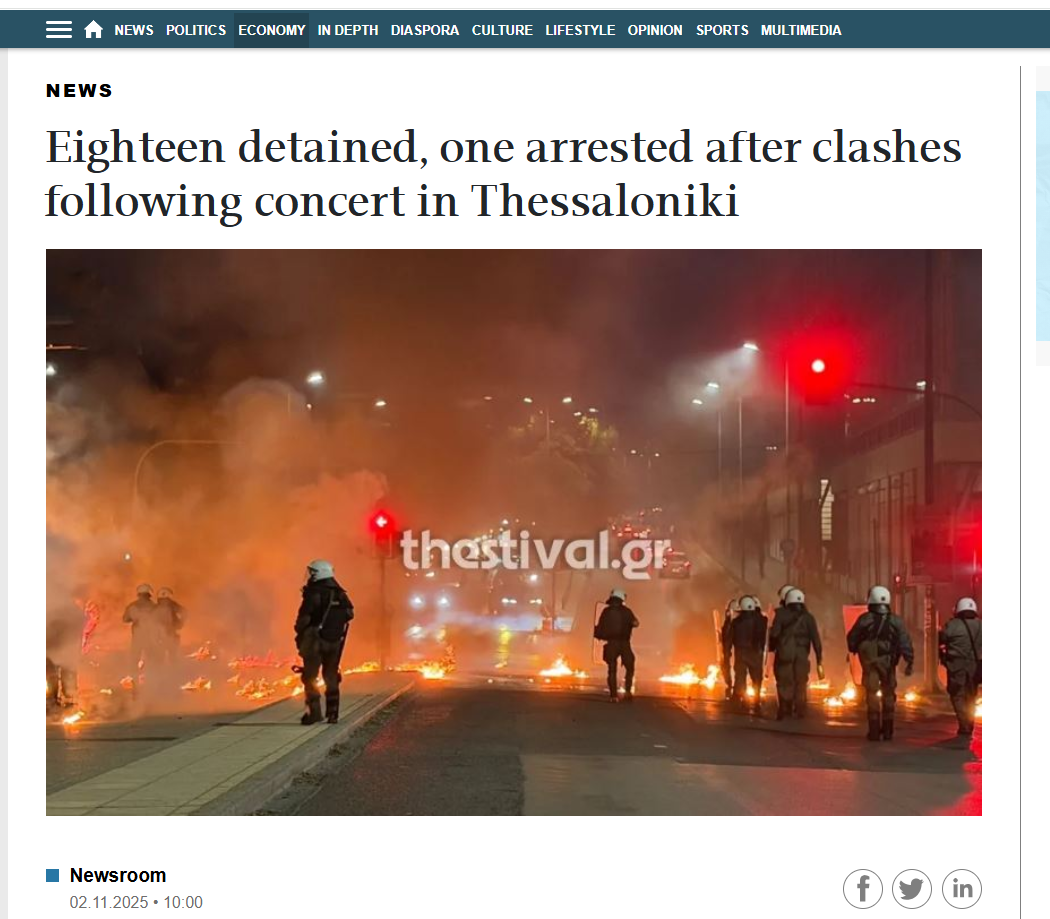
A keyword search led us to a report published on November 2, 2025, by Ekathimerini, a leading Greek media outlet. The report detailed violent clashes that erupted in Thessaloniki following a concert by Greek rapper Lex.
According to the report:
Police in Thessaloniki detained 18 people and arrested one individual on drug-related charges. The unrest began when a group attacked police forces stationed outside the Turkish Consulate. During the clashes, six cars were damaged, two of them completely burned, along with a garbage bin. ( report link and screenshot)
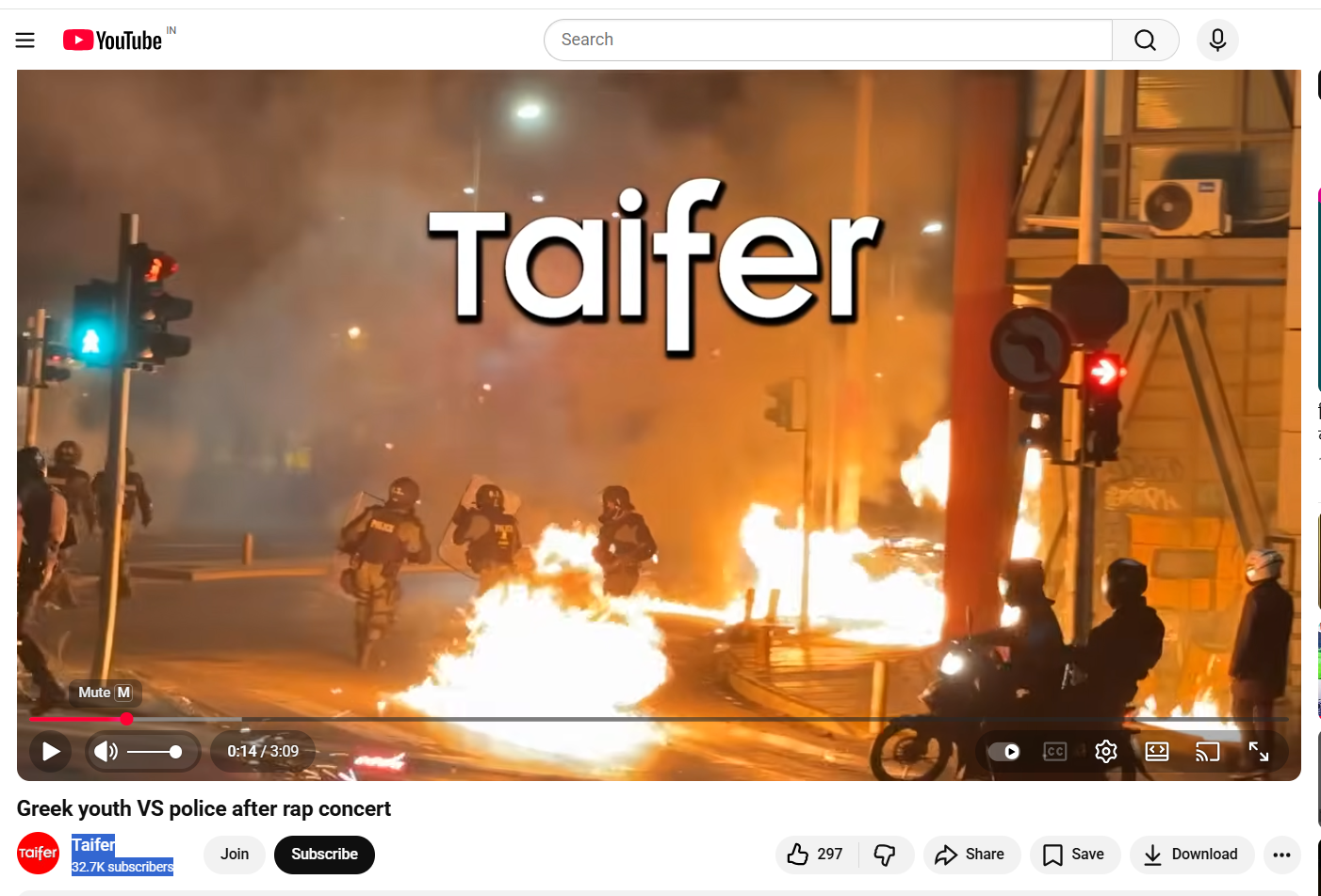
In the next stage of the investigation, we found similar visuals to the viral video on a YouTube channel named “Taifer”, where the footage was published on November 2, 2025. The link to the post and its screenshot can be seen below.
(YouTube link): https://www.youtube.com/watch?v=TejETjQRmTQ
To strengthen our findings, we conducted a geolocation analysis of the video. By comparing road layouts, surrounding buildings, light poles, and other visual markers with online maps and images, we confirmed that the location shown in the video matches Agios Dimitriou Street in Thessaloniki, Greece.
(Location link)
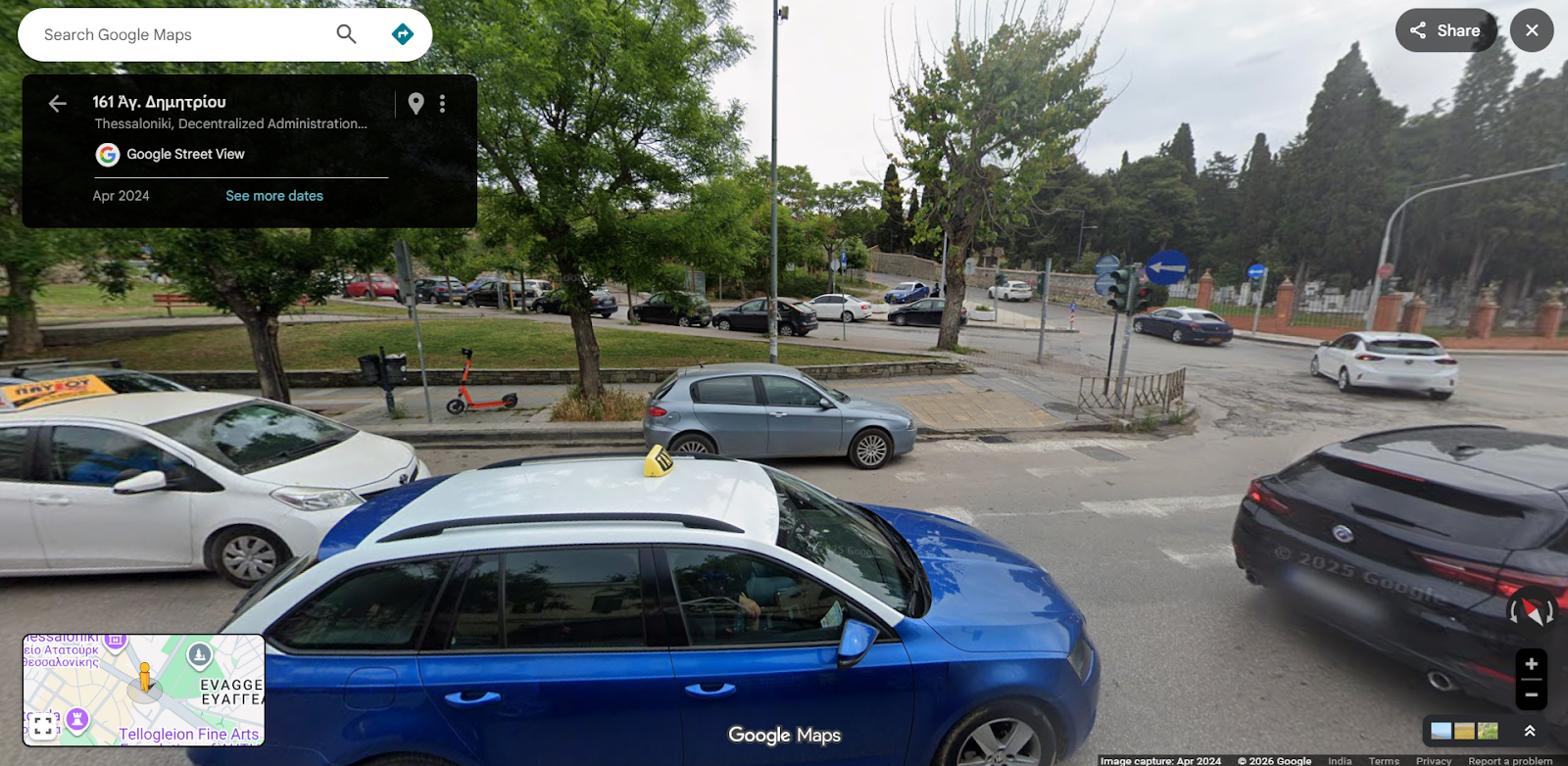
Our research clearly establishes that the viral video being shared as footage of recent protests in Iran is misleading. The video actually shows violent demonstrations near the Turkish Consulate in Thessaloniki, Greece, on November 1, 2025, and has no connection to the current situation in Iran.
.webp)
The 2020s mark the emergence of deepfakes in general media discourse. The rise in deepfake technology is defined by a very simple yet concerning fact: it is now possible to create perfect imitations of anyone using AI tools that can create audio in any person's voice and generate realistic images and videos of almost anyone doing pretty much anything. The proliferation of deepfake content in the media poses great challenges to the functioning of democracies. especially as such materials can deprive the public of the accurate information it needs to make informed decisions in elections. Deepfakes are created using AI, which combines different technologies to produce synthetic content.
Understanding Deepfakes
Deepfakes are synthetically generated content created using artificial intelligence (AI). This technology works on an advanced algorithm that creates hyper-realistic videos by using a person’s face, voice or likeness utilising techniques such as machine learning. The utilisation and progression of deepfake technology holds vast potential, both benign and malicious.
An example is when the NGO Malaria No More which had used deepfake technology in 2019 to sync David Beckham’s lip movements with different voices in nine languages, amplified its anti-malaria message.
Deepfakes have a dark side too. They have been used to spread false information, manipulate public opinion, and damage reputations. They can harm mental health and have significant social impacts. The ease of creating deepfakes makes it difficult to verify media authenticity, eroding trust in journalism and creating confusion about what is true and what is not. Their potential to cause harm has made it necessary to consider legal and regulatory approaches.
India’s Legal Landscape Surrounding Deepfakes
India presently lacks a specific law dealing with deepfakes, but the existing legal provisions offer some safeguards against mischief caused.
- Deepfakes created with the intent of spreading misinformation or damaging someone’s reputation can be prosecuted under the Bharatiya Nyaya Sanhita of 2023. It deals with the consequences of such acts under Section 356, governing defamation law.
- The Information Technology Act of 2000, the primary law that regulates Indian cyberspace. Any unauthorised disclosure of personal information which is used to create deepfakes for harassment or voyeurism is a violation of the act.
- The unauthorised use of a person's likeness in a deepfake can become a violation of their intellectual property rights and lead to copyright infringement.
- India’s privacy law, the Digital Personal Data Protection Act, regulates and limits the misuse of personal data. It has the potential to address deepfakes by ensuring that individuals’ likenesses are not used without their consent in digital contexts.
India, at present, needs legislation that can specifically address the challenges deepfakes pose. The proposed legislation, aptly titled, ‘the Digital India Act’ aims to tackle various digital issues, including the misuse of deepfake technology and the spread of misinformation. Additionally, states like Maharashtra have proposed laws targeting deepfakes used for defamation or fraud, highlighting growing concerns about their impact on the digital landscape.
Policy Approaches to Regulation of Deepfakes
- Criminalising and penalising the making, creation and distribution of harmful deepfakes as illegal will act as a deterrent.
- There should be a process that mandates the disclosures for synthetic media. This would be to inform viewers that the content has been created using AI.
- Encouraging tech companies to implement stricter policies on deepfake content moderation can enhance accountability and reduce harmful misinformation.
- The public’s understanding of deepfakes should be promoted. Especially, via awareness campaigns that will empower citizens to critically evaluate digital content and make informed decisions.
Deepfake, Global Overview
There has been an increase in the momentum to regulate deepfakes globally. In October 2023, US President Biden signed an executive order on AI risks instructing the US Commerce Department to form labelling standards for AI-generated content. California and Texas have passed laws against the dangerous distribution of deepfake images that affect electoral contexts and Virginia has targeted a law on the non-consensual distribution of deepfake pornography.
China promulgated regulations requiring explicit marking of doctored content. The European Union has tightened its Code of Practice on Disinformation by requiring social media to flag deepfakes, otherwise they risk facing hefty fines and proposed transparency mandates under the EU AI Act. These measures highlight a global recognition of the risks that deepfakes pose and the need for a robust regulatory framework.
Conclusion
With deepfakes being a significant source of risk to trust and democratic processes, a multi-pronged approach to regulation is in order. From enshrining measures against deepfake technology in specific laws and penalising the same, mandating transparency and enabling public awareness, the legislators have a challenge ahead of them. National and international efforts have highlighted the urgent need for a comprehensive framework to enable measures to curb the misuse and also promote responsible innovation. Cooperation during these trying times will be important to shield truth and integrity in the digital age.
References
- https://digitalcommons.usf.edu/cgi/viewcontent.cgi?article=2245&context=jss
- https://www.thehindu.com/news/national/regulating-deepfakes-generative-ai-in-india-explained/article67591640.ece
- https://www.brennancenter.org/our-work/research-reports/regulating-ai-deepfakes-and-synthetic-media-political-arena
- https://www.responsible.ai/a-look-at-global-deepfake-regulation-approaches/
- https://thesecretariat.in/article/wake-up-call-for-law-making-on-deepfakes-and-misinformation
