
What are Wi-Fi Attacks | Ethical Hacking
What are Wi-Fi attacks?
Wi-fi is an important area of cyber security and there is no need for physical cable for the network. Wi-Fi has access to a network signal radius everywhere. The devices and systems can have a network without physical access due to Wi-fi. But everything comes with cons and pros, and if we talk about cybersecurity, it has been established that Wi-fi networks are extremely vulnerable to security breaches and it is very easy to be hacked by hackers. Wi-Fi can be accessed by almost every device in the modern day: it can be smartphones, tablets, computers, and laptops. To know whether someone has been tampering with your personal Wi-Fi there are certain signs that can prove it. The first and most important sign is that your internet speed gets slower, as someone else is using your Wi-Fi surf.
Why would anyone hack someone’s Wi-Fi network?
Usually, hackers hack the network because they want access to the confidential data of someone and they can observe all the online activities and data that have been sent through a network. An unauthorize hacker will pretty much be able to see everything you do online. Wi-Fi allows hackers o view information on sites. Any financial information which is saved in the browser can be accessed by hackers and they can alter it and can alter the content you see online. And all the information saved in Wi-fi networks can be used by hackers for their own benefit, they can sell it, impersonate you, or even take money out of your bank through Wi-Fi.
Avoiding vulnerable Wi-Fi networks
The first and foremost rule of protection is that you should not use public networks if that network is easily open to you then that is also available to others and from others, and someone can who wishes to use your confidential and sensitive information, can access that. If you really need to access the public network in an urgent situation, then you must make sure to limit your activities while connected. And avoid accessing your online banking or pages that require login information. Also, a good measure to take as well is to always delete your cookies after using public WIFI.
How To Secure Your Home Wi-Fi Network
Your home’s wireless internet connection is your Wi-Fi network. Typically, a wireless router is used, which broadcasts a signal into the atmosphere. You can connect to the internet using that signal. However, if your network is not password-protected, any nearby device can grab the signal off the air and connect to your internet. The benefit of Wi-Fi? Wireless access to the internet is possible. The negative? Your internet activity, including your personal information, may be visible to neighboring users who connect to your unprotected network. Furthermore, if someone uses your network to conduct a crime or send out unauthorized spam, you might be held accountable.
Wi-Fi or Li-Fi? –
The common consensus is that Li-Fi technology is more secure than Wi-Fi. Li-Fi systems can be made more secure by integrating a variety of security features. Although these qualities might appear when Li-Fi is widely used in the near future, it is already thought to be safer because of a number of security features. Since the connection’s characteristics make it simpler to lock connections, limit access, and track users even in the absence of encryption and other security features, Li-Fi is seen as being safer. Li-Fi systems will be able to support new security protocols, which will not only enable high-speed networking but also open the door for innovative security techniques to strengthen connections.
Conclusion
A hacker can sniff the network packets without having to be in the same building where the network is located. As wireless networks communicate through radio waves, a hacker can easily sniff the network from a nearby location. Most attackers use network sniffing to find the SSID and hack a wireless network.
Any wireless network can theoretically be attacked in a number of different ways. Use of the default SSID or password, WPS pin authentication, insufficient access control, and leaving the access point available in open locations are all examples of potential vulnerabilities that could allow for the theft of sensitive data. Kismet’s architecture in WIDS mode may guard against DOS, MiTM, and MAC spoofing attacks. routine software updates on the other hand, the use of firewalls may help defend the network against outside intrusion. The act of finding infrastructure issues that could allow harmful code to be injected into a service, system, or organization is known as ethical hacking. They use this technique to prevent invasions by lawfully breaking into networks and looking for weak spots.

Related Blogs
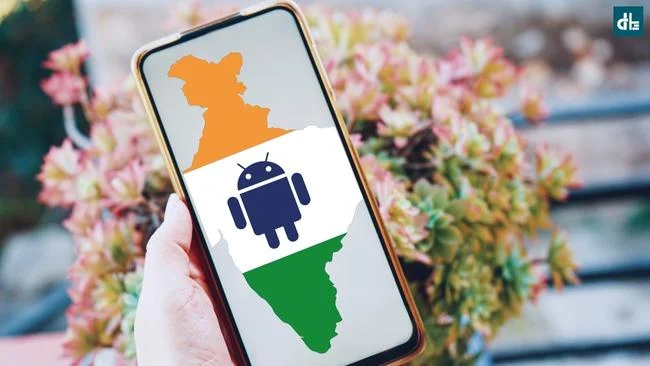
BharOS’s successful testing grabbed massive online attention after Ashwini Vaishnaw, Minister of Communications and Electronics & IT, and Union Education Minister Dharmendra Pradhan unveiled the new mobile operating system. On Data Privacy Day, January 28, it’s appropriate to discuss the safety factors.
The OS is developed by JandKops, which has been incubated by IIT Madras Pravartak Technologies Foundation. It is claimed that BharOS will ensure the prevention of the “execution of any malware” and “execution of any malicious application”.
Even though it is called a Made in India OS, there are many people who disagree with this. It is because the OS is based on an AOSP (Android Open Source Project). It includes similar methodologies, functionalities, and basics used in Google Android.
Global safety factor
Security and data safety has been worldwide issue. A few years ago, Alphabet CEO Sundar Pichai also testified in front of US Congress while facing questions related to privacy, data collection, and location tracking.
While experts say that Android’s app ecosystem is a privacy and security disaster, a study that examined 82,501 apps pre-installed on 1,742 Android smartphones sold by 214 vendors concluded that users are woefully unaware of the significant security and privacy risks posed by pre-installed applications.
Even Apple, which takes cybersafety issues as a top priority, sometimes finds itself in a vulnerable situation. For example, last year Apple users were advised to update their devices to protect against a pair of security flaws that could allow attackers to take complete control.
It was said that one of the software flaws affected the kernel, the deepest layer of the OS shared by all Apple devices, while the other had an impact on WebKit, the technology that powers the Safari web browser.
Security researchers, including NordVPN, said that Apple’s closed development OS makes it more difficult for hackers to develop exploits, while Android raises the threat level since anyone can see its source code to develop exploits.
BharOS is not like iOS but it is kind of similar to Android and based on AOSP. So the question is, how safe would this OS be?
‘Security blanket’
Sandip Kumar Panda, Co-founder and CEO of InstaSafe, told News18: “BharOS acts as a security blanket for devices. The framework is designed in a manner that it prevents the execution of any malicious app and verifies each app on the devices before making it live on the BharOS platform.”
There are no apps without any vulnerabilities, he said. “As the app development progresses, vulnerabilities get introduced either in the form of insecure coding practices or third-party software vulnerabilities integrated with the platform. Since several Android vulnerabilities were discovered over the years, all those bugs would have been fixed now and updates would already have been for AOSP, which will be much more mature now,” he added.
Vineet Kumar, Founder and President of CyberPeace Foundation, believes that “the use of AOSP as the foundation for BharOS is a positive step” as it is a robust platform.
But according to him, it is important to note that no OS can be completely immune to all forms of cyber threats. “The key to staying safe online is to stay vigilant, use security software, keep your software updated, and be mindful of the apps you install and the websites you visit,” he said,
Furthermore, the expert stated that it is possible to make an OS more secure by implementing a variety of security features and technologies such as sandboxing, whitelisting, and application control, as well as rigorous testing and code review processes.
Kumar said: “It would be important for an independent, reputable security firm to evaluate BharOS and test its security features before it can be stated with certainty that it is more secure than other OSs.”
It is difficult to say whether the BharOS will be free of cybersecurity issues without more information about the specific features and security measures that have been implemented, he noted while adding that this OS has to go through a rigorous testing and certification process.
“It will be important to see how it measures up against established security standards and how well it can withstand real-world attacks,” the expert stated.
Reference Link : https://www.news18.com/amp/news/tech/data-privacy-day-how-safe-is-bharos-what-do-cybersecurity-experts-say-you-are-about-to-find-out-6932521.html

Introduction
The rise in start-up culture, increasing investments, and technological breakthroughs are being encouraged alongside innovations and the incorporation of generative Artificial Intelligence elements. Witnessing the growing focus on human-centred AI, its potential to transform industries like education remains undeniable. Enhancing experiences and inculcating new ways of learning, there is much to be explored. Recently, a Delhi-based non-profit called Rocket Learning, in collaboration with Google.org, launched Appu- a personalised AI educational tool providing a multilingual and conversational learning experience for kids between 3 and 6.
AI Appu
Developed in 6 months, along with the help of dedicated Google.org fellows, interactive Appu has resonated with those the founders call “super-users,” i.e. parents and caregivers. Instead of redirecting students to standard content and instructional videos, it operates on the idea of conversational learning, one equally important for children in the targeted age bracket. Designed in the form of an elephant, Appu is supposed to be a personalised tutor, helping both children and parents understand concepts through dialogue. AI enables the generation of different explanations in case of doubt, aiding in understanding. If children were to answer in mixed languages instead of one complete sentence in a single language (eg, Hindi and English), the AI would still consider it as a response. The AI lessons are two minutes long and are inculcated with real-world examples. The emphasis on interactive and fun learning of concepts through innovation enhances the learning experience. Currently only available in Hindi, it is being worked on to include 20 other languages such as Punjabi and Marathi.
UNESCO, AI, and Education
It is important to note that such innovations also find encouragement in UNESCO’s mandate as AI in education contributes to achieving the 2030 Agenda of Sustainable Development Goals (here; SDG 4- focusing on quality education). Within the ambit of the Beijing Consensus held in 2019, UNESCO encourages a human-centred approach to AI, and has also developed the “Artificial Intelligence and Education: Guidance for Policymakers” aiming towards understanding its potential and opportunities in education as well as the core competencies it needs to work on. Another publication was launched during one of the flagship events of UNESCO- (Digital Learning Week, 2024) - AI competency frameworks for both, students and teachers which provide a roadmap for assessing the potential and risks of AI, each covering common aspects such as AI ethics, and human-centred mindset and even certain distinct options such as AI system design for students and AI pedagogy for teachers.
Potential Challenges
While AI holds immense promise in education, innovation with regard to learning is contentious as several risks must be carefully managed. Depending on the innovation, AI’s struggle with multitasking beyond the classroom, such as administrative duties and tedious grading, which require highly detailed role descriptions could prove to be a challenge. This can become exhausting for developers managing innovative AI systems, as they would have to fit various responses owing to the inherent nature of AI needing to be trained to produce output. Security concerns are another major issue, as data breaches could compromise sensitive student information. Implementation costs also present challenges, as access to AI-driven tools depends on financial resources. Furthermore, AI-driven personalised learning, while beneficial, may inadvertently reduce student motivation, also compromising students' soft skills, such as teamwork and communication, which are crucial for real-world success. These risks highlight the need for a balanced approach to AI integration in education.
Conclusion
Innovations related to education, especially the ones that focus on a human-centred AI approach, have immense potential in not only enhancing learning experiences but also reshaping how knowledge is accessed, understood, and applied. Untapped potential using other services is also encouraged in this sector. However, maintaining a balance between fostering intrigue and ensuring the inculcation of ethical and secure AI remains imperative.
References
- https://www.unesco.org/en/articles/what-you-need-know-about-unescos-new-ai-competency-frameworks-students-and-teachers?hub=32618
- https://www.unesco.org/en/digital-education/artificial-intelligence
- https://www.deccanherald.com/technology/google-backed-rocket-learning-launches-appu-an-ai-powered-tutor-for-kids-3455078
- https://indianexpress.com/article/technology/artificial-intelligence/how-this-google-backed-ai-tool-is-reshaping-education-appu-9896391/
- https://www.thehindu.com/business/ai-appu-to-tutor-children-in-india/article69354145.ece
- https://www.velvetech.com/blog/ai-in-education-risks-and-concerns/
.webp)
In what is being stated by experts to be one of the largest data breaches of all time, approximately 16 billion passwords were exposed online last week. According to various news reports, the leak contains credentials spanning a broad array of online services, including Facebook, Instagram, Gmail, etc., creating a serious alarm across the globe. Cybersecurity specialists have noted that this leak poses immense risks of account takeovers, identity theft, and enabling phishing scams. The leaked data is being described as a “collection-of-collections,” with multiple previously breached databases compiled into one easy-to-access repository for cybercriminals.
Infostealer Malware and Why It’s a Serious Threat
This incident brought to light a type of malware that experts refer to as the Infostealer. Just as the name suggests, this is a malware program made expressly to take personal information from compromised computers and devices, including cookies, session tokens, browser data, login credentials, and more. It targets high-value credentials, as opposed to ransomware, which encrypts files for ransom, or spyware that passively watches users. Once installed, they silently gather passwords, screenshots, and other information while hiding inside unassuming software, such as a game, utility, or browser plugin. Once stolen, these credentials are then combined by hackers to create databases, which are then offered for sale on dark web forums or even made public, as was the case in this breach. This is particularly risky since, if session tokens or other browser data are also taken, these credentials can be used to get around even two-factor authentication. As a result, the leak would also enable the rise of other crimes such as phishing.
Guidelines for protection
In response to this breach, India’s Computer Emergency Response Team (CERT-IN) issued an advisory, urging all internet users to take immediate action to protect their accounts. Although this is in response to the specific data leak, these are some key measures advised to be followed to maintain a general standard of cyber hygiene at all times.
- Reset your passwords: In case of incidents such as the above, users are advised to change the passwords of their accounts immediately. More so of the ones that have been compromised and need to be prioritised, such as email, online banking, and social media etc.
- Use strong, unique passwords and password manager features: Avoid password reuse across platforms. Using a password manager on a trusted platform can aid in storing and recalling them for different accounts.
- Monitor account activity: Check activity logs, especially for signs of unrecognised login attempts or password-reset notifications.
- Enable Multi-Factor Authentication (MFA): The user is advised to enable two-step verification (via an app like Google Authenticator or a hardware key), which will add an extra security layer.
- Phishing attacks: Cybercriminals will likely attempt to use leaked credentials to impersonate legitimate companies and send phishing emails. Read carefully before clicking on any links or attachments received.
- Scan devices for malware: Run updated antivirus or anti-malware scans to catch and remove infostealers or other malicious software lurking on your device.
Why This Data Breach is a Wake-Up Call
With 16 billion credentials exposed, this breach highlights the critical need for robust personal cybersecurity hygiene. It also reveals the persistent role of infostealer malware in feeding a global cybercrime economy, one where credentials are the most valuable assets. As Infosecurity Europe and other analysts highlight, infostealers are lightweight, often distributed via phishing or malicious downloads, and are highly effective at lifting data in the background without alerting the user. Even up-to-date antivirus software can struggle to catch new variants, making proactive security practices with respect to such malware all the more essential. In a time where data is everything, access to credentials can derive power and safety, regarding it must be kept in check.
Conclusion
This breach is a reminder that cybersecurity is a shared responsibility. Even with protective systems in place with respect to the industries and official authorities, every internet user must do their part in protecting themselves through cyber hygiene practices such as resetting passwords, using multi-factor authentication, staying vigilant against phishing scams, and ensuring devices are regularly scanned for malware. While breaches like this can seem overwhelming and might create a surge of panic, practical measures go a long way in mitigating exposure. Staying informed and proactive is the best defence one can adopt in a rapidly evolving threat landscape.
References
- https://economictimes.indiatimes.com/news/international/us/16-billion-passwords-exposed-in-unprecedented-cyber-leak-of-2025-experts-raise-global-alarm/articleshow/121961165.cms?from=mdr
- https://timesofindia.indiatimes.com/technology/tech-news/16-billion-passwords-leaked-on-internet-what-you-need-to-know-to-protect-your-facebook-instagram-gmail-and-other-accounts/articleshow/121967191.cms
- https://indianexpress.com/article/technology/tech-news-technology/16-billion-passwords-leaked-online-what-we-know-10077546/
- https://indianexpress.com/article/technology/tech-news-technology/16-billion-passwords-leaked-online-what-we-know-10077546/
- https://www.hindustantimes.com/business/certin-issues-advisory-after-data-breach-of-16-billion-credentials-asks-people-to-change-passwords-101750779940872.html
- https://www.cert-in.org.in/s2cMainServlet?pageid=PUBVLNOTES02&VLCODE=CIAD-2025-0024
- https://www.infosecurityeurope.com/en-gb/blog/threat-vectors/guide-infostealer-malware.html
