
G7 Hiroshima AI Process
Introduction:
The G7 Summit is an international forum that includes member states from France, the United States, the United Kingdom, Germany, Japan, Italy, Canada and the European Union (EU). The annual G7 meeting that is held every year was hosted by Japan this year in May 2023. It took place in Hiroshima. Artificial Intelligence (AI) was the major theme of this G7 summit. Key takeaways from this G7 summit highlight that leaders together focused on escalating the adoption of AI for beneficial use cases across the economy and the government and improving the governing structure to mitigate the potential risks of AI.
Need for fair and responsible use of AI:
The G7 recognises that they really need to work together to ensure the responsible and fair use of AI to help establish technical standards for the same. Members of the G7 countries agreed to adopt an open and enabling environment for the development of AI technologies. They also emphasized that AI regulations should be based on democratic values. G7 summit calls for the responsible use of AI. The ministers discussed the risks involved in AI technology programs like ChatGPT. They came up with an action plan for promoting responsible use of AI with human beings leading the efforts.
Further Ministers from the Group of Seven (G7) countries (Canada, France, Germany, Italy, Japan, the UK, the US, and the EU) met virtually on 7 September 2023 and committed to creating ‘international guiding principles applicable for all AI actors’, and a code of conduct for organisations developing ‘advanced’ AI systems.
What is HAP (Hiroshima AI Process)
Hiroshima AI Process (HAP) aims to establish trustworthy AI technical standards at the international level. The G7 agreed on creating a ministerial forum to prompt the fair use of AI. Hiroshima AI Process (HAP) is an effort by G7 to determine a way forward to regulate AI. The HAP establishes a forum for international discussions on inclusive AI governance and interoperability to achieve a common vision and goal of trustworthy AI at the global level.
The HAP will be operating in close connection with organisations including the Organisation for Economic Co-operation and Development (OECD) and the Global Partnership on AI (GPAI).
This Hiroshima AI Process (HAP) initiated at the Annual G7 Summit held in Hiroshima, Japan is a significant step towards regulating AI and the Hiroshima AI Process (HAP) is likely to conclude by December 2023.
G7 leaders emphasized fostering an environment where trustworthy AI systems are designed, developed and deployed for the common good worldwide. They advocated for international standards and interoperable tools for trustworthy AI that enable Innovation by creating a comprehensive policy framework, including overall guiding principles for all AI actors in the AI ecosystem.
Stressing upon fair use of advanced technologies:
The impact and misuse of generative AI was also discussed by the G7 leaders. The G7 members also stressed misinformation and disinformation in the realm of generative AI models. As they are capable of creating synthetic content such as deepfakes. In particular, they noted that the next generation of interactive generative media will leverage targeted influence content that is highly personalized, localized, and conversational.
In the digital landscape, there is a rapid advancement of technologies such as generative
Artificial Intelligence (AI), deepfake, machine learning, etc. Such technologies offer convenience to users in performing several tasks and are capable of assisting individuals and business entities. Since these technologies are easily accessible, cyber-criminals leverage AI tools and technologies for malicious activities, hence certain regulatory mechanisms at the global level will ensure and advocate for the ethical, reasonable and fair use of such advanced technologies.
Conclusion:
The G7 summit held in May 2023 focused on advanced international discussions on inclusive AI governance and interoperability to achieve a common vision and goal of trustworthy AI, in line with shared democratic values. AI governance has become a global issue, countries around the world are coming forward and advocating for the responsible and fair use of AI and influence on global AI governance and standards. It is significant to establish a regulatory framework that defines AI capabilities and identifies areas prone to misuse. And set forth reasonable technical standards while also fostering innovations. Hence overall prioritizing data privacy, integrity, and security in the evolving nature of advanced technologies.
References:
- https://www.politico.eu/wp-content/uploads/2023/09/07/3e39b82d-464d-403a-b6cb-dc0e1bdec642-230906_Ministerial-clean-Draft-Hiroshima-Ministers-Statement68.pdf
- https://www.g7hiroshima.go.jp/en/summit/about/
- https://www.drishtiias.com/daily-updates/daily-news-analysis/the-hiroshima-ai-process-for-global-ai-governance
- https://www.businesstoday.in/technology/news/story/hiroshima-ai-process-g7-calls-for-adoption-of-international-technical-standards-for-ai-382121-2023-05-20

Related Blogs
.webp)
Introduction
As per the National Crime Records Bureau (NCRB) ‘Cyber Crime In India Report 2022’, A total of 65,893 cases were registered under Cyber Crimes, showing an increase of 24.4% in registration in comparison to 52,974 cases registered in 2021. The crime rate increased from 3.9 in 2021 to 4.8 in 2022. During 2022, 64.8% of cyber-crime cases registered were for the motive of fraud (42,710 out of 65,893 cases), followed by Extortion with 5.5% (3,648 cases) and Sexual Exploitation with 5.2% (3,434 cases). The statistics released by NCRB show the increased rate of cyber crimes in the country, which poses a significant question of safety in the online world. The rise in cybercrime indicates a rise in emerging criminal groups with malicious intentions, creating new cybercrime hotspots in the country where these groups target and commit cyber crimes despite limited resources.
Cyber Crime Hotspots
Police have recently arrested several cyber criminals in a specific region, indicating that certain areas have become hotspots for cybercrime. Mewat region is one such hotspot indicating a growing trend of cybercrime operating from this area. The Mewat gang's modus operandi is quite different; Cybercriminals in Mewat scam mobile owners just using smartphones and SIM cards without kingpins and targeting mobile owners. The scammers also lure people through online marketplaces such as OLX, in which they pretend to sell possessions and then either physically lure victims to pick-up locations or scam them virtually.
A study conducted by Future Crime Research Foundation and IIT Kanpur in 2023 has revealed that Jamatara city, once considered the cyber crime capital of India, is no longer the epicentre. The study found that 35 hotspots in India are actively involved in cybercrime activities. The top 10 cybercrime hotspots in India collectively account for 80% of cybercrime-related cases in India. These districts are strategically located near India's capital or closer to the National Capital Region (NCR). These districts are strategically placed with multiple borders, making them easy targets for criminals.
Online financial fraud and social media-related crimes are the most common in India. Cybercriminals exploit data as a gold mine, using it to commit crimes. For instance, they can obtain banking and insurance data, use simple AI tools to cheat victims, and they can easily impersonate identities to lure innocent people. In cybercrime hotspots, sextortion is a modern way for cybercriminals to record and demand money. Loan app fraud, OLX fraud, and job fraud also originate from these specific regions.
Recommendations
To counter the challenges posed by emerging cybercrime hubs, the following recommendations are to be considered:
- Advanced threat Intelligence: The digital landscape is evolving, and the threat landscape is becoming more complex. AI's role in cybersecurity is becoming increasingly critical, both positively and negatively, as it helps in understanding and addressing advanced threats. AI is capable of proactive threat hunting, real-time anomaly detection, and swift incident response.
- Enhancing capabilities of Law Enforcement Agencies: Law enforcement agencies must be sensitised to advanced tools or techniques to investigate cyber crime cases effectively. The development and implementation of advanced forensic tools and technologies need to be utilised or implemented to keep up with the evolving tactics of cybercrime perpetrators.
- Continuous Monitoring: Continuous cybersecurity monitoring is crucial for detecting anomalies and preventing cyber-attacks. It involves analysing systems and data to establish baseline security, identify deviations, and investigate potential threats. Cybersecurity experts use data observability tools, artificial intelligence, and machine learning to detect unexpected dataset changes.
- Cyber Security Awareness: Public awareness needs to be higher. Cybercrime prevention and cybersecurity is a shared responsibility of all of us by being aware of the threats and following the best practices. The frequent interaction between law enforcement and the public is necessary to raise awareness about safeguarding personal and financial information. Effective campaigns on cyber security are necessary to educate netizens.
Safety Tips for Netizens
Install up-to-date security software and firewalls on devices, use strong passwords for accounts, and regularly update software and applications. Be cautious when clicking on links or downloading files from unknown sources, and be cautious of your personal information.
Conclusion
The rise of Cyber Crime Hotspots in specific regions or districts has significantly exacerbated the issue of increasing cybercrime rates. In order to combat cybercrime more effectively, it is necessary for law enforcement agencies to strengthen their coordination between different states and to adapt advanced technology methods to counter cybercrime threats effectively. Moreover, educating netizens about cyber crime threats and providing best practices is an effective method to counter these threats, considered the first line of defense against cybercrime.
References
- https://ncrb.gov.in/uploads/nationalcrimerecordsbureau/custom/1701607577CrimeinIndia2022Book1.pdf
- https://economictimes.indiatimes.com/tech/technology/no-kingpins-just-a-smartphone-and-sim-card-how-cybercriminals-in-mewat-scam-mobile-owners/articleshow/98062889.cms?from=mdr
- https://www.futurecrime.org/fcrf-cyber-crime-survey-2023
- https://timesofindia.indiatimes.com/city/mumbai/jamtara-loses-crown-as-new-remote-districts-rewrite-indias-cybercrime-map/articleshow/104475868.cms?from=mdr
- https://government.economictimes.indiatimes.com/news/secure-india/80-of-cyber-crimes-from-10-new-districts-iit-report/103921338
- https://www.dw.com/en/how-mewat-became-indias-new-hub-for-cyber-criminals/video-68674527
- https://www.indiatoday.in/from-india-today-magazine/story/into-cybercrime-hotspot-india-mewat-rajasthan-haryana-uttar-pradesh-2381545-2023-05-19
- https://frontline.thehindu.com/the-nation/spotlight-how-nuh-district-in-haryana-became-a-breeding-ground-for-cybercriminals/article67098193.ece
- https://www.opindia.com/2024/04/nuh-mewat-cyber-crime-haryana-police-crackdown/#google_vignette
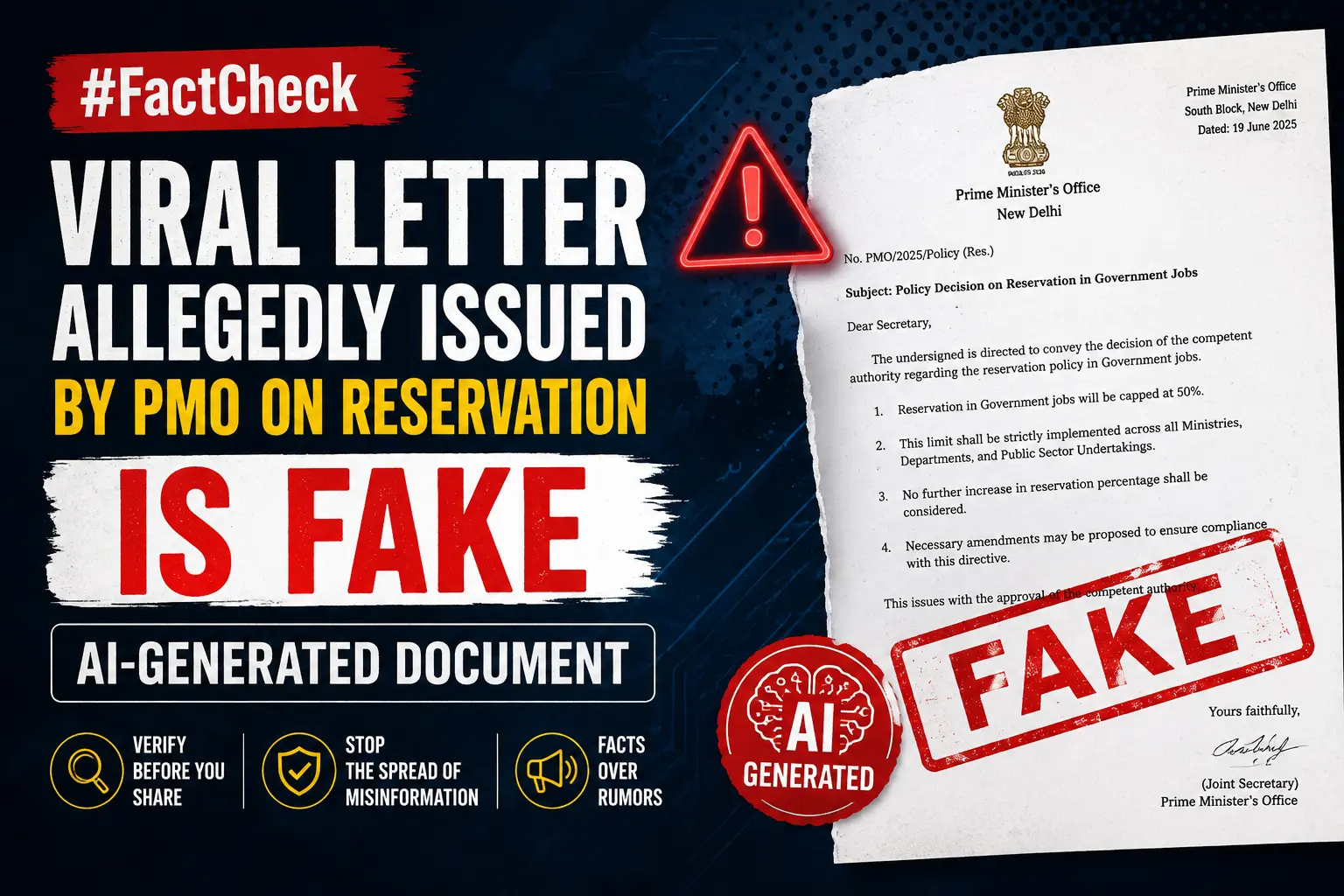
Executive Summary
A purported letter issued in the name of the Prime Minister’s Office (PMO) is being widely shared on social media. The letter claims that the government has not made any changes to the reservation system regarding the “Remove Reservation Movement” and appeals to people not to pay attention to rumours. The viral letter is dated July 27, 2026, and also carries what appear to be Prime Minister Narendra Modi’s signatures in both Hindi and English.
CyberPeace Research Wing’s research found the viral claim to be false. The research revealed that the Prime Minister’s Office (PMO) has neither issued any official statement regarding reservation nor released any such letter. No credible media reports related to the alleged letter were found. The research further revealed that the purported reservation-related letter circulating on social media was a fake document created with the help of AI.
Claim:
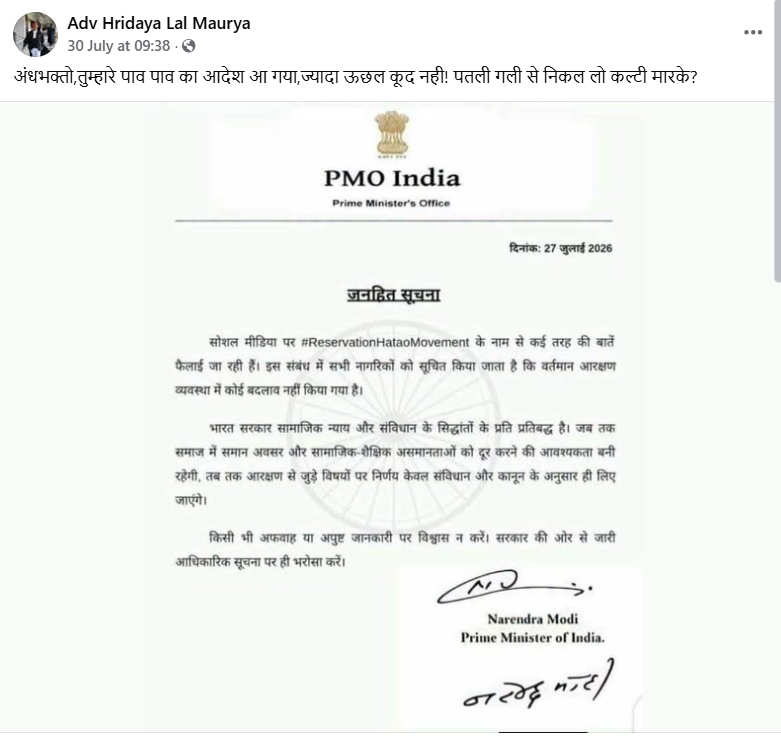
A Facebook user shared the alleged letter issued in the name of the Prime Minister’s Office on July 30, 2026, claiming that the government has not made any changes to the reservation system in connection with the “Remove Reservation Movement” and appealed to citizens not to believe rumours. The viral letter bears the date July 27, 2026, and displays signatures of Prime Minister Narendra Modi in both Hindi and English. The archived link and screenshot of the post are provided below:
https://www.facebook.com/share/p/1b9nD5k3As/
Factcheck
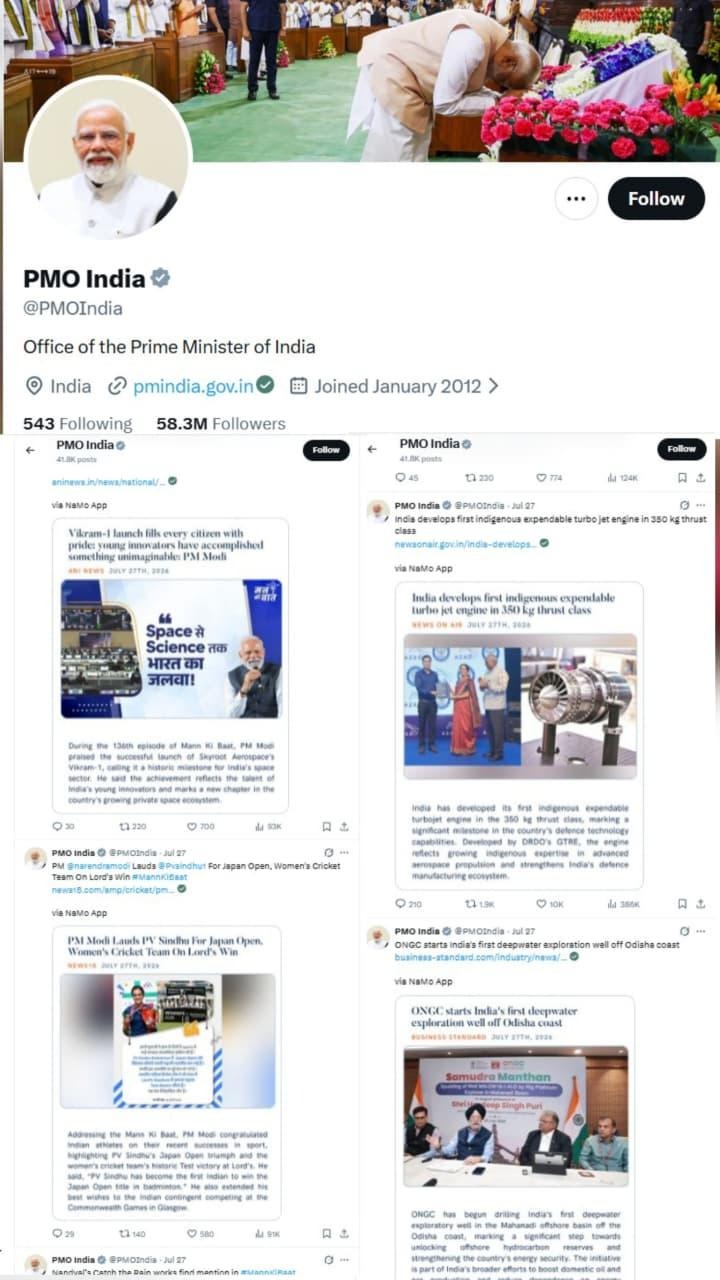
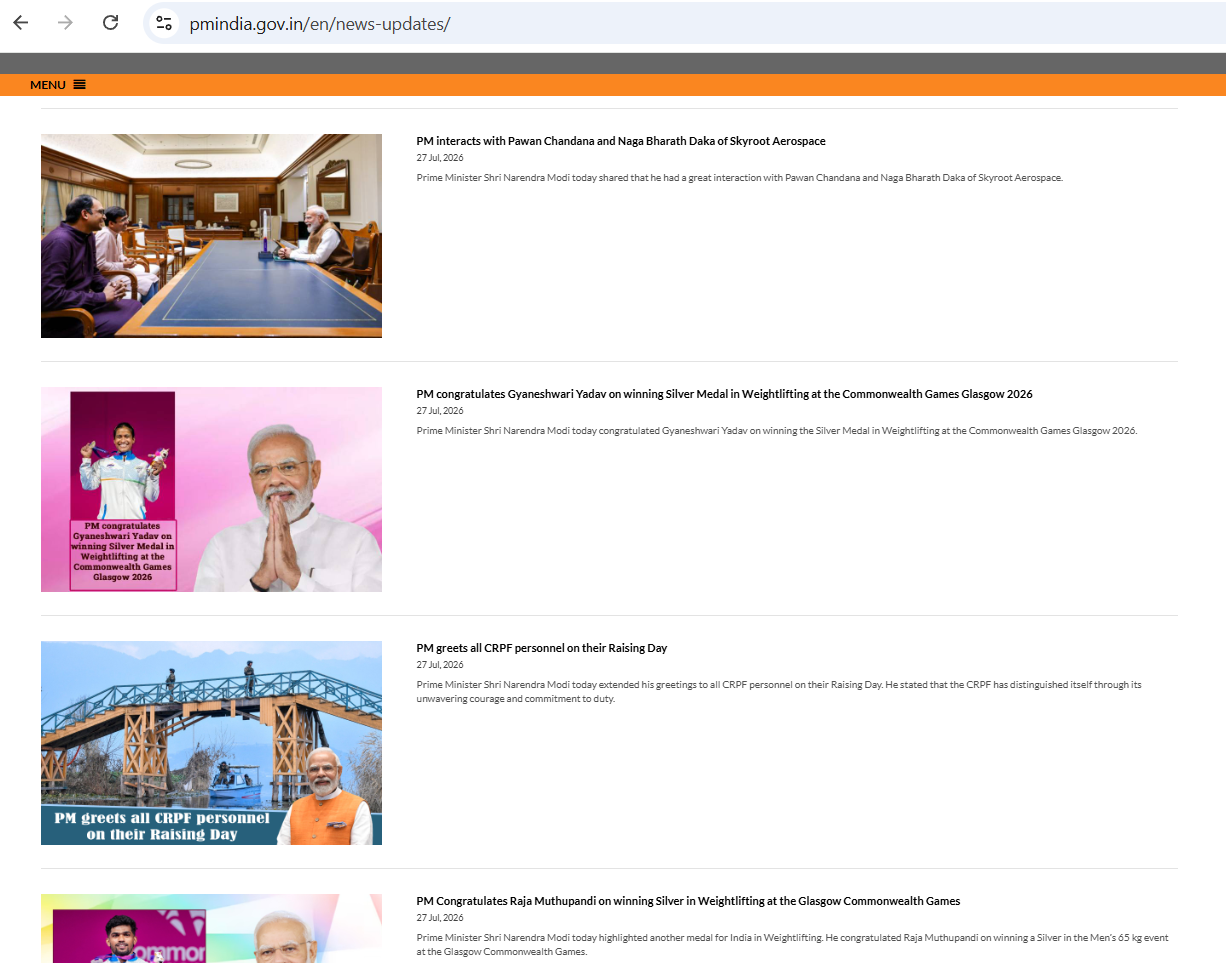
To verify the authenticity of the viral claim, we conducted a Google search using relevant keywords. However, no credible media reports related to the alleged letter were found. During the next stage of the research, we scanned the official X account (formerly Twitter) of PMO India. We did not find any such letter posted on July 27 or around that date. Continuing the research, we checked the official website of PMO India. No such letter was found in the news updates section or anywhere else on the website that could confirm the viral claim.
Further, we reviewed the press releases issued by the Prime Minister’s Office on July 27 available on the official website of the Press Information Bureau (PIB). We found no press release or official communication related to reservation or matching the viral letter.
https://www.pmindia.gov.in/en/
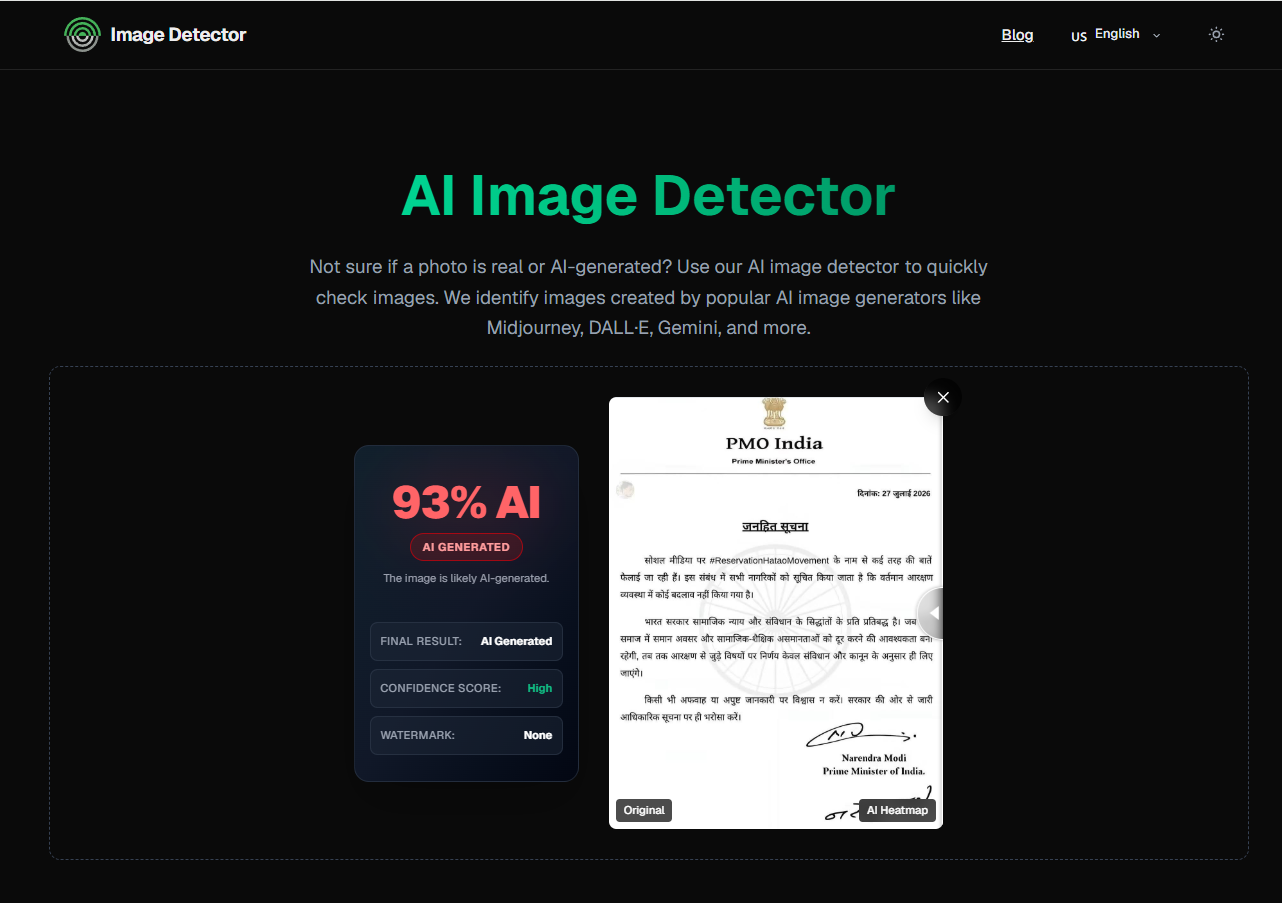
As part of the research, we scanned the viral letter using the AI detection tool Image Detector. The results indicated that the document was 93 percent likely to be AI-generated.
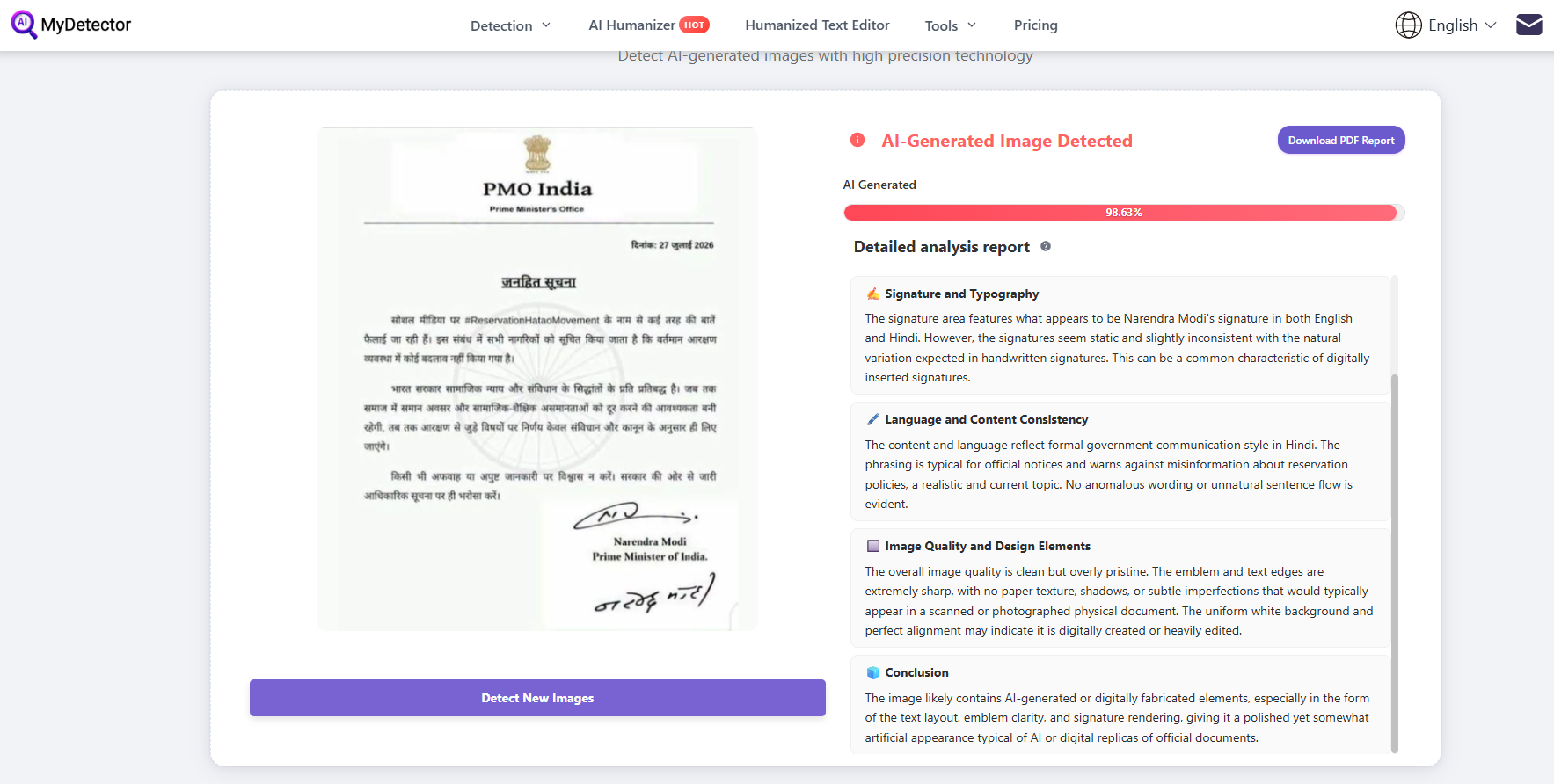
We also analysed the viral letter using another AI detection tool, My Detector. The results showed a 98 percent probability that the letter was created using AI.
Conclusion:
Our research found no official evidence confirming that the Prime Minister’s Office issued the viral letter. The purported PMO letter regarding reservation was found to be fake and AI-generated.
.webp)
Misinformation spread has become a cause for concern for all stakeholders, be it the government, policymakers, business organisations or the citizens. The current push for combating misinformation is rooted in the growing awareness that misinformation leads to sentiment exploitation and can result in economic instability, personal risks, and a rise in political, regional, and religious tensions. The circulation of misinformation poses significant challenges for organisations, brands and administrators of all types. The spread of misinformation online poses a risk not only to the everyday content consumer, but also creates concerns for the sharer but the platforms themselves. Sharing misinformation in the digital realm, intentionally or not, can have real consequences.
Consequences for Platforms
Platforms have been scrutinised for the content they allow to be published and what they don't. It is important to understand not only how this misinformation affects platform users, but also its impact and consequences for the platforms themselves. These consequences highlight the complex environment that social media platforms operate in, where the stakes are high from the perspective of both business and societal impact. They are:
- Legal Consequences: Platforms can be fined by regulators if they fail to comply with content moderation or misinformation-related laws and a prime example of such a law is the Digital Services Act of the EU, which has been created for the regulation of digital services that act as intermediaries for consumers and goods, services, and content. They can face lawsuits by individuals, organisations or governments for any damages due to misinformation. Defamation suits are part of the standard practice when dealing with misinformation-causing vectors. In India, the Prohibition of Fake News on Social Media Bill of 2023 is in the pipeline and would establish a regulatory body for fake news on social media platforms.
- Reputational Consequences: Platforms employ a trust model where the user trusts it and its content. If a user loses trust in the platform because of misinformation, it can reduce engagement. This might even lead to negative coverage that affects the public opinion of the brand, its value and viability in the long run.
- Financial Consequences: Businesses that engage with the platform may end their engagement with platforms accused of misinformation, which can lead to a revenue drop. This can also have major consequences affecting the long-term financial health of the platform, such as a decline in stock prices.
- Operational Consequences: To counter the scrutiny from regulators, the platform might need to engage in stricter content moderation policies or other resource-intensive tasks, increasing operational costs for the platforms.
- Market Position Loss: If the reliability of a platform is under question, then, platform users can migrate to other platforms, leading to a loss in the market share in favour of those platforms that manage misinformation more effectively.
- Freedom of Expression vs. Censorship Debate: There needs to be a balance between freedom of expression and the prevention of misinformation. Censorship can become an accusation for the platform in case of stricter content moderation and if the users feel that their opinions are unfairly suppressed.
- Ethical and Moral Responsibilities: Accountability for platforms extends to moral accountability as they allow content that affects different spheres of the user's life such as public health, democracy etc. Misinformation can cause real-world harm like health misinformation or inciting violence, which leads to the fact that platforms have social responsibility too.
Misinformation has turned into a global issue and because of this, digital platforms need to be vigilant while they navigate the varying legal, cultural and social expectations across different jurisdictions. Efforts to create standardised practices and policies have been complicated by the diversity of approaches, leading platforms to adopt flexible strategies for managing misinformation that align with global and local standards.
Addressing the Consequences
These consequences can be addressed by undertaking the following measures:
- The implementation of a more robust content moderation system by the platforms using a combination of AI and human oversight for the identification and removal of misinformation in an effective manner.
- Enhancing the transparency in platform policies for content moderation and decision-making would build user trust and reduce the backlash associated with perceived censorship.
- Collaborations with fact checkers in the form of partnerships to help verify the accuracy of content and reduce the spread of misinformation.
- Engage with regulators proactively to stay ahead of legal and regulatory requirements and avoid punitive actions.
- Platforms should Invest in media literacy initiatives and help users critically evaluate the content available to them.
Final Takeaways
The accrual of misinformation on digital platforms has resulted in presenting significant challenges across legal, reputational, financial, and operational functions for all stakeholders. As a result, a critical need arises where the interlinked, but seemingly-exclusive priorities of preventing misinformation and upholding freedom of expression must be balanced. Platforms must invest in the creation and implementation of a robust content moderation system with in-built transparency, collaborating with fact-checkers, and media literacy efforts to mitigate the adverse effects of misinformation. In addition to this, adapting to diverse international standards is essential to maintaining their global presence and societal trust.
References
- https://pirg.org/edfund/articles/misinformation-on-social-media/
- https://www.mdpi.com/2076-0760/12/12/674
- https://scroll.in/article/1057626/israel-hamas-war-misinformation-is-being-spread-across-social-media-with-real-world-consequences
- https://www.who.int/europe/news/item/01-09-2022-infodemics-and-misinformation-negatively-affect-people-s-health-behaviours--new-who-review-finds
